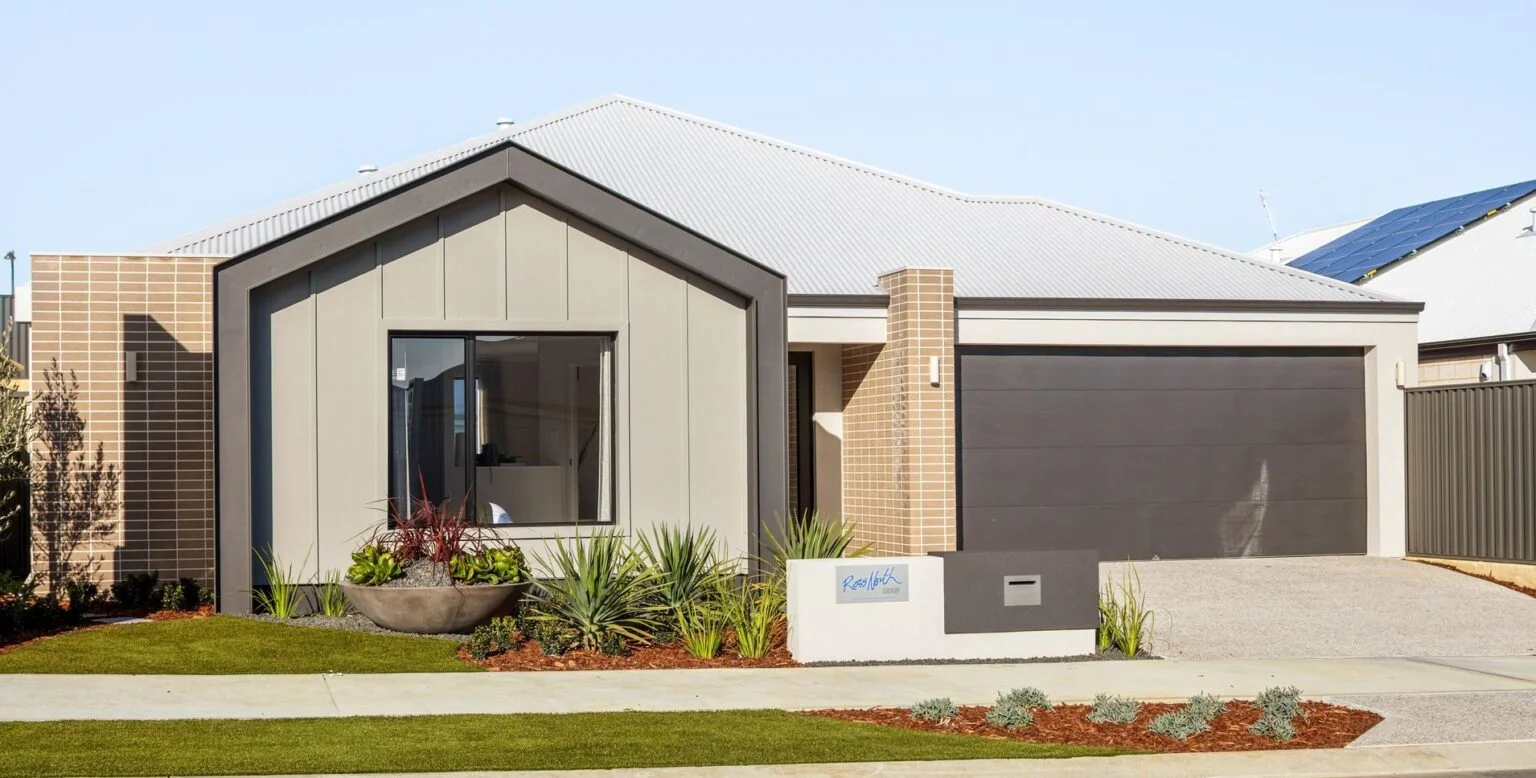
When people talk about “types of buildings construction” in Australia, they usually mean two connected ideas. First, how a building is classified under the National Construction Code (NCC) and Building Code of Australia (BCA). Second, what “type of construction” it falls under based on fire resistance and the way it is built.
If you own a home in Perth, manage commercial property, or you are involved in development work, this stuff is not just paperwork. It affects how safe your building is, what materials you can use, what your fencing needs to do, and how much maintenance you will be stuck with in a few years’ time.
Here is the bottom line.
The way your building is classified and constructed directly shapes what you can and should do with your fences, retaining walls, gates, and any other structures on the block. If you want something that looks sharp, stands up to Perth’s climate, and actually complies with regulations, you need a basic working knowledge of building types.
What “type of buildings construction” really means in Australia
In the Australian context, “type of buildings construction” usually covers three key ideas.
1. Building classifications under the NCC/BCA
The NCC groups every building into a “Class”, based on how it is used and who occupies it. This is not about architectural style, it is about function and risk. For example, a small family home, a block of units, a warehouse, a hospital, and a private garage all sit in different Classes.
Those Classes drive what rules apply to you. They influence things like fire safety measures, structural performance, access and egress, and, importantly for you, what sort of boundary treatments and fencing details might be required for safety, privacy, and compliance.
2. Types of construction based on fire resistance
The NCC also splits buildings into three “Types of construction” named Type A, Type B, and Type C. You can think of these as levels of fire resistance, tied to the building’s size, height, and use.
- Type A construction is the highest level of fire resistance. It usually applies to larger or higher risk buildings.
- Type B construction sits in the middle, with moderate fire resistance requirements.
- Type C construction has the lowest fire resistance requirements, usually for smaller or lower risk buildings.
This affects what materials go into external and internal walls, floors, roofs, fire separating walls, and sometimes how close certain elements can sit to boundaries. It also shapes how you think about non-habitable structures on site, including fences and retaining walls that might need to perform near fire rated walls or property boundaries.
3. Practical construction choices, from the slab to the fence line
On site, you are not walking around talking in NCC clauses. You are looking at concrete, steel, masonry, timber, glass, aluminium, and composite products, and deciding what will last in real Perth conditions. High UV, wind, coastal air, heat, and the occasional storm all punish poor material choices.
For homeowners, that might mean choosing Colorbond fencing or aluminium slats because you want privacy, low maintenance, and a clean, modern look that matches a Class 1 house built as Type C construction. For a commercial property, it might mean pairing a security fence or garrison-style boundary with a more fire resistant building form, automated gates, and retaining walls that will not move when heavy vehicles come and go.
Good construction choices start with understanding what your building is, on paper and in practice.
Why building types matter to you
For homeowners in Perth
If you own a residential property, understanding your building’s Class and construction type helps you:
- Make smarter calls on fencing, gates, and retaining walls that suit your block, house style, and privacy needs.
- Align any new works with council, NCC, and pool safety requirements, especially for pool fencing, boundary walls, and structures close to neighbours.
- Choose materials that will not become a maintenance headache in a few years, such as corrosion resistant metal fencing and long life retaining systems.
- Plan future renovations, extensions, or a pool with a clear sense of what is allowed and practical.
In simple terms, you get a property that feels secure, looks good from the street, and does not keep you busy every weekend with repairs.
For property developers and builders
If you are working on residential or commercial projects, the type of construction is one of the first things you need clear in your design brief. It influences:
- Compliance pathways, approvals, and documentation for each building Class on the site.
- Choice of structural systems, façade treatments, and fire rated walls and floors.
- Specification of fencing and boundary solutions that meet security, acoustic, privacy, and durability requirements without blowing the budget.
- Staging and coordination with trades, especially when dealing with mixed site uses and tight timeframes.
When you align building Class, construction type, and site infrastructure, you cut down on costly redesigns, rework, and delays.
For commercial property owners and business managers
In commercial and industrial settings, classification and construction type are directly tied to risk, insurance, security, and reputation. Knowing where your building sits helps you:
- Specify security fencing, crash resistant gates, or automated systems that match your site’s risk profile and traffic patterns.
- Plan upgrades that maintain fire separation and access requirements at loading docks, car parks, and public entry points.
- Balance visual appeal with robust performance, so your premises looks professional but still protects your assets.
Whether you run a warehouse, a retail premises, or a mixed commercial site, your boundary and building form need to work together, not against each other.
What this guide will help you do
This blog is written to cut the jargon and give you a clear, practical way to think about building types and construction choices in Australia, with a particular lens on Perth conditions.
Across the rest of this guide, you will:
- Get a plain English overview of building classifications under the NCC and BCA, from Class 1 to Class 10, including the key sub-classes that affect homes, multi residential projects, and commercial sites.
- Understand Types A, B, and C construction, what they mean for fire resistance, and how they influence the materials used in walls, floors, roofs, and external elements.
- Learn how the required construction type is determined, based on building Class, height, occupancy, and use, with a simple framework you can use when planning works or discussing options with your designer, builder, or fencing contractor.
- See how this all plays out on residential blocks, from home extensions and retaining walls to low maintenance fences that suit Perth’s climate and your privacy and security needs.
- Understand what matters for developers and builders delivering larger residential or commercial projects, including how smart fencing and boundary planning can support compliance and keep projects moving.
- Apply the same thinking to commercial properties, so you can choose high security, durable, and visually consistent fencing and gates that work with your building classification and business use.
- Navigate mixed use and mixed construction sites, where different Classes and construction types interact and you need clear strategies for boundaries and shared areas.
- Choose materials with maintenance, sustainability, and longevity in mind, so your building fabric and fencing last in Australian conditions without constant repair work.
If you want practical advice on fencing, you can explore the broader range of Perth specific solutions on the Stag Fencing site while you read. This guide will give you the framework. Those product pages will help you see how it fits in real selections, like Colorbond, aluminium slats, pool fencing, security fencing, or retaining systems.
The goal is simple. By the end of this series, you will understand what type of building you are dealing with, what type of construction it needs, and how to select fencing and related structures that match your safety, compliance, aesthetic, and maintenance expectations.
Understanding Building Classifications in Australia
Before you think about construction types, fire ratings, or what fencing suits your site, you need to know how your building is classified under the NCC and BCA. This is the starting point for everything that follows, from approvals to what you can build on the boundary.
Every building in Australia is assigned a Class from 1 to 10. That Class is based on how the building is used and who occupies it, not on style or cost. A basic brick home and a high end architect designed home usually sit in the same Class if they are used in the same way.
If you know your building Class, you can predict the kind of rules and performance requirements that apply to it.
Why building classifications exist
Building classifications give councils, certifiers, and designers a consistent way to group buildings that pose similar risks. The NCC looks at things like:
- Use, for example, dwelling, office, shop, warehouse, or health care.
- Occupancy, meaning how many people might be inside and how vulnerable they are.
- Regulatory needs, such as fire safety, access, structural performance, and services.
Once a building is placed in a Class, specific requirements kick in. These cover:
- Fire resistance and protection systems.
- Number and width of exits and paths to safety.
- Access for people with disability, in the Classes where that applies.
- Energy efficiency and performance.
- Setbacks, boundary walls, and in some cases, what your fencing and external structures need to do.
For you, that classification tells you what your design, building, or upgrade project has to satisfy. It also shapes what kind of fencing, retaining walls, and external works make sense around it.
Overview of Classes 1 to 10
Here is a plain English overview of the main Classes you will come across, focused on the types of properties common in Perth and across Australia.
Class 1: Typical houses and small residential buildings
- Class 1a: Usually a single dwelling. That might be a detached house on its own block, a terrace, or semi detached house. Most suburban Perth homes fall in this category.
- Class 1b: Small scale shared or short term accommodation, for example where multiple unrelated people stay, up to a limited number and size defined in the NCC. Think of it as the step between a single home and a full Class 3 or Class 9 building.
For these buildings, you are usually dealing with Type C construction, domestic scale walls and roofs, and a strong focus on privacy and amenity. This is where fencing choices like aluminium slat fencing, Colorbond style panels, and practical retaining walls come into play, because the NCC is more focused on separation between dwellings and pool safety than on complex fire systems.
Class 2: Apartments and multi unit residential buildings
Class 2 refers to buildings that contain two or more separate dwellings stacked or arranged over each other, generally in one building. These can range from small walk up blocks to larger multi storey apartment buildings.
Here, fire separation between units, common areas, and car parks becomes a bigger factor. External walls may need higher fire resistance, and common property fencing and entry gates often have to deal with more foot traffic and shared access.
Class 3: Larger residential accommodation
Class 3 covers larger residential buildings used for long term or transient accommodation, where unrelated people share facilities. These buildings sit between standard apartments and more complex public buildings.
In these settings, you usually see a need for more robust entry control, higher performance security fencing in external areas, and careful management of shared courtyards, driveways, and boundaries.
Class 4: A dwelling within another building
Class 4 is a single dwelling that sits within a building of another Class, for example a caretaker’s residence in a commercial or industrial building. This Class highlights how mixed uses can exist in the one structure, which becomes important when you think about fire separation and external elements near that dwelling.
If you are planning fencing or retaining work on a site that has a Class 4 dwelling inside a different primary Class, you have to respect both the residential amenity and the broader site use.
Class 5: Office buildings
Class 5 covers office use, such as professional suites and administration buildings. The main concern is safe egress, fire performance, and comfort for workers who occupy the building for long stretches.
Externally, you often want a balance between a tidy, professional look and enough security to manage after hours access. That might mean pairing neat front boundary treatments with discreet security fencing, controlled gates, and car park separation at the rear.
Class 6: Shops, restaurants, and retail type spaces
Class 6 applies to spaces used for the sale of goods or services, or for direct serving of the public, for example retail, food, and some service businesses. More foot traffic and a broad mix of visitors naturally change the fire and access requirements.
For Perth business owners, this often means clear boundaries that still look inviting, such as open style metal fencing, framed entry gates, and robust back of house security fencing that can handle repeated use.
Class 7: Storage and display areas
- Class 7a: Car parks, such as multi level or undercroft parking structures.
- Class 7b: General storage or display of goods, such as some types of warehouses or bulk storage facilities.
Here, the emphasis shifts toward vehicle movement, load paths, and asset protection. Fencing and gates often need to allow for larger access widths, higher impact resistance, and clear separation from public areas, especially where heavy vehicles or high value goods are involved.
Class 8: Factories and industrial buildings
Class 8 covers buildings where production, assembly, processing, or similar industrial activities take place. These buildings often involve machinery, processes, and materials that attract higher fire and safety considerations.
In practice, industrial sites in Perth need strong security fencing, robust sliding or swing gates, and retaining solutions that can carry load near driveways and hardstand areas. The building Class informs how close those elements can sit to fire walls and how you manage exit routes.
Class 9: Public buildings and facilities
- Class 9a: Health care buildings, such as medical facilities where people receive treatment.
- Class 9b: Assembly buildings that accommodate groups of people, such as certain public halls or gathering spaces.
- Class 9c: Certain types of aged care buildings where residents may need assistance.
These Classes deal with more vulnerable occupants and higher person densities. Fire safety, access for people with disability, and emergency management are all more demanding.
External works need to be carefully planned. Fences and gates cannot interfere with emergency vehicle access, paths of travel, or required open space. At the same time, you still need secure perimeters and controlled access for staff, visitors, and service providers.
Class 10: Non habitable structures
Class 10 covers buildings and structures that are not used for living or working in the usual sense. They support the main building use on the site.
- Class 10a: Private garages, carports, and some small sheds.
- Class 10b: Structures such as retaining walls of a certain scale, fences, masts, and similar external elements that can affect safety or stability.
- Class 10c: Certain private bushfire shelters, where relevant.
This is where your fencing and retaining walls often sit. While a fence is not a habitable building, some fences and retaining systems fall into Class 10b because of their size, load, or impact on neighbouring land. That means they still need to meet structural and, in some cases, fire related requirements.
For example, a substantial retaining wall supporting a boundary, or a high security fence near a fire rated wall, might be treated as a Class 10b structure. Planning those works with NCC classification in mind helps you avoid compliance issues and expensive rework. If you are considering new retaining or a boundary upgrade, the retaining wall resources on the Stag Fencing retaining walls page give a useful sense of what is possible.
How these Classes show up in Perth properties
Across Perth and the surrounding metro areas, you will most often encounter:
- Class 1a and 1b for standalone homes, duplexes, villas, and small guest style accommodation.
- Class 2 for townhouse and apartment style developments, especially near activity centres.
- Class 5, 6, 7, and 8 in commercial, retail, and industrial zones, often mixed across a single site.
- Class 10 structures in almost every project, from garages and garden sheds to retaining walls and boundary fences.
Mixed use sites are common, for example, a commercial or industrial lot that has a Class 4 dwelling for a caretaker, or a ground level retail tenancy below Class 2 apartments. In those cases, more than one Class can apply within one overall building, which is where a proper classification and construction strategy really matters.
The key point for you is simple. Before you commit to any major building, fencing, or retaining work, know what Class or Classes you are dealing with. That single decision drives the required type of construction, the fire and structural rules, and what kind of fencing or external structures will actually work on your site without causing compliance headaches later.
Types of Construction Defined: Fire Resistance and Material Considerations
Once you know your building Class, the next piece of the puzzle is its Type of construction. This is where the NCC gets specific about how resistant your building needs to be to fire, and what that means for the structure, materials, and even how close things like fences and retaining walls can sit to it.
If you understand Types A, B, and C, you can have a much clearer conversation with your designer, builder, or fencing contractor about what is realistic, compliant, and low maintenance in Perth conditions.
The three NCC construction types in plain language
The NCC defines three Types of construction, based on how much fire resistance is required. You can think of them as three bands of performance.
- Type A construction: Highest fire resistance. Reserved for larger or higher risk buildings.
- Type B construction: Moderate fire resistance. Sits between the two and shows up in a lot of mid scale projects.
- Type C construction: Lowest fire resistance. Common for smaller or lower risk buildings, especially domestic construction.
The NCC then sets performance requirements for different building parts, such as structural frames, external and internal walls, floors, roofs, and fire separating walls. Fences and retaining walls usually sit outside those core elements, but they still need to work around them. In some cases, they also need to respect required clearances, fire spread limitations, and structural loading near fire rated walls.
How construction type connects to safety and layout
Construction type is not just about what the walls are made of. It shapes the entire fire strategy for the building, including how long parts of the structure are expected to stand up in a fire, and how fire is prevented from spreading to other areas or properties.
Key links between construction type and safety include:
- Fire resistance levels, which dictate how long structural and separating elements must maintain their function in a fire.
- Compartmentation, where fire rated walls and floors divide a building into compartments to slow spread.
- Boundary relationships, which influence where you can place openings, how close combustible materials can sit to the boundary, and how external structures interact with fire rated walls.
For you, this might show up as limits on where you can fix a fence to a boundary wall, what that fence can be made from, or how you design a retaining wall near a fire rated structure so you do not compromise its stability.
Type A construction: High performance and non combustible materials
Type A construction is the top tier. It applies where the NCC considers the fire risk and potential impact on occupants or neighbours to be higher. Think of taller and more heavily occupied buildings that need to stay structurally sound for longer in a fire.
While the exact technical requirements sit in the NCC, typical characteristics include:
- Primary structural frame in non combustible materials such as concrete or steel.
- External walls with substantial fire resistance and non combustible construction.
- Internal separating walls and floors with defined fire resistance levels to keep fire from rapidly moving between areas.
- Limited use of combustible cladding or finishes, subject to strict rules.
Type A buildings are usually more complex and they demand careful coordination of everything around them. On these sites, perimeter security often relies on robust metal fencing systems such as garrison fencing, crash resistant gates, and durable retaining systems that can handle higher load and traffic without conflicting with fire paths or access.
For Perth conditions, non combustible materials with proven corrosion resistance tend to perform best, because they deal with both the fire requirements and the coastal or high UV environment.
Type B construction: Balanced fire performance and flexibility
Type B construction sits in the middle. It still has defined fire resistance levels for key elements, but there is more flexibility in how you achieve them. You will often see a mix of concrete, masonry, and steel, and, in some cases, carefully managed use of timber or other materials that meet the relevant performance criteria.
In Type B buildings you will typically see:
- Structural frames that can be concrete, steel, or other compliant systems.
- External walls that may combine masonry, concrete, and compliant cladding systems.
- Internal separations designed to contain fire for a set period, often with specific treatment around corridors, fire stairs, and services.
From a fencing and external works perspective, Type B construction often appears in medium scale residential and commercial developments. Here, you are balancing visuals, cost, and compliance. For example, a site might pair a neat front boundary treatment, such as aluminium feature fencing, with higher security side and rear boundaries in steel or welded mesh, all while maintaining required setbacks from fire rated walls.
Type C construction: Domestic scale and lower fire resistance
Type C construction has the lowest fire resistance requirements. It is very common for smaller residential buildings and other low risk structures. In these projects, you tend to see more light framed construction, such as timber or light gauge steel framing, with cladding systems that meet the relevant performance criteria.
Key themes for Type C include:
- Lighter structural systems, often framed construction with sheet or masonry cladding.
- Simpler fire separation, mostly focused on boundary walls, walls between dwellings, and required fire protection at particular junctions.
- Greater flexibility in external finishes, provided the NCC provisions for combustibility and proximity to boundaries are met.
This is where most suburban Perth homes sit. It is also where low maintenance fencing systems, such as Colorbond style steel fencing, aluminium slats, and modular retaining walls, have become popular. They line up well with domestic scale structures, suit common boundary arrangements, and handle the local climate with minimal upkeep when properly detailed.
Structural and non structural components that are affected
Construction type affects more than just load bearing walls. It reaches into many parts of the building fabric and site layout.
Structural components influenced by construction type include:
- Primary frames and load bearing walls.
- Floor systems, including suspended slabs and structural decking.
- Roof structures, particularly where they form part of a fire rated barrier.
- Fire walls and fire separation between different uses or tenancies.
Non structural components can also be impacted, for example:
- Internal partition walls that require a fire resistance rating.
- External cladding systems and linings that must be non combustible or limited combustible in certain buildings.
- Services penetrations that must be fire stopped.
- Attachment points for external structures, such as awnings, screening, or some fence types fixed to or near fire rated walls.
When you plan external works such as fencing and retaining, it is worth confirming where fire rated walls, exits, and services run. That way you avoid compromising fire performance with inappropriate fixings, penetrations, or combustible elements too close to a boundary.
Fire risk management and the role of construction type
Construction type is one piece of a broader fire risk strategy. The NCC uses it alongside other measures, such as:
- Active systems, for example sprinklers and detection systems in the Classes where these are required.
- Passive measures, such as fire rated construction, separation, and fire stopping.
- Safe egress, including the number and width of exits, paths of travel, and distance to safety.
- Site planning, such as separation between buildings, boundary setbacks, and access for emergency services.
For property owners and developers, the practical takeaway is simple. The higher the fire risk profile of the building, the more fire resistant the construction must be, and the more carefully you need to design everything around it, including fences, retaining, and gates.
Durability and maintenance in Australian conditions
Perth’s climate is tough on building materials. Strong sun, salt in coastal air, heat, and seasonal winds can quickly expose cheap finishes or poor detailing. When you layer that on top of NCC fire requirements, some materials clearly pull ahead in terms of long term performance.
If you want low maintenance and durability that matches your building’s construction type, focus on:
- Non combustible, corrosion resistant metals for structural and boundary elements where fire performance matters, such as prefinished steel systems and high quality aluminium.
- Quality masonry and concrete for retaining and structural walls, especially in higher fire resistance Types or where soil and load conditions are demanding.
- Compliant cladding and fencing finishes with proven resistance to fading, peeling, and surface corrosion in high UV environments.
- Thoughtful detailing, including proper fixings, separation between dissimilar metals, and drainage so water does not sit on or behind elements.
For fencing and retaining in particular, systems like engineered retaining sleepers and quality metal fencing products usually give you a good balance between structural integrity, minimal maintenance, and compatibility with a range of construction types.
When you match your material choices to your construction type and local conditions, you reduce headaches for the life of the property.
How to Determine the Type of Construction Required
By this point, you know two key ideas, your building Class and the three NCC Types of construction. The next question is simple. How do you work out which Type your building actually needs.
You do not guess it, and you do not just copy what the neighbour did. The NCC uses a clear sequence of criteria. If you walk through them in order, you will land on the right construction Type or know when you need a professional to confirm it.
The four core criteria that set construction type
In practical terms, the required construction Type is driven by four big levers.
- Building classification, what Class it is under the NCC.
- Rise in storeys, essentially the height in terms of usable levels.
- Occupancy risk, who is using the building and how vulnerable they are.
- Intended building use and fire load, what is happening inside and how that affects fire behaviour.
Designers and certifiers use NCC tables that cross reference these factors. For everyday decisions, you just need to understand how each one pushes you toward Type A, B, or C.
1. Building Class: Your starting point
Step one, confirm the correct Class or Classes.
Your Class sets the baseline fire performance the NCC expects. For instance:
- Smaller residential Classes, such as typical houses, often align with Type C construction for many configurations.
- Multi residential, office, retail, industrial, and public building Classes are more likely to step up into Type B or Type A as height and occupant numbers increase.
If you are not sure of your Class, do not skip this. Misclassifying a building is one of the quickest ways to end up with non compliant fire protection or unexpected upgrade costs later. Go back to the classification outline, talk to your designer, and lock that in first.
2. Rise in storeys: Height raises the bar
Once you know the Class, the next filter is rise in storeys. The NCC looks at how many storeys the building has, not just its absolute height in metres.
As the number of storeys goes up, so does the required construction Type. The logic is straightforward. More levels mean more people to evacuate, longer travel distances to exits, more structural load, and a greater chance that a fire will affect neighbours or public areas.
In broad terms:
- Lower rise Class 1 homes often fall within Type C, provided other risk factors stay low.
- Mid rise apartment or commercial buildings can trigger Type B, especially once you move beyond a modest number of storeys.
- Taller, heavily occupied buildings regularly require Type A.
If you are planning to add levels to an existing building, be aware that your required construction Type might change. That can flow through to upgrades in structural elements, fire separation, and even how external structures relate to the building envelope.
3. Occupancy risk: Who is inside, and how quickly can they get out
Next, the NCC considers occupancy risk. This focuses on how many people might be inside, how familiar they are with the building, and how easily they can evacuate without assistance.
Key risk factors include:
- High density or transient occupants, for example in assembly or accommodation buildings.
- Vulnerable occupants, such as young children, older people, or people with limited mobility.
- Visitors who are unfamiliar with the layout, for example in public or retail buildings.
Buildings that house vulnerable or dense populations tend to be pushed into higher performance construction Types, even if they are not especially tall. That could move you from Type C to Type B, or from Type B to Type A.
For you, the main takeaway is this. If your building serves the public, houses groups of people, or includes accommodation for vulnerable occupants, expect stricter construction requirements than a standard single dwelling.
4. Intended use and fire load: What is happening inside
The final major piece is what you do in the building, and what kind of fuel load or fire behaviour that creates.
Factors that can increase fire risk include:
- Activities that involve heat, flame, or industrial processes.
- Storage of combustible goods, packaging, or chemicals.
- Large open plan spaces where fire can spread quickly if not contained.
Industrial and storage uses often carry higher fire loads than a typical office or home. The NCC accounts for that in the way it sets construction Types for different Classes and building heights.
If you are converting a building from one use to another, for example from storage to a public facing use, your required construction Type may change. That might mean upgrading fire separation, structural elements, and the way external elements like security fencing and gates manage access and fire service entry.
The basic decision path in practice
When professionals work out the construction Type, they apply the NCC tables. You do not need to memorise those. You can use a simple decision path instead.
- Confirm the building Class or Classes on the site.
- Count the storeys above the lowest ground level that provides access.
- Consider the occupancy risk, including density and vulnerability.
- Confirm the dominant use and any high fire load activities.
- Check the NCC matrix for that Class and number of storeys to see the minimum Type of construction required.
For a homeowner or small business, steps 1 to 4 are your job. Step 5 is where you lean on designers, building surveyors, or certifiers to reference the exact NCC requirements.
Mixed construction types, fire compartments, and fire walls
Real projects rarely fit into a neat box. Many buildings combine different uses or have parts that need higher fire resistance than others. The NCC deals with this through mixed construction types, fire compartments, and fire walls.
Mixed construction types arise when different parts of one building can comply with different construction Type requirements, provided they are separated in a compliant way. For example, a lower risk area can sometimes be built to a lower construction Type, if it is properly fire separated from a higher risk area.
Fire compartments are sections of a building separated by fire rated walls, floors, and openings. The goal is to slow fire spread so occupants can escape and fire services can intervene. Each compartment is treated as having a certain fire risk profile and construction demand.
Fire walls are specific fire rated walls that act as robust barriers. They can:
- Divide different fire compartments.
- Separate buildings or different parts of a building with different uses.
- Provide fire separation along or near property boundaries.
In mixed use or mixed construction projects, the highest risk area usually drives the strictest requirements, unless you can clearly separate areas with compliant fire walls and compartmentation. This is where a smart layout can save money, by keeping higher construction Types only where they are genuinely needed.
For fencing and external works, fire walls have real implications. You need to respect:
- Clearances from fire rated walls to combustible fences or structures.
- Restrictions on fixing fences directly into fire rated elements without proper detailing.
- Access requirements for fire services along boundaries, especially in commercial and industrial zones.
On more complex sites, involve your designer or certifier early before you commit to any built in fencing or large Class 10b structures next to a fire wall.
Simple checklists for each audience
Checklist for homeowners
Use this when you are planning renovations, a new pool, or significant fencing and retaining work.
- Confirm your dwelling Class, usually Class 1 or part of a Class 2 development.
- Check current number of storeys and whether you plan to add another level.
- Note any special risks, such as a secondary dwelling, home office with visitors, or short stay use.
- Identify any fire rated boundary walls on or near your property line.
- Before locking in fencing, retaining, or pool fencing, ask your designer or installer how it interacts with the building’s construction Type and any fire rated elements.
Checklist for property developers and builders
Use this as part of your project setup and design brief.
- List all building Classes on the site, including any Class 4 dwellings or Class 10 structures that are more than minor.
- Map rise in storeys for each building and identify likely triggers for Type A or B construction.
- Assess occupancy risk per building, including any public, health, or assembly uses.
- Confirm primary use and fire loads for industrial, storage, or mixed commercial tenancies.
- Work with your design and certification team to define construction Types and fire compartments early, so you can plan boundary treatments, staging, and services with confidence.
Checklist for commercial property owners and managers
Use this when planning upgrades, change of use, or security works.
- Confirm the existing building Class and current construction Type if known.
- Identify any proposed changes in use, for example office to retail, storage to workshop, or adding public access areas.
- Review how many people typically use the building, and whether you have vulnerable occupants or visitors.
- Locate fire rated walls, exit paths, fire stairs, and hydrant or hose reel positions on a simple plan.
- Before commissioning new security fencing, gates, or retaining near the building envelope, check that they do not block egress, fire service access, or compromise fire separation at boundaries.
Why getting construction type right pays off
When you correctly determine the construction Type at the start, three things happen.
- You avoid redesigns and surprise upgrade costs later in the approval or construction phase.
- You can select materials, fencing, and retaining solutions that genuinely suit the performance level the NCC expects.
- You build in confidence that your property is safer, more compliant, and more resilient long term.
You do not need to become an NCC expert. You just need to follow the logic, ask the right questions, and involve professionals when the picture gets complex. From there, you can focus on what matters to you, a secure, good looking, low maintenance property that holds its value in Perth conditions.
Building Construction Types and Their Impact on Residential Properties
For most Perth homeowners, your property sits in a residential Class, usually Class 1 or part of a Class 2 development, and is built as Type C construction. That single fact quietly shapes what you can do with your walls, roofs, fences, retaining walls, and even pool areas.
If you understand how residential building classifications link to construction type, you can choose fencing and structures that look sharp, meet the rules, and do not chew through your weekends with maintenance.
How residential classifications shape construction type
Residential properties usually sit in one of these NCC Classes.
- Class 1a, typical detached or semi detached homes.
- Class 1b, small scale shared or short stay accommodation.
- Class 2, apartments and multi unit residential buildings.
- Class 4, a single dwelling within another building, for example a caretaker’s residence in a commercial or industrial building.
Here is how that affects construction type in practice.
- Most standalone homes are Class 1a with Type C construction. You usually see light framed walls, brick veneer or masonry, and simple roof structures. Fencing and retaining can focus more on privacy, looks, and low maintenance, provided boundary rules are met.
- Class 1b and smaller Class 2 buildings may sit in Type C or Type B construction, depending on size and storeys. You start to see more attention on fire separation between dwellings, which affects where and how you attach fences or build shared retaining walls.
- Larger Class 2 developments (more levels or more dwellings) often move into Type B construction. That means higher performance external walls and more defined fire compartments, so any external structures need to be planned around those fire rated elements.
- Class 4 dwellings inherit the fire and structural logic of the primary building. If that building is Type B or Type A construction, you treat things near the residential part with the same respect, even though it is “just” one dwelling.
The bigger and more complex the residential building, the more seriously you must treat fire separation, boundary conditions, and services. That is where smart selection of non combustible, low maintenance fencing and retaining systems starts to matter a lot more than just looks.
Choosing fencing that suits your residential construction type
The good news. For most Perth homes, you have a lot of flexibility. The trick is choosing fencing that suits your construction type, boundary conditions, and how you actually live in the space.
Privacy and boundary fencing for Class 1 homes
For a typical Class 1a house built as Type C construction, you are usually dealing with side and rear boundary fences that sit close to light framed or brick veneer walls. Your priorities are privacy, security, and low maintenance.
Strong options for this setup include:
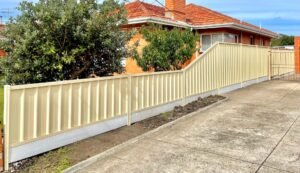
- Colorbond style steel fencing, a popular choice in Perth because it delivers privacy, good wind performance, and very low maintenance when installed correctly. Pair it with a layout that respects any fire rated boundary walls and you avoid compliance issues.
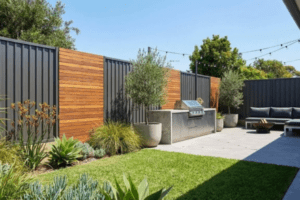
- Aluminium slat fencing, ideal when you want more airflow or a designer look while still keeping sight lines under control. Powder coated aluminium holds up well in coastal and high UV conditions and works nicely with modern façades.
- Frameless or blade style fencing in front yards, where you want street appeal with controlled visibility. Products such as frameless batten fencing or the frameless blade fencing range help you match a contemporary home without inviting constant upkeep.
These systems sit comfortably alongside Type C domestic construction because they are light, structurally efficient, and do not load up your house walls when properly footed on their own posts or retaining system.
Pool fencing and higher fire performance zones
If you add a pool or outdoor entertaining area, you start interacting with extra regulations. Pool fencing has strict requirements on height, climbability, and latch operation. The construction type of your dwelling still matters because of proximity to external walls and openings.
In residential settings, practical and compliant pool fencing options include:
- Tubular aluminium pool fencing, light, corrosion resistant, and compliant when detailed correctly. Products in this category, such as the systems described on the aluminium pool fencing page, give you a balance of safety and durability for a Type C home.
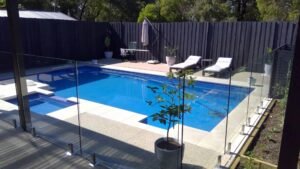
- Frameless glass pool fencing, which suits more refined outdoor areas where sightlines, views, and resale value matter. This works especially well with masonry or concrete pool surrounds in both Type C and Type B residential projects, provided fixings and clearances match NCC and pool safety rules.
- Perforated or blade style pool fencing, for owners who want a modern look and better privacy than glass. Here, material quality and fixing details are key, particularly where the fence meets a retaining wall or terrace that also carries structural or fire performance responsibilities.
Any time your pool area backs onto a fire rated wall or sits near a boundary, treat those junctions carefully. Make sure the fencing does not compromise fire performance or breach setback requirements.
Structural choices around retaining walls and sloping blocks
Perth has plenty of sloping sites. On these blocks, retaining walls are not just landscaping, they are structural Class 10b elements that interact with your dwelling’s construction type.
When you combine residential construction with retaining, focus on three things.
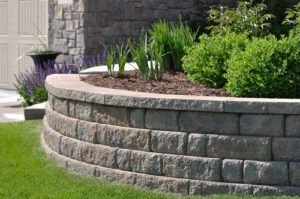
- Structural integrity, the wall must safely hold the soil and any surcharge from fences, decks, or driveways above. For heavier loads and closer boundaries, engineered systems such as Fibrewall retaining or other compliant sleeper solutions provide reliable performance.
- Material compatibility, retainers built from concrete, masonry, or engineered composite elements pair well with both Type C and Type B residential construction because they are stable, relatively non combustible, and low maintenance when drained properly.
- Integration with fencing, you often need to mount fences on top of retainers. In that case, design the footing and wall to carry both soil and fence loads so you do not end up with cracking, leaning, or disputes with neighbours.
On multi residential or Class 2 sites, retaining can form part of fire and access planning. Keep clear zones for egress and do not block fire service paths with ad hoc fences or planter walls that seemed like a good idea at the time.
Key residential considerations in Perth: privacy, security, aesthetics, and maintenance
Every homeowner balances four main goals. You want privacy from neighbours and the street, enough security that you sleep well, a home that looks good, and as little maintenance as possible.
Privacy and noise control
In the suburbs, boundary fencing does most of the privacy work. For Class 1 Type C homes, solid fencing panels on side and rear boundaries give you the best result.
- Solid steel panels cut sight lines and soften some noise. Taller panels within local height limits do the heavy lifting here.
- Slat systems with tight spacing allow airflow while blocking direct lines of sight. They pair well with courtyards and decks where you want to feel enclosed but not boxed in.
- Combination layouts, solid panels where neighbours are close, more open batten or blade fencing where you face the street or open space.
If your property is part of a Class 2 complex, check body corporate or strata rules before changing any shared fences. The building’s construction type and fire strategy may already assume particular boundary conditions.
Security and access control
Residential security is less extreme than industrial, but it still matters. You want to discourage opportunistic access without turning your place into a fortress.
Consider these points when pairing security with your construction type.
- Front boundaries, use open style fencing or low solid walls that maintain street appeal and passive surveillance, with gates that match the quality of your dwelling construction. Options like swing gates or sliding gates with simple automation add everyday convenience.
- Side and rear boundaries, stronger, taller fencing helps secure access points, especially under eaves or near windows. Here, a tough metal fence aligned with your construction type reduces the chance of forced entry without increasing fire risk.
- Gate automation, pairing residential gates with gate automation solutions (searchable via the automation pages) cuts down on manual effort and keeps the property secure even when you are busy or away.
As you upgrade security, always keep fire egress in mind. Do not block or lock paths that function as exit routes in an emergency, especially in multi dwelling or Class 2 settings.
Aesthetics and street appeal
Construction type shapes the look and mass of your home. A light framed Type C house presents differently to a more solid Type B apartment building. Your external structures should respect that.
- Match the visual weight of your fence to the dwelling. Lightweight aluminium or steel suits most single homes, while more substantial masonry bases or blade systems fit larger townhouses or grouped dwellings.
- Consider colour consistency with roof, gutters, and wall cladding. Tools such as the Colorbond fencing colours guide help you pick a palette that ties the whole property together.
- For corner or feature sites, use designer fencing ranges with batten or blade profiles that echo battens in screens, eaves, or pergolas.
Done well, your fence feels like part of the house, not an afterthought you bolted on later.
Eco-conscious materials and durability in harsh Perth weather
If you care about sustainability and longevity, construction type gives you a useful filter. You want materials that satisfy NCC performance, last in local conditions, and avoid constant repairs or replacements.
Material choices that work hard for longer
For Perth residential properties, look for these traits.
- Coated steel fencing with proven corrosion resistance and colour fast coatings. It aligns with domestic Type C construction, uses relatively thin material efficiently, and can be recycled at end of life.
- Aluminium systems for slats, battens, and pool fencing. Aluminium suits coastal areas, it is light, strong for its weight, and recyclable.
- Engineered retaining systems, such as composite sleepers, prefinished concrete, or solutions like Fibrewall, that offer high strength, controlled manufacturing, and good long term performance when installed with correct drainage.
- Quality fixings and detailing, stainless or properly coated fasteners, correct separation of dissimilar metals, and detailing that keeps water moving away from critical joints.
The aim is simple. You invest once in materials that respect both fire and climate, instead of patching up cheap timber or thin, uncoated steel every few seasons.
Low maintenance design decisions
Maintenance is not just about materials, it is about design choices that reduce wear.
- Avoid fences that rely heavily on painted timber in full sun, unless you are genuinely happy to repaint regularly.
- Keep vulnerable elements, such as gate hardware and latches, out of direct irrigation spray and in locations where water can drain freely.
- Plan clear access for cleaning and small repairs, for example, gates that open wide enough and fences that are not buried in garden beds.
When you view your home as a Type C or Type B residential building in a tough climate, not just a styling project, you make more grounded choices. You get fences, gates, and retaining walls that stay straight, stay legal, and keep doing their job long after the novelty wears off.
If you start with your building Class and construction type, then choose residential materials that suit Perth’s climate, you end up with a home that feels private, secure, and easy to live with for years.
Construction Types and Building Classifications for Property Developers and Builders
If you develop or build in Perth, construction type and building Class are not just compliance labels. They decide how hard a project is to deliver, how predictable your costs are, and whether your fencing and external works help or hurt your program.
When you understand how NCC building classifications and Types A, B, and C construction tie together, you can lock in structural systems, façades, and fencing strategies early. That means fewer redesigns, cleaner approvals, and site works that actually match what you priced.
Why developers and builders need a clear construction strategy
Every development lives or dies on three things, compliance, budget, and time. Building Class and construction type cut across all three.
- Compliance, they control minimum fire resistance, structure, access, and boundary conditions. If you misjudge the construction type, you risk upgrades midstream.
- Budget, Type A, B, and C drive your material palette, structural design, and fire protection systems. That flows straight into cost per square metre and per lot.
- Timeline, clear classification and construction decisions let you stage works logically, coordinate trades, and order long lead items with confidence.
If you treat NCC classification and construction type as the first design decision, not a box to tick later, you gain control over the whole project.
Aligning project typologies with construction types
Most developments fit into a few repeatable patterns. Each pattern tends to fall into certain Classes and construction Types, which you can treat as your starting assumption before detailed design.
Greenfield and infill residential estates
Typical estates combine a mix of:
- Class 1a detached and semi detached dwellings, usually Type C construction.
- Some Class 1b or small Class 2 townhouses or grouped dwellings, often Type C or Type B depending on form.
- Class 10 structures, garages, sheds, retaining walls, and boundary fencing.
Here, you can standardise domestic scale fencing such as Colorbond style steel and aluminium slats, and repeat retaining wall systems across multiple lots. If you pair a consistent fence and retaining specification with house designs that share similar setbacks and levels, you streamline both procurement and installation.
Lock in a base specification early, then allow controlled variations in height, colour, and gate style. A product catalogue supported by a supplier such as Stag’s online fencing range makes it easier for buyers to pick from pre approved options that still match your construction strategy.
Medium density and multi residential projects
Once you move into townhouses, apartments, and mixed residential precincts, you normally see:
- Class 2 main buildings, often Type B construction as storeys and unit numbers grow.
- Class 1a or 1b clusters, often Type C, on the same site.
- Shared Class 10b structures, retaining, bin enclosures, plant enclosures, and perimeter fencing.
As the construction type steps up, fire rated walls, slabs, and boundaries become more significant. Your fencing and external structures need to respect those elements. That impacts where you can fix to walls, what materials you can use near boundaries, and how you keep exit paths clear.
In these projects, treat fencing, gates, and retaining as part of the main building package, not an afterthought. Include them in the early fire engineering and layout work, so your landscape and boundary details do not land on site as unexpected variations.
Commercial and industrial developments
Commercial and industrial sites usually involve a spread of Classes, for example:
- Class 5 offices associated with the development.
- Class 6 retail or showroom tenancies.
- Class 7 and Class 8 warehouses, storage, or industrial buildings.
- Class 10b security fencing, high retaining walls, plant enclosures, and barrier systems.
Depending on height and risk profile, you may be dealing with Type B or Type A construction for major buildings. High fire resistance at boundaries, larger fire compartments, and more demanding access requirements come with that.
Perimeter and internal fencing is rarely just decorative in these environments. It has to manage security, vehicle movements, and interaction with fire service access points. If you standardise robust systems such as chainmesh, garrison, or blade style security fencing, and combine that with properly designed automated gates, you can repeat the same details on multiple projects and keep engineering work efficient.
Using classifications and construction types to control budget
Cost control starts with choosing the right construction Type for each building form, then matching materials accordingly.
Avoid “overbuilding” with construction types
It is easy to default to higher performance construction than the NCC actually requires, especially when risk appetite is low. The problem is that higher construction Types ripple through every part of the building.
- More stringent fire resistance can increase thickness and complexity of walls, floors, and cladding.
- Greater reliance on non combustible systems can limit cheaper finishes or force alternative details.
- Boundary and separation rules can affect site yield and usable area.
When you classify accurately and check the minimum construction Type for each block or building, you can keep some elements in Type C where risk is low, and reserve Type B or A for higher rise or higher risk parts. Clever compartmentation and fire wall placement lets you draw that line deliberately, instead of applying the strictest rules across the entire development.
Standardise fencing and external works across building types
Fencing, gates, and retaining can quietly consume a large slice of the external works budget if you specify them one by one. A better approach is to tie standard external details to the Classes and construction Types on site.
For example, you might:
- Use one base specification of coated metal boundary fencing for all Class 1 and low rise Class 2 lots, with controlled options for infill panels and colours.
- Define a standard security fence and gate system for Class 6, 7, and 8 perimeters, including heights, post sections, and automation hardware for common gate widths.
- Nominate one or two retaining systems for typical wall heights on the estate, complete with schedules of maximum surcharge loads and compatible fence post details.
Once those standards are set, you can negotiate better pricing, reduce drafting and engineering overhead, and keep installers working to known systems instead of reinventing details on every lot.
Protecting the program by locking in external works early
Time loss often happens when external works clash with fire or access requirements that were not fully resolved in design. NCC classifications and construction Types give you a framework to avoid that.
Coordinate fire strategy and boundary works upfront
When you sit down with your design team, include boundary fencing, retaining, and gate access in the same conversation as:
- Fire compartment layouts and fire wall locations.
- Hydrant and hose reel coverage.
- Required fire service vehicle access paths around buildings.
- Exit discharge points and assembly areas.
Once those are mapped, you can define clear “no build” or “non combustible only” zones, maximum fence heights in front of exits, and where you can integrate fences with retaining or low walls without affecting compliance. That clarity keeps landscape and civil design moving without repeated checks and redesigns.
Stage fencing and retaining to support construction logistics
Construction type and Class also guide how and when you install boundary elements.
- On residential estates with mostly Type C housing, early installation of rear and side fencing can help control access, reduce theft, and protect completed lots, provided you maintain clear access for heavy vehicles.
- On commercial and industrial sites, you may need temporary chainmesh in the early stages, then permanent higher security fencing, automated gates, and retaining once major structural works and fire access routes are in place.
- In mixed use developments, you might stage different fence lines to match the commissioning of separate fire compartments or tenancies, so you do not block egress or service access during fitout.
Build that staging into your program and subcontractor scopes. If your fencing partner understands the site’s construction Types and Classes, they can plan crews and fabrication runs to match.
Customisable fencing for different building classes
Class and construction type should drive what style and performance level of fencing you use. Think tiered specifications instead of bespoke details everywhere.
Residential and mixed residential precincts
For large scale residential work, you want fencing that looks good enough for buyers, fits domestic construction, and does not demand constant attention from your warranty team.
- Standard boundary fencing packages using coated steel or similar systems for Class 1 lots, with defined heights and colour options. Buyers get consistency and privacy, you get predictable cost and quick install.
- Feature front fencing and gates for higher value lot frontages, such as aluminium slats, blade fencing, or designer batten systems. These better suit more prominent façades while still working structurally with Type C housing.
- Shared property fencing for Class 2 or townhouse common areas, where durability and shared appearance matter more than individual taste. In these zones, lean toward non combustible, low maintenance metals rather than timber.
Keep all these options within a controlled product set. A curated range such as the systems showcased in the Stag Fencing brochures page helps sales teams and designers stay aligned.
Commercial, retail, and industrial sites
In higher risk or higher traffic environments, your fence does more work. It manages public access, protects assets, and interacts with fire and vehicle movement patterns.
- Perimeter security fencing for Class 6, 7, and 8 facilities, often taller, stronger metal systems. Chainmesh, heavy duty tubular, or blade style fences provide a visible barrier and work well with Type B or Type A buildings.
- Yard and compound fencing for storage areas, bin compounds, and service yards, typically using similar systems at lower heights or with adjusted infill for privacy.
- Frontage and showroom fencing where aesthetics matter, such as blade or batten fences that still deliver security but match glazed façades and signage.
In these settings, gates and automation are non negotiable. Integrate your gate specification with your construction type, traffic patterns, and fire service requirements so you do not need last minute changes to hardware or layouts.
Choosing construction materials that respect fire, climate, and volume delivery
Beyond fencing, the materials you choose for walls, frames, and external structures must satisfy the NCC, survive Perth’s climate, and be available at scale.
Material frameworks by construction type
You can use a simple matrix when deciding on primary and secondary materials.
- For Type A construction, prioritise non combustible systems. Concrete, masonry, and protected steel for primary structure, non combustible cladding, and metal fencing and gates with proven fire performance near boundaries.
- For Type B construction, you have more flexibility, but you still need robust fire performance. Combine concrete or steel frames with compliant cladding systems, durable metal fencing, and structural retaining walls that can handle traffic and surcharge loads.
- For Type C construction, lighter framed systems suit most residential work, combined with coated steel or aluminium fencing and engineered retaining where height or loading requires it.
In all three Types, repeatable details and trusted supply chains matter. When you are rolling out dozens or hundreds of lots or multiple buildings, any complexity in fixing methods, coatings, or connections can magnify into serious time and cost impacts.
Sustainability and long term performance
Many projects now carry sustainability targets, but clients still expect low maintenance and strong resale value. You can hit all three if you approach materials with a long view.
- Use durable metals with high quality coatings for fencing, gates, and exposed structures, so replacement cycles are longer and scrap is recyclable.
- Specify engineered retaining systems that minimise material waste, provide consistent quality, and integrate with stormwater design.
- Choose modular, repairable components for gates and fences so damaged panels or sections can be swapped out without replacing entire runs.
- Keep detailing simple and robust, with clear installation guidance for trades, so workmanship quality stays consistent across the project.
When you align building Class, construction type, and a clear materials strategy, fencing and external works stop being a source of nasty surprises. They become predictable, repeatable, and supportive of your compliance, budget, and program goals.
Securing and Enhancing Commercial Properties Through Appropriate Construction Types
If you own or manage a commercial or industrial property in Perth, your building classification and construction type quietly control what you can do with security, fencing, and external works. Once you understand where your building sits under the NCC, you can design a perimeter that actually matches your risk profile, looks professional, and stays on the right side of compliance.
This is not just about picking a “strong” fence. It is about matching security, materials, and layout to the fire resistance, occupancy, and usage patterns of your site.
Linking commercial building classes to practical security needs
Most commercial and industrial properties will fall under Classes such as:
- Class 5, offices and administration spaces.
- Class 6, shops, showrooms, food and service premises.
- Class 7, car parks and storage or display warehouses.
- Class 8, factories and industrial buildings.
- Class 10b, external structures such as substantial fences, retaining walls, and enclosures that support the main building use.
As the risk level and fire load increase, the NCC generally pushes you toward Type B or Type A construction for the main buildings. That has three knock on effects for your security design.
- Fire resistance and boundaries, fire rated external walls, setbacks, and compartmentation can restrict what you attach to the building and how close combustible fences can sit.
- Occupant safety and exits, public and staff exit routes must stay clear and accessible, even when you add gates, fences, or barriers for security.
- Emergency access, fire services and vehicles still need direct paths around the building and into key yards or loading areas.
When you plan security for a Class 5, 6, 7, or 8 building, you are really juggling those three factors with your own concerns about theft, vandalism, and brand image.
Using construction type to choose the right level of fence security
Construction type gives you a practical indicator of how robust your site security should be. As the building steps from Type C to Type B and then to Type A, you usually move from low level deterrence fencing to fully engineered security perimeters.
Type C or light commercial settings
Some smaller offices, showrooms, or light commercial spaces may effectively behave like Type C construction in their scale and risk, even if the technical classification is more complex. Here you are often dealing with:
- Low to moderate risk of targeted theft.
- Limited on site storage of high value goods.
- Smaller staff numbers and manageable visitor flows.
In these cases, you can focus on visually tidy, moderate security solutions such as:
- Tubular or blade style front fencing that marks the boundary without blocking visibility to the business.
- Controlled access gates with basic automation from a provider like Stag’s gate automation range so staff can manage entry without leaving vehicles.
- Lighter side and rear fencing systems that still deter casual trespass.
Because these properties usually sit in busier urban areas, passive surveillance and lighting do a lot of the heavy lifting. Your fence does not need to look like a fortress, but it does need a clean, professional finish.
Type B and Type A commercial and industrial buildings
Once you move into heavier storage, higher occupancy, or industrial work, you are commonly dealing with Type B or Type A construction. These buildings often store valuable stock, plant, or vehicles, and they sit in industrial or commercial zones with lower passive surveillance after hours.
In this band, your baseline perimeter normally includes:
- High security fencing, such as welded tubular, garrison, or robust chainmesh systems like those described on the chainmesh fencing page.
- Strategic use of anti climb details, for example vertical bar spacing, blade profiles, and fence heights that make scaling the fence difficult without appearing overly aggressive.
- Engineered gates and automation, tailored to truck entries, staff car parks, and loading docks, integrated with access control and, where needed, fail safe or fail secure modes for fire incidents.
Because the building construction type already demands serious fire performance, stick with non combustible fencing materials near fire rated walls and boundaries, and coordinate posts and fixings with your fire and structural engineering.
Designing commercial fencing that respects fire and access rules
Security upgrades often go wrong when fences or gates clash with the existing fire and access strategy. You can avoid that with a simple checklist before you commit to any layout.
Keep exit paths clear and obvious
Commercial and industrial buildings have clearly defined exit routes and discharge points under the NCC. When you add perimeter fencing or internal yard fences, check:
- That no new fence blocks or narrows an exit door, stair, or path of travel.
- That any gates included along an exit route either stay unlocked during occupancy or are equipped with compliant hardware that allows egress without a key, card, or special knowledge.
- That you do not funnel staff and visitors into dead ends in an emergency because of poorly placed internal fences in yards or car parks.
On higher risk sites, work with your building surveyor or certifier to confirm gate hardware choices. In some building Classes, you may need specific door furniture or fail safe systems that unlock on fire alarm.
Protect fire service access and hydrant coverage
Type B and Type A buildings often rely on hydrants, hose reels, and dedicated fire service vehicle access paths. When you overlay a security fence, confirm:
- That hydrants and hose reels on external walls remain accessible from outside the fence if that is part of the fire strategy.
- That designated fire appliance access roads through or around the site remain at required widths and headroom, even with new gates.
- That any automated gate across a fire access path has a manual release or fire service override that allows access during an incident.
This is where integrating your fencing scope with a competent automation provider, such as the team behind Stag’s gates and automation solutions, saves a lot of headaches. Automation is not just convenience, it is part of the life safety picture on commercial sites.
Respect fire rated boundaries and walls
On higher construction Types, external walls near boundaries often have fire resistance ratings. That affects how and where you can attach fences, screens, or enclosures.
- Avoid fixing combustible fencing or screens directly into fire rated walls without specific detailing that preserves the rating.
- Maintain required clearances between combustible elements and boundary structures as indicated by your fire design.
- When in doubt, use non combustible materials and independent posts for fences near fire rated boundaries so the fence performance does not depend on the building wall.
If you are creating yard enclosures for waste, gas bottles, or plant, check whether those enclosures trigger additional fire resistance or separation requirements under the NCC.
Balancing security with professional visual appeal
Many commercial owners worry that high security fencing will make their site look hostile. You do not have to choose between protection and presentation if you approach it zone by zone.
Front of house: brand and welcome
Your street frontage carries your brand. Here, you usually want:
- Cleaner, architectural fence lines, such as vertical blade or batten systems that still provide a defined boundary but match modern façades.
- Wide, well detailed vehicle and pedestrian gates, aligned with signage and entry paths so visitors understand where to go.
- Lower fence heights or more open styles in front of public entries, with stronger, taller fences hidden further back where the public does not go.
Blade and designer tubular systems, like the ranges highlighted in Stag’s designer blade fencing content, can deliver a high security feel without harsh visual impact, especially on office or showroom sites.
Back of house: hard security and operations
Loading docks, yards, and plant areas are where you focus on performance first. In these zones, your priorities shift to:
- Maximum deterrence and delay, through fence height, infill pattern, and anti climb profiles.
- Clear sightlines for CCTV and patrols, which usually means open style metal fencing rather than solid walls that create blind spots.
- Integration with retaining, ramps, and vehicle barriers, since heavier vehicles and impacts are more likely at the rear of commercial and industrial properties.
Because these areas are less visible to the public, you can be more utilitarian with fence style as long as it aligns with the building’s fire and access design.
Adapting construction type thinking to specific commercial property types
Each major category of commercial property has its own rhythm. You can use construction type as the backbone and tune your fencing and security for the way the site is actually used.
Retail and hospitality premises
Class 6 buildings, such as shops and hospitality venues, juggle public access, branding, and after hours security.
- During trading hours, the focus is on open, obvious entry points, safe queuing spaces, and clear pedestrian routes that are not hemmed in by fencing.
- After hours, shutters, gates, and back of house fences need to lock down delivery yards, stock rooms, and staff entries.
- Construction type shapes how solid your back of house walls and structures are, which in turn guides how robust your fence and gate hardware should be.
Align fence design with the building scale. A lightweight, decorative fence in front of a solid Type B retail complex can look out of place and under perform in security terms.
Warehouses, storage yards, and logistics facilities
Class 7a and 7b properties, such as car parks and storage or display warehouses, often sit in large sites with long boundaries and multiple vehicle entries.
- Perimeter security normally relies on long runs of consistent high security fence with limited, controlled access points.
- Internal fences divide zones, separate staff car parks from heavy vehicle areas, and protect specific high value compounds.
- Construction type, usually Type B or Type A for the main structures, indicates that fire resistance and structural integrity are key. Choose fences and gates that can interface cleanly with engineered pavements and loading docks.
In these environments, even the best fence fails if the gate design is weak. Make sure gate frames, tracks, and posts are engineered for frequent cycles and vehicle impacts, not just sized as an afterthought.
Factories and industrial plants
Class 8 buildings usually involve processes, machinery, and materials that raise fire and safety stakes.
- Hazardous or higher risk areas often require dedicated fenced compounds or restricted access enclosures within the site.
- Construction type helps you identify where non combustible fences, blast resistant layouts, or greater separation distances may be justified.
- Outdoor storage of combustibles should be fenced in a way that both secures the area and respects the fire separation distances in your fire engineering report.
For industrial plants, spend time up front mapping process areas, storage, and traffic flows, then overlay both fire and security requirements before you draw a single fence line.
Using materials that stand up to Perth’s climate and site conditions
Commercial properties in and around Perth cop high UV, coastal air in many suburbs, and hard use from vehicles and heavy foot traffic. Whatever your construction type, your fence will not perform if the materials cannot handle the environment.
When you specify commercial fencing and gates, look for:
- Corrosion resistance, through galvanising, quality powder coating, or corrosion resistant alloys, especially within reach of coastal breezes or industrial pollutants.
- Non combustible performance, particularly near fire rated walls or combustible storage areas, so the fence does not become a weak link in your fire strategy.
- Structural resilience, posts and rails sized for wind loads, potential vehicle knocks, and the larger spans that often occur on commercial boundaries.
- Serviceability over time, modular panels, standardised fittings, and accessible hinges and rollers that maintenance teams can replace without custom fabrication.
Pair that with regular inspection and basic maintenance, such as clearing debris from gate tracks and checking fixings, and your fencing will last on a similar cycle to the rest of the site’s external works.
Turning construction knowledge into better commercial fencing decisions
When you know your building Class and construction type, it becomes much easier to brief designers, engage fencing contractors, and push back on suggestions that do not fit your risk profile or compliance obligations.
- If your building is higher rise or high occupancy, assume you need non combustible, structurally robust fencing that respects fire and access requirements.
- If your site stores valuable stock or machinery, treat the fence and gates as part of your security system, not just a boundary marker.
- If your brand depends on a sharp street presence, push most of the hard security work to back of house, while using more refined systems on public frontages.
Combine that mindset with a specialist fencing partner that understands the NCC context and Perth conditions, and you can secure your commercial property in a way that looks professional, meets regulations, and does not turn into a constant maintenance problem.
Mixed-Use and Mixed-Construction Buildings: Challenges and Practical Solutions
Mixed-use sites are where building classifications and construction types really start to work hard. You are no longer dealing with a simple “house plus fence” or “warehouse plus security gate”. You might have apartments over shops, offices attached to warehouses, or a caretaker’s residence inside an industrial complex. Each use can sit in a different NCC Class, and different parts of the one structure can legitimately have different construction Types, as long as the fire separation is done properly.
If you own, manage, or develop this kind of property, your fencing, gates, and retaining walls need to serve several masters at once, safety, compliance, privacy, security, and appearances. The good news, there is a structured way to think through it so you do not end up with a jumble of ad hoc barriers that frustrate tenants and upset certifiers.
Why mixed-use and mixed-construction buildings are more complex
Mixed-use complexity comes from three overlapping factors.
- Multiple NCC Classes in one building or on one site, for example Class 2 apartments over a Class 6 retail space, or a Class 4 dwelling within a Class 7 or Class 8 industrial building.
- Different risk profiles and occupants, residents, shoppers, staff, visitors, drivers, and sometimes vulnerable occupants using different parts of the property at different times.
- Different performance expectations, high fire resistance and strict access in one area, more relaxed requirements in another, but all under the same roof or within the same boundary.
Because of this, the NCC often treats parts of a mixed-use building as separate fire compartments with their own required construction Type. The highest risk area usually sets the benchmark unless you introduce effective fire separation such as compliant fire walls and fire rated floors.
For you, that means a simple rule of thumb. Wherever uses touch or share circulation, you should assume you are closer to the higher risk end of the spectrum and treat fencing, gates, and external structures with that same level of respect until confirmed otherwise.
How construction types are determined on mixed-use sites
On a mixed-use project, you do not guess which part is which. The decision process still follows the same NCC logic, but it applies to each distinct part of the building or site.
Designers and certifiers will typically:
- Map all uses and assign Classes, for example Class 2 for apartments, Class 6 for ground floor retail, Class 5 for offices, Class 7 or 8 for industrial components, and Class 4 for any internal dwelling.
- Define fire compartments, grouping areas that can share a fire strategy, and separating different risk profiles with fire rated walls, floors, and protected openings.
- Determine construction Type for each compartment, using the same criteria you have already seen, Class, rise in storeys, occupancy risk, and fire load.
- Decide where mixed construction types are allowed, for example a lower rise, low risk part of a building that can legitimately be Type C, adjacent to a Type B or Type A core, provided the separation is robust.
External works then have to respect those compartments. A fence or retaining wall that seems “outside” the building can still influence fire spread, structural performance, or access around that compartment. If you treat external works as separate from the construction type conversation, you almost always pay for it later.
Key regulatory considerations on mixed-use projects
Mixed-use and mixed-construction sites bring a few regulatory themes together. If you keep these in your head when planning fencing and external structures, you will stay out of trouble.
- Highest risk influences the rules, when in doubt, the part of the building with the higher fire or occupancy risk usually drives the strictest construction Type and fire performance. You can step down only if the separation is properly detailed and documented.
- Fire separation at interfaces matters, walls and floors between different Classes or construction Types often need defined fire resistance levels, with strict rules on penetrations and attachments. That includes fixing fences or screens.
- Exit paths cannot be compromised, mixed-use means more exit routes, more shared circulation, and more complexity. Any fence, gate, or retaining wall near these paths has to leave clear, compliant egress.
- Service and fire access must work for all uses, hydrants, hose reels, and fire appliance access need to serve each compartment. If you fence something off, you must preserve that access.
If your site layout is tight, bring your building surveyor or certifier into the conversation before you get quotes for fencing or retaining. A quick review at that stage is far cheaper than cutting and shifting steel or concrete after installation.
Typical mixed-use combinations and what they need from fencing
Mixed-use properties in and around Perth tend to fall into a few common patterns. Each pattern drives different priorities for your boundary treatments and internal fences.
Residential over retail or commercial
This is the classic “apartments above shops” or “offices and residences in one building”. You might be dealing with:
- Class 2 apartments over a Class 6 retail ground floor.
- Class 2 apartments above or alongside Class 5 offices.
- Shared car parking, which may be Class 7a, serving both uses.
Common fencing and construction challenges include:
- Separating public access from residential access, residents need secure, controlled entry points, while retail customers need open, obvious paths. This often means higher security fencing and gates around residential courtyards and car parks, paired with more open or decorative fencing along the public frontage.
- Integrating fire stair discharge with fences, exit stairs serving apartments may discharge to the same street or rear lane that your fence and gates control. Those exit points must remain clear, with gates that allow egress at all times.
- Managing noise and privacy, lower levels may be busy and noisy, upper residential levels need privacy and amenity. Solid or semi-solid fencing around shared courtyards can help, while still respecting fire and access constraints.
Here, a mix of secure metal fencing for residential zones and more refined batten or blade systems on the street edge typically works well. A specialist installer, such as the team behind Stag’s fencing installation services, can help align residential privacy with commercial presentation.
Industrial or warehouse with a caretaker’s residence
Another common scenario is a Class 7 or Class 8 industrial building with an internal Class 4 dwelling. The main building might be Type B or Type A construction, with the caretaker’s residence embedded inside.
Typical issues include:
- Protecting the dwelling from industrial hazards, you need clear separation between heavy vehicle areas, noisy yards, and the residential entrance. That usually calls for strong internal fencing and gates that carve out a “safe” residential pocket.
- Maintaining secure site perimeters, the overall site still needs high security boundary fencing and automated vehicle gates. These must blend residential convenience with industrial risk management.
- Coordinating fire separation, the Class 4 dwelling relies on the building’s broader fire strategy. Any fences or screens near its exits or windows must not undermine that strategy or block escape routes.
High security boundary fencing around the industrial perimeter combined with smaller scale, more privacy oriented fencing around the residence tends to work best. Use robust, non combustible materials in both areas so the site reads as one cohesive whole, rather than a patchwork of mismatched barriers.
Business parks or commercial precincts with integrated amenities
Some developments mix Class 5 offices, Class 6 retail, and Class 7 or 8 storage or light industrial, often sharing common car parking and landscaped areas. Different buildings across the site may have different construction Types, but they share the same overall circulation and boundaries.
Fencing has to support this in several ways.
- Common entries, controlled internal zones, the front of the precinct might use unified, visually consistent fencing and signage, while internal fences separate higher risk or restricted yards and service areas.
- Shared car parks, Class 7a car parks supporting multiple tenancies need clear circulation with minimal fencing interruptions, but still need protected pedestrian paths and restricted areas for staff only zones.
- Staged development and occupation, parts of the precinct may be occupied while others are under construction. Temporary and permanent fences must respect the final fire strategy and not block future access.
In these environments, a layered approach works best. Use consistent, good looking fencing at the outer edges, then scale up to heavier security systems only where risk and construction Type justify it.
Choosing fencing solutions that satisfy multiple needs at once
The core challenge with mixed-use sites is that one fence line often has to serve more than one purpose. Privacy for residents, security for loading docks, safe egress, visual appeal, and clear wayfinding might all be competing along the same boundary. Instead of trying to tick every box with one generic product, use a simple framework.
Step 1, map zones and priorities
Start by dividing your site into zones on a simple plan.
- Public zones, streetscapes, retail frontage, visitor entries, and shared plazas.
- Semi private zones, residential courtyards, staff outdoor areas, shared gardens.
- Restricted zones, loading docks, plant areas, waste enclosures, storage yards.
For each zone, rank these priorities, safety and egress, fire separation, security, privacy, noise control, and aesthetics. Different zones will rank them differently. That ranking tells you what your fence in that zone must do first, and where you can compromise.
Step 2, align each zone with the nearest construction Type
Next, look at which construction Type serves the buildings bordering each zone. For instance:
- Residential courtyards adjacent to Type B Class 2 apartments.
- Service yards next to Type A or Type B industrial sheds.
- Public plazas facing Type B or Type C office façades.
Use the higher construction Type at each boundary as your performance benchmark for fencing materials, fixings, and proximity to fire rated walls. This keeps you on the safe side of combustibility and structural demands.
Step 3, pick systems that can vary in height and infill
Once you know what each zone needs, choose one or two compatible fencing systems that can be tuned with different heights, infill densities, and gate configurations.
- Modular metal systems such as blade, batten, or tubular fencing can run from low, open front boundaries to taller, more secure side or rear lines without changing basic components.
- Security focused systems can be used at full height around high risk zones, but cut down and refined for less exposed areas while preserving a consistent look.
- Custom enclosures from a provider like Stag’s custom enclosures service help you treat bins, gas bottles, and plant gear as part of the same language rather than an afterthought.
This approach means you do not need a different fence product for every tenancy or use. You adjust the configuration, not the entire system, which helps with compliance, pricing, and maintenance.
Managing retaining walls and level changes on mixed-use sites
Many mixed-use projects sit on sloping or contoured sites. Retaining walls often do double duty, they hold soil, define property or use boundaries, carry fences, and sometimes sit near fire rated walls. On top of that, different parts of the site may have different construction Types and loading conditions.
When you design retaining on mixed-use sites, focus on four points.
- Structural demand, industrial yards, car parks, and driveways produce heavier surcharges than residential gardens. Engineered retaining systems sized for the highest load case near them are safer and more durable.
- Fire performance, non combustible retaining walls such as concrete, masonry, or engineered composite systems reduce fire risk near boundaries and fire rated walls when compared with combustible options.
- Fence integration, retaining caps and footing details must be designed to carry fence posts for both residential style and industrial style fences where they coincide. This avoids ad hoc core drilling or bolting that can weaken the wall.
- Access and egress, level changes can easily turn into choke points. Avoid placing tall fences or solid retaining where they might reduce the effective width of escape routes or obstruct fire appliance movement.
Because retaining walls are usually Class 10b structures, they must be considered in the same compliance frame as the main buildings, not as back-of-house landscaping.
Practical checklists for mixed-use and mixed-construction sites
For mixed-use homeowners and small strata bodies
If you live in, or help manage, an apartment over retail, townhouse above car park, or similar, use this checklist before you approve new fencing or retaining works.
- Confirm which Classes apply on your site, for example Class 2 over Class 6, and whether there are any Class 4 dwellings inside other areas.
- Ask for a simple plan that shows fire rated walls, exit stairs, and exit discharge points.
- Check whether the proposed fence or retaining wall affects any of those exits, paths, or fire rated walls.
- Ensure new residential privacy fences do not cut off access to shared plant, bins, or fire service equipment.
- Prefer non combustible, low maintenance metal fencing systems in shared areas, so the body corporate is not chasing constant repainting or repairs.
For developers planning a mixed-use project
Early in design, bring this framework to your team.
- List every building use on the site and nominate the expected Class for each.
- With your fire engineer or building surveyor, map fire compartments and the construction Type for each compartment.
- Overlay fences, gates, and retaining on the same plan as fire walls, exits, hydrants, and vehicle access paths.
- Define a small family of fencing and gate systems that can service all uses with variations in height, infill, and automation, instead of bespoke designs everywhere.
- Lock in structural and footing details for fences on top of retaining, and near fire rated walls, before documentation goes to tender.
For commercial owners on mixed-use or shared sites
If you operate a business in a building that also houses other uses, or share a site with residential components, approach upgrades carefully.
- Confirm the construction Type and fire strategy that applies to your tenancy and the building as a whole.
- Identify which boundaries and yards are yours to control, and which are shared or part of a common property arrangement.
- Check with the building manager or strata manager before adding or changing gates, security fences, or loading enclosures.
- Make sure security upgrades do not reduce residential amenity or block shared entries, deliveries, or fire service access.
- Choose robust, non combustible fencing and gates that match the building’s scale and professional image, so your part of the property feels integrated, not bolted on.
When you treat a mixed-use or mixed-construction property as one coordinated system instead of a set of isolated projects, you get a safer, cleaner, and more manageable result, from the building fabric through to the last fence post on the boundary.
Maintenance, Sustainability, and Longevity in Building Construction Choices
If you own or build property in Perth, you are probably thinking about three things at the same time. You want structures that last, you do not want constant upkeep, and you care about making smarter, more sustainable choices. The type of building construction on your site, and the materials you pair with it, decide how well you can hit all three.
This is where it pays to zoom out. Your building Class and construction type set the performance bar. Your material and detailing choices determine how much maintenance you will be stuck with and how often you will be tearing things out and replacing them.
Longevity is rarely an accident. It is usually the result of choosing the right systems for your building type and climate, then installing them properly the first time.
What drives maintenance headaches in Perth properties
Perth properties share a few common maintenance pain points, regardless of whether they are homes, commercial premises, or industrial sites.
- Harsh climate, strong UV, coastal air in many suburbs, heat, and wind punish thin coatings, low grade metals, and untreated timber.
- Boundary exposure, fences and retaining walls sit right in the weather, often with gardens, irrigation, or vehicle load working against them.
- Wrong material for the building type, for example combustible or fragile fencing too close to a Type A or Type B fire rated boundary, or light domestic systems used on heavy industrial sites.
- Poor detailing, unprotected fixings, water traps, contact between dissimilar metals, and fences bolted onto walls that were never designed to carry them.
If you want to reduce maintenance, you start by lining up your construction type with materials that are proven to survive these conditions without endless repair work.
Aligning construction type with low maintenance materials
Your building’s construction type, Type A, B, or C, tells you something important about what the structure has to cope with, especially in a fire. It also gives you a guide on where you can safely select lighter, lower maintenance materials and where you should default to tougher systems.
Type A buildings, pair high fire performance with durable non combustible materials
Type A construction expects the building to maintain structural integrity for longer in a fire. That usually means concrete, masonry, and protected steel in the main frame and walls. External elements around Type A structures should follow that same intent.
- Use non combustible metal fencing and gates around the perimeter, with proper galvanising and powder coating so they stand up to weather and fire expectations.
- Prefer concrete or engineered retaining walls near fire rated boundaries, which handle soil loads and fire exposure with little ongoing maintenance.
- Keep combustible elements, such as raw timber screens, away from fire rated walls unless they are clearly outside the risk zone your fire design sets.
In these settings, low maintenance often lines up with compliance. Non combustible metals and properly detailed concrete do not just tick NCC boxes, they also avoid rot, termite attack, and constant repainting.
Type B buildings, balance performance, flexibility, and upkeep
Type B construction still has defined fire resistance requirements, but allows more flexibility in structural systems and façades. That same mindset can apply to your external works.
- Choose coated steel or aluminium fencing for boundaries, with profiles that suit the scale of the building, for example vertical bars or blades for commercial façades.
- Combine masonry or concrete base walls with metal infill where you want a more solid feel at ground level, but still need airflow and visibility higher up.
- Use engineered retaining systems with clear load ratings and drainage design, which simplifies maintenance across car parks, shared courtyards, and service yards.
By keeping the primary elements non combustible and corrosion resistant, you get long life in Perth conditions and reduce the number of materials that need special attention.
Type C buildings, domestic scale but not disposable
Type C construction shows up heavily in houses, townhouses, and smaller buildings. There is often more timber or light gauge framing in the mix, so it can be tempting to match that with lightweight, cheaper external elements. That is usually where maintenance problems start.
- Favour Colorbond style steel fencing or similar prefinished steel systems over timber palings if you want a fence that lasts with minimal work.
- Use aluminium slat or batten fencing in coastal or high UV locations, where painted timber or low grade steel would deteriorate quickly.
- Reserve hardwood or softwood elements for smaller accents or spots where you are committed to regular recoating, not for long boundary lines or structural retainers.
Type C does not mean “cheap and cheerful”. With the right materials, a domestic scale property can be just as low maintenance as a larger commercial site.
Sustainable choices that actually last
Sustainability is not only about labels and marketing language. In building and fencing work, it usually comes down to three questions. How long does it last, how often do you replace it, and what happens at the end of its life.
Longer life almost always means lower total environmental impact, fewer replacements, and less waste.
Material characteristics to aim for
Across homes, developments, and commercial properties, you can use the same simple criteria when choosing materials for fences, gates, and retaining walls.
- Durability, resistance to corrosion, UV breakdown, impact, and biological attack from termites or rot.
- Reusability or recyclability, metals that can be recycled, modular systems where panels can be replaced singly instead of ripping out whole runs.
- Low toxicity and safe disposal, avoiding legacy issues such as asbestos or preservative treatments that create disposal headaches later.
- Stable finishes, coatings that resist chalking, flaking, or rapid colour shift so you do not repaint every couple of years.
Coated steel and aluminium score well on all four, as do properly detailed concrete and quality composite retaining systems. They fit comfortably alongside all three construction Types, provided the structural design is correct.
Why “cheap now, replace soon” is rarely sustainable
Tempting low upfront costs often hide higher long term environmental and financial costs.
- Softwood fences that need replacement after a relatively short service life create repeat waste and transport impact.
- Thin, low grade metal products that rust through quickly force you to strip and replace whole sections, even if most of the fence is still serviceable.
- Poor drainage behind retaining walls leads to early failure, even if the wall material itself is durable, which means new materials, plant, and labour to repair it.
If you can afford to step up one tier in material quality, and get the detailing right, you usually cut both maintenance and long term environmental impact in one move.
Innovations and smarter systems for Australian conditions
While the core materials, steel, aluminium, concrete, and masonry, have been around for a long time, the way they are used has become smarter. The focus is on reducing site waste, simplifying installation, and hitting higher performance for fire, structure, and weathering without constant intervention.
Prefinished and modular fencing systems
Prefinished fencing systems now come with more consistent coatings, better profiles, and smarter fixings than older versions.
- Factory applied coatings on steel and aluminium mean controlled thickness, even coverage, and predictable colour performance in UV, which is much more reliable than ad hoc on site painting.
- Modular panels and posts allow faster install and easier replacement of damaged sections, instead of demolishing whole runs.
- Refined profiles, such as slim blades or radiused edges, reduce dirt buildup and water traps, which directly reduces maintenance.
On a practical level, that means you can specify a neat, modern fence for a home or commercial frontage, such as the profiles featured on the radiator blade fencing page, and expect it to stay presentable with basic cleaning rather than frequent refinishing.
Engineered retaining wall systems
Retaining walls used to be a mix of ad hoc masonry, dry stacked solutions, or timber that looked good at first and then started to move or rot. Engineered retaining systems are now built around controlled manufacture and defined structural performance.
- Concrete and composite sleepers are cast or formed with predictable strength and reinforcement, which means they can be designed for specific heights and loads.
- Integrated posts and footing details take both soil and fence loads into account, so you avoid the common problem of fences failing where they sit on top of retaining.
- Standardised drainage details reduce hydrostatic pressure and early failure from trapped water.
If you are considering new retaining as part of a project, it is worth getting a tailored design and quote through a specialist channel such as the retaining wall quote service so the system is matched to your building type and site loads instead of guessed on site.
Maintenance strategies by property type
Even the best materials will fail early if they are ignored. The good news is that, with the right systems in place, “maintenance” can drop to a few simple, low effort checks each year.
For homeowners
If you own a house or apartment with private courtyards in Perth, aim for a light touch, repeatable routine instead of crisis repairs.
- Visual inspections, walk the boundary a couple of times a year. Look for movement, rust spots around fixings, loose caps, or blocked drainage behind retaining walls.
- Basic cleaning, wash metal fences and gates with mild detergent and fresh water, especially in coastal areas, to remove salt and dirt that break down coatings.
- Immediate small fixes, tighten loose screws, replace missing caps, clear weeds and soil build up from the base of fences before they trap moisture.
If you have chosen good quality coated steel or aluminium fencing, and engineered retaining, those small steps are usually enough to keep everything working and looking right for a long period.
For developers and builders
On development projects, most “maintenance” issues show up as defects or early warranty claims. You can manage those by getting the specification and detailing right before the first sod is turned.
- Standardise details for posts in concrete, connections between fences and retaining, and clearances from paving and soil, so every crew builds the same robust solution.
- Use clear installation guides from trusted suppliers, backed by inspections at key stages, to catch shortcuts that might cause problems later.
- Consider whole-of-life cost when selecting materials, not just supply price. A slightly more expensive, properly coated system that avoids warranty returns pays for itself on volume projects.
Because you know the building Classes and construction Types across your site, you can also tailor maintenance expectations in body corporate or handover documents to match the systems you have installed, instead of leaving owners guessing.
For commercial and industrial owners
Commercial and industrial fencing works harder than domestic systems. Trucks clip posts, forklifts nudge barriers, and people cycle gates hundreds or thousands of times.
- Include fencing and gates in scheduled maintenance, not just as “when something breaks”. Simple checks on gate hinges, rollers, tracks, and automation keep things moving and safe.
- Plan for replaceable parts, select systems where common wear components can be swapped out without hot works or major downtime.
- Keep vegetation and storage off fences, pallets, bins, and stock leaning on fences shorten their life and can change fire risk near boundaries.
On sites built to Type B or Type A construction, remember that a failed fence is not just a security issue. It can also interfere with fire service access or exit routes if it leans or collapses into circulation spaces.
Practical framework for low maintenance, sustainable choices
You do not need to be a materials scientist to pick long lasting, sustainable systems. You can use a simple framework every time you make a decision about fences, gates, or retaining walls.
- Confirm your building Class and construction type, this tells you how serious the fire and structural demands are around your boundary.
- Define the job of the element, is it privacy, security, retaining, access control, or a mix, and how exposed is it to weather and physical impact.
- Shortlist non combustible, corrosion resistant options that align with those demands, such as coated steel, aluminium, concrete, or engineered composite systems.
- Check for modularity and repairability, can you replace panels, posts, or parts without redoing entire runs.
- Plan simple maintenance tasks you can commit to, such as annual inspections and cleaning.
If a product or system fails this framework on more than one point, keep looking. There are enough proven options in the Australian market in 2026 that you do not need to settle for something that will give you headaches in a few years.
When you line up your construction type, materials, and detailing with Perth’s climate, you end up with buildings and fences that feel “boring” in the best possible way. They just sit there, doing their job, year after year, without demanding constant attention.
Conclusion and Next Steps
By now you have seen how three ideas tie everything together, building Class under the NCC, construction type, and your choices for fencing, gates, and external structures. When you line those up properly, you get safer, more compliant, and better looking properties that do not drain your time or budget with constant repairs.
The pattern is the same whether you are a homeowner, developer, or commercial owner.
- Correctly identify your building Class or Classes.
- Confirm the construction type, Type A, B, or C, that applies.
- Choose structural systems, fencing, and retaining that respect both the NCC rules and Perth’s climate.
- Plan layout and access so fire safety, security, and day to day use can work together instead of fighting each other.
Once you treat building classification and construction type as the starting point, not an afterthought, good decisions become much easier.
Why getting classification and construction type right matters
Correctly classifying your building and locking in the right construction type does more than satisfy a line in the standards. It directly affects:
- Safety, fire resistance, exit paths, and fire service access are all built off those two decisions.
- Compliance, approvals, inspections, and certificates are smoother when your design reflects the right Class and construction type from day one.
- Aesthetics and functionality, once you know what the structure must do, you can pick fencing and external work that looks sharp and still performs.
- Cost and value, you avoid “overbuilding” or expensive retrofits, and you invest in materials that hold their value over time.
If those foundations are wrong, everything on top, from façade choices to pool fencing and security gates, becomes a gamble. If they are right, most of your later decisions reduce to simple, informed trade offs.
Next steps for homeowners
If you own a house or apartment in Perth and you are planning new fencing, a pool, or retaining, your next moves are straightforward.
- Confirm your building Class, for most residential properties that will be Class 1 or Class 2. Your building approval documents, council records, or designer can usually confirm this.
- Check the current construction type, often Type C in domestic settings, but confirm with your designer, builder, or building certifier if there is any doubt.
- Walk your site, note boundary walls, level changes, existing retaining, and any obvious exit paths or pool areas. Sketch a simple plan if it helps.
- Decide your priorities, privacy, security, pool safety, street appeal, or all of the above. Rank them so you do not get distracted by the wrong compromises.
- Talk to an experienced fencing contractor, bring your plan, your priorities, and what you know about your building type. Ask how each proposed system handles fire, structure, and maintenance in your location.
If you want ideas before you talk to anyone, you can browse design and product inspiration on the Stag Fencing project gallery. It will help you visualise how different fencing and gate styles sit alongside typical Perth residential construction.
Next steps for property developers and builders
If you develop or build, the way you handle classification and construction type will either protect or erode your margin on every project. Treat this as part of your standard project setup, not optional homework.
- Lock in Classes and construction types early, at concept stage, map all building uses, assign provisional Classes, and agree on construction types with your building surveyor or fire engineer before you chase façade schemes or sales material.
- Integrate external works into your fire and access strategy, put fencing, gates, and retaining on the same drawings as fire walls, exits, hydrants, and vehicle access routes. Resolve conflicts on paper, not on site.
- Standardise fencing and retaining solutions, pick a small family of compliant systems that suit your mix of Type A, B, and C buildings. Use those across stages and projects for predictability and speed.
- Detail once, repeat often, invest in well considered standard details for posts, footings, interfaces with retaining, and clearances from fire rated walls. Reuse them across jobs to keep design fees and risk down.
- Brief trades properly, make sure your fencing contractor understands the project’s Classes, construction types, and fire strategy. That one conversation can avoid a stack of non compliant installations.
If you are building in high volumes or across multiple sites, a short planning session with a specialist contractor that knows both NCC context and Perth conditions is worth its weight in reduced rework. The overview of services on the About Stag Fencing page is a useful starting point when you are shortlisting partners.
Next steps for commercial and industrial property owners
For commercial, retail, and industrial owners or managers, security and presentation are usually top of mind, with compliance sitting close behind. Tie those together with a few deliberate steps.
- Clarify your building Class and construction type, check your occupancy certificate or speak with your building surveyor or property manager to confirm where your building sits, especially if the use has changed over time.
- Map risks and priorities, list your key risks, such as theft, vandalism, unauthorised access, or safety incidents in yards and car parks. Overlay that with egress paths, fire service access, and any fire rated boundaries.
- Segment your site, break your property into public, semi private, and restricted zones. Decide what each zone needs from fencing, privacy, security, or visual openness.
- Choose systems that match your risk profile, higher construction Types and higher fire loads usually justify more robust, non combustible fencing, stronger gates, and more thoughtful access control.
- Plan for maintenance, build basic inspections and servicing of gates, automation, and critical fence lines into your property management routine.
When you approach perimeter upgrades this way, you avoid “patch and hope” fixes and end up with a security layout that integrates with your fire and access obligations instead of clashing with them.
Work with professionals who understand the NCC context
You do not need to become a building code specialist. You just need to know enough to ask the right questions and recognise when you need expert advice. In practice, that means:
- Engaging a building surveyor, building certifier, or designer to confirm Classes and construction types, especially for larger, taller, or mixed-use projects.
- Using engineers for any retaining or structural boundary elements that carry significant load, or sit near fire rated walls.
- Choosing fencing and gate contractors who can talk in practical terms about NCC requirements, Perth climate, and long term performance, not just initial appearance.
Before you sign off on any significant works, check that your chosen team is comfortable coordinating with your certifier or fire engineer where needed. Good communication here saves you from expensive adjustments when inspections roll around.
Where to go from here
You now have a framework you can reuse on any property you are responsible for, residential, commercial, industrial, or mixed use. The next logical step is to apply it to your own site.
- Write down your building Class, or the Classes you think apply.
- Confirm or clarify the construction type.
- List the fencing, gates, and retaining elements you want to add or change in the next period.
- Run those ideas through the lenses of safety, compliance, aesthetics, maintenance, and sustainability.
- Reach out to the relevant professionals with a clear brief that includes all of this information.
If you want more practical ideas on specific fencing styles, materials, or layouts before you talk to anyone, you can explore wider guidance in the Stag Fencing blog. Use what you have learned here as your decision filter, and those resources as inspiration.
The aim is simple. Whether you are choosing a single backyard fence or planning a full mixed-use development, you now have enough knowledge to make informed, grounded decisions. When your building classification, construction type, and external works all point in the same direction, you get properties that are safer, easier to live or work in, and far less hassle to own in the long run.