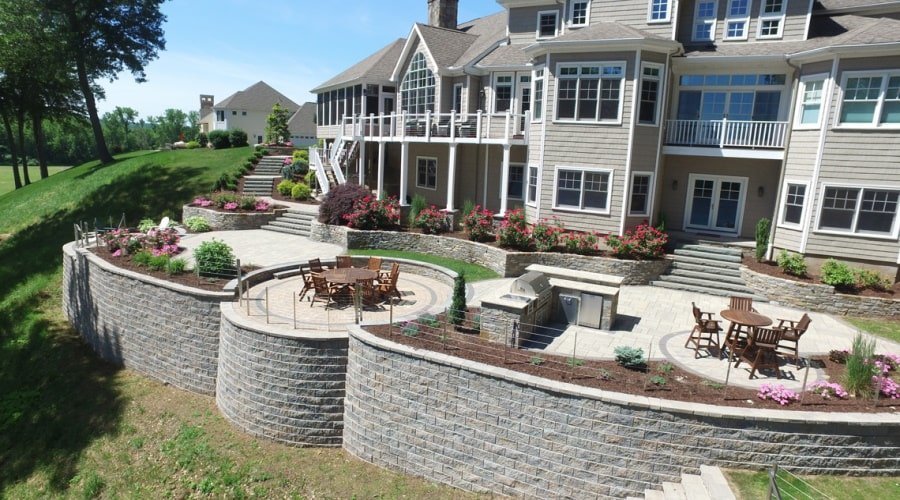
Retaining walls sit in that awkward space between landscaping and structural construction. They look simple from the outside, just a straight line holding back dirt. In reality, they carry serious loads, affect drainage, change ground levels, and can impact neighbouring properties if they are not designed and approved properly.
If you own or manage property in Perth, you cannot treat a retaining wall like a casual garden feature. Councils and insurers treat them as structural work, and that means permits, engineering, and clear responsibility when something goes wrong.
This guide walks you through how that works in Western Australia, who needs a building permit, and what to expect from the process. It is written for three groups who face the same rules but feel the pain in different ways.
- Homeowners who want their yard level, private, and safe for the kids without drama from council or neighbours
- Property developers and builders who need retaining walls signed off quickly so the schedule does not blow out
- Commercial property owners who have to control levels, access, and safety around carparks, warehouses, and public areas
If that is you, you are in the right place.
What exactly is a retaining wall?
A retaining wall is any built structure that holds back soil, fill, or other material at different levels on each side. One side is higher, one side is lower, and the wall stops that higher ground from collapsing or washing away.
Common retaining wall types you will see across Perth include:
- Panel and post systems, usually concrete sleepers between steel posts
- Masonry or block walls, often used when you want a rendered or more architectural look
- Limestone walls, popular for coastal and suburban properties
- Timber sleeper walls, often used for garden beds and smaller level changes
If a structure is built to resist sideways pressure from soil, it is a retaining wall. Garden edging that just defines a garden bed without holding back soil at different levels usually falls outside that scope. Once it starts supporting vertical height or taking load from a driveway, building, or fence, it moves into structural territory.
If you want to understand the construction side in more detail, there is a separate guide that focuses on installation, materials, and design. You can read that in the retaining wall installation guide for landscapes.
Why retaining walls matter for your property
Retaining walls are not just there to make your yard look neat. They shape how your property works day to day and how it holds up over time in Perth conditions.
1. Controlling levels and making land usable
Many Perth blocks are sloping, uneven, or stepped. Retaining walls let you cut and fill so you can create:
- Usable lawn or play areas
- Driveways and parking that sit at the right level
- Safe transitions between different floor or outdoor levels on a build
Without proper retaining, soil can creep, paths can crack, and steps or ramps can shift out of level.
2. Protecting structures and fencing
A retaining wall carries soil pressure, and often extra load from what sits above it. That might be:
- A Colorbond or slat fence line
- A shed, carport, or pool area
- A driveway used by cars and service vehicles
If the wall is underdesigned or not built correctly, you do not just lose the wall. You can lose the fence, the paving, or the structure that is relying on it to stay put. This is where engineered panel and post retaining walls make sense for many Perth properties, because they are designed from the start to take that load.
3. Managing drainage and erosion
Every retaining wall changes how water moves across your site. Good retaining design includes drainage behind the wall, controlled outlets, and finished ground levels that push water away from buildings and neighbouring boundaries.
Poorly built retaining can lead to soggy yards, washed out garden beds, subsidence, and sometimes structural damage to adjoining properties.
4. Privacy, security, and street appeal
Retaining often goes hand in hand with fencing. Raise the ground level, and suddenly a standard fence height is not legal or private anymore. Drop the ground level, and you may expose more of your yard to the street.
When you get the levels and walls right, you can:
- Achieve legal fence heights without awkward extensions
- Create clean, modern terracing that looks deliberate, not patched together
- Support feature fences, gates, or screens that add to property value
If you are planning both fencing and retaining, it pays to think about them together rather than as separate jobs. There is a detailed comparison of different fence types and how they perform in Perth conditions in the guide on types of fencing for Perth homes.
Why building permits for retaining walls are non‑negotiable
In Western Australia, retaining walls are treated as building work once they reach certain heights, carry certain loads, or affect boundaries and neighbouring land. That brings in the Building Code of Australia, local planning schemes, and council-specific policies.
A building permit for a retaining wall is there to do three things.
- Confirm structural safety. An engineer signs off that the wall can safely handle soil pressure, surcharge loads, and local site conditions.
- Protect neighbouring properties. Councils want to know that your wall will not cause subsidence, flooding, or boundary disputes next door.
- Record legal responsibility. A permit ties the work to approvals, drawings, and a responsible owner or builder. That matters if anything fails later.
If you skip the permit when one is required, you open the door to a long list of problems. Councils can order you to stop work, modify, or even remove what you have built. Selling, refinancing, or making insurance claims gets harder when unapproved structures appear on site plans or building reports.
This is why the rest of this guide spends time on when a permit is required, not just how to build the wall. The height triggers, boundary rules, and loading conditions catch a lot of owners out, especially on tiered walls or on sites where one property sits much higher than the neighbour.
What this guide will help you with
This blog is not here to drown you in legislation. You will get straight answers to practical questions like:
- When does a retaining wall in Perth actually need a building permit
- How council rules change once you get close to a boundary or public area
- What drawings, engineering, and paperwork you need before you lodge
- Who is responsible for a retaining wall that sits on or near a shared boundary
- How retaining design ties into broader landscaping, fencing, and development work
- What happens with insurance, contracts, and liability if something fails
Each section focuses on clear, practical guidance. You will see how the same rules apply across Perth, but with local twists depending on your council. You will also see how to plan retaining walls that do their job for the long term, instead of becoming a constant repair or legal headache.
If you are about to cut a site, level a backyard, build a new boundary fence, or design a multi dwelling project, treat your retaining walls as a core part of the build, not an afterthought. The permit process is only one piece of that, but it is the piece that keeps you compliant and covered.
Who actually needs a building permit for a retaining wall in Perth
In Perth, the question is almost never, “Does someone need a permit for this retaining wall” It is, “Do you need the permit for this wall on this site” The answer shifts slightly for homeowners, developers, and commercial owners, but the triggers are similar.
Here is the simple way to think about it. The more height, load, or impact on boundaries and public areas, the more likely you are dealing with a wall that needs a building permit and often engineering sign off as well.
When Perth homeowners must seek a building permit
If you own a house in Perth and you are planning to level a yard, cut in a new patio, install a pool, or tidy up an old leaning limestone wall, you sit in this category.
Homeowners usually need a building permit when:
- The retaining wall reaches or exceeds a typical council height trigger, for example around [insert height criterion], at any point along its length
- There are multiple tiers of walls that act together to hold back the same bank of soil
- The wall supports extra load on top, such as fencing, a driveway, parking bay, shed, or pool area
- The wall sits on, or close to, a shared boundary with your neighbour
- The wall is needed to stabilise cut or fill created by new building work, not just a shallow garden bed
If you are putting in a small garden edging with no significant difference in levels, and no load on top, you are often outside permit territory. As soon as the wall holds back meaningful height, supports a Colorbond fence, or changes how water drains toward a neighbour, councils will expect a proper approval trail.
Typical homeowner concerns that point straight to “get a permit” include:
- Safety, making sure the wall will not move or crack, especially where kids play or cars park above or below it
- Neighbour relations, where a shared boundary is involved and you want clear responsibility on paper
- Street appeal and value, when you are pairing retaining with new fencing or terraced landscaping to boost resale value
- Low maintenance, where you want a solid, engineered wall, such as concrete panel and post, that will not need constant patching
If you are planning retaining under or beside a new fence, it can help to plan both together. Resources like this guide on fence height regulations for Perth homeowners give you a sense of how levels, fences, and approvals interact.
When property developers and builders need a permit
Developers and builders rarely have the luxury of treating retaining as “landscaping” work. If you are cutting multiple lots, stepping foundations, or benching a sloping site to get the yield you want, retaining walls become structural elements in the development.
As a developer or builder, you should expect to need building permits for retaining walls when:
- The walls form part of the site works package to create level pads for houses, townhouses, or apartments
- You install boundary retaining that affects more than one lot or interfaces with public open space
- The walls interact with driveways, carparks, loading areas, or access ramps
- You have tiered retaining solutions across a site where each wall is under the basic height threshold, but together they hold back significant fill or cut
- The retaining is tied into structural elements of the building, for example garage walls or basement walls that also act as retaining
On multi dwelling and subdivision projects, councils and certifiers will look at retaining as part of the overall civil and structural design, not as a late add on. That means your engineering drawings need to address:
- Design heights and wall types for each stage or pad
- Drainage management behind and between walls
- Fencing or balustrade loads along the top of high walls
- Clear ownership and maintenance responsibilities between lots
The pain point for developers is usually time. You want approvals locked in early so you are not stuck on site with machinery waiting while a last minute retaining design goes through council or a building surveyor. Treat every significant retaining wall as a permit item in your program, alongside the main building permit, not as an afterthought your landscaper will “sort out later”.
When commercial property owners must obtain permits
If you run or manage a commercial or industrial property, your retaining walls are doing heavy duty work. They are often holding up carparks, truck accessways, storage yards, or steep level changes around public entry points.
As a commercial owner or manager, you will almost always need a building permit for retaining walls where:
- The wall supports vehicle loads from bays, ramps, or turning areas
- The wall is adjacent to public access zones, such as footpaths, entries, or outdoor seating
- The wall forms part of a fire escape path or affects safe egress
- The wall protects or supports structures or services, such as buildings, tanks, or utilities
- There is potential fall risk from the top of the wall to the level below, which may also trigger guardrail or fence requirements
Commercial owners are usually more exposed on liability. If a retaining wall fails and damages vehicles, stock, or injures someone on site, the question will be simple. Was the wall permitted, engineered, and constructed in line with that permit
Security fencing, such as commercial security fencing, often runs on top of retaining around industrial or retail sites. That combination of height, surcharge load, and public exposure makes permit level design and documentation non negotiable in most cases.
Common triggers that cut across all property types
The exact rules will vary between Perth councils, but some patterns show up over and over again for homeowners, developers, and commercial property owners.
Expect a building permit to be required if any of the following apply:
- The retaining wall is above a typical council height trigger at any point, not just its average height
- Multiple low walls sit close together and effectively act as one taller wall
- The wall is within a set distance of a boundary, easement, right of way, or public reserve
- The wall supports or is directly below a fence, pool barrier, driveway, carpark, or building
- The wall changes existing drainage patterns in a way that might affect adjoining land
- The wall is in a location that creates a significant fall from the upper level to the lower level
You can use a simple framework before you talk to council or a building professional. Ask yourself:
- What is the maximum height of the wall at any point
- What sits above and behind the wall that might add load
- How close is it to a boundary, building, or public area
- Will it change water flow toward neighbours or structures
If you answer “yes” to meaningful height, meaningful load, close to boundaries, or changed drainage, assume you are in permit territory. The later sections of this guide step through the specific regulations and the approval process so you can plan your wall with clear eyes, whether you are levelling a backyard or designing a large commercial site.
Understanding local regulations and legal requirements in Perth and Western Australia
Before you spend money on excavation, concrete, or panel and post systems, you need to know how the rules work in Western Australia. Retaining walls sit inside a web of national codes, state legislation, and local council policies. If you ignore that, you risk designing a wall that looks fine on paper but cannot be approved, or worse, has to be pulled out later.
The key regulatory layers you are dealing with
For any retaining wall in Perth or wider WA, you are usually dealing with three main layers of control.
- Building Code of Australia (BCA), which sets minimum structural and safety standards for building work across the country
- State legislation and building regulations, which control when a building permit is needed, who can certify, and how councils administer approvals
- Local council planning and policy rules, which fine tune things like heights, setbacks, appearance, and how close you can build to boundaries and public land
The BCA focuses on how the wall performs. It cares about structural strength, stability, durability, and safety for people using or moving past the site. State and local rules focus more on when you need permission, where you can place the wall, and what impact it has on neighbours, streetscapes, and services.
That is why two walls that look similar from the street can sit under very different approval rules. A low wall in the middle of a backyard might slip under council thresholds. The same wall on a boundary holding up a driveway and fence can trigger permits, engineering, and sometimes planning sign off as well.
Typical height thresholds that trigger permits
Height is usually the first filter councils use. Each local government sets its own thresholds, but the pattern across Perth is fairly consistent.
Common height related triggers include:
- Retaining walls above a nominated height, for example around [insert height criterion], measured from the lower ground level to the top of the wall
- Tiered walls, where two or more shorter walls sit within a certain distance of each other and effectively behave as one taller structure
- Walls that combine with fencing or balustrades to create a total barrier height above a nominated limit
Councils care about the maximum point, not the average. If most of your wall sits below the trigger but one section climbs above it due to a step or fall in ground level, the whole structure usually lands in permit territory.
Multi tier arrangements catch a lot of owners and builders out. For example, you might plan three small walls, each just under a basic height trigger, with small terraces between them. Structurally, they still hold back the same bank of soil. Many councils assess those as a single retaining system rather than three separate low walls, which means you can still need a building permit and engineering sign off.
Proximity to boundaries and neighbouring land
Boundaries are the next big trigger. Once a retaining wall moves close to, or onto, a shared boundary, the rules tighten. Councils and certifiers want to protect neighbouring properties, public land, and shared services.
Expect tougher requirements if your wall is:
- Built on a property boundary, especially where one property is higher than the other
- Within a nominated distance of a boundary, easement, right of way, or laneway
- Supporting or directly below a boundary fence, pool barrier, or security fence
- Next to public open space, footpaths, roads, or laneways used by vehicles or pedestrians
When a wall sits on or close to a boundary, councils are more likely to ask for:
- Clear survey information that defines the boundary and existing levels
- Engineered designs that consider soil on both sides of the wall
- Evidence of how drainage will avoid dumping water onto neighbouring land
- Confirmation of who owns, maintains, and carries liability for the wall
Boundary retaining also interacts with fencing rules. A high retaining wall with a Colorbond fence on top can exceed local height limits for dividing fences if not planned properly. If you are upgrading both at once, it is worth reading through resources such as retaining wall installation advice specific to Perth conditions before you lock in your design.
Structural loading and why it matters for permits
Councils and engineers look beyond the wall itself. They care about what load the wall carries, because that affects both the design and whether a permit is required.
Typical surcharge loads that change the rules include:
- Driveways, carparks, and heavy vehicle access areas above or behind the wall
- Buildings, sheds, garages, or pool shells that sit close to the edge of the retained ground
- Fencing, balustrades, or guardrails along the top of the wall, especially high or wind exposed barriers
- Stockpiles, storage yards, or regularly loaded areas in commercial and industrial settings
Under the BCA, any retaining wall that carries significant surcharge loads should be engineered. In practice, that usually means a building permit, unless your council has a specific minor works pathway.
If you are a homeowner, an example framework for identifying surcharge is simple. Ask yourself:
- Will vehicles park, turn, or drive within [insert distance criterion] of the top of the wall
- Does any structure sit near the top edge of the retained area
- Will there be a full height Colorbond or similar fence fixed on top of the wall
If you answer “yes” to any of those, assume an engineer and permit are on the cards. For developers and commercial owners, surcharge loads are almost always present in some form, particularly around parking, loading docks, and service yards, so retaining design becomes part of the broader structural package.
Zoning, planning schemes, and visual impact
The local planning scheme for your council area also shapes what you can build. Zoning, overlays, and specific local planning policies can control where and how retaining walls are used, especially near streets and public areas.
Planning related triggers for retaining walls often include:
- Retaining on street frontages that changes the visual height of the property or fence line
- Walls that alter natural ground levels by more than a set amount within nominated setbacks
- Retaining in areas with special character controls, heritage considerations, or landscape protection
- Walls that create significant level differences close to footpaths or public open space
In some cases you need both a planning approval and a building permit. The planning side focuses on appearance, streetscape impact, overshadowing, and privacy. The building permit focuses on structural safety and compliance with the BCA. You usually tackle planning first, then lodge for a building permit with the approved plans and engineering.
How local council rules play out, using a typical Perth council as a guide
Every council publishes its own retaining wall and site works guidelines. These often include diagrams, height thresholds, and setback requirements. While the exact numbers differ, the structure of the rules is similar across Perth metro councils.
Using a typical metropolitan council as a reference point, you will usually see statements along the lines of:
- Retaining walls above [insert height criterion] require a building permit
- Combined height of retaining and fencing must not exceed [insert height criterion] within front setback areas, unless otherwise approved
- Tiered retaining must be separated by a minimum horizontal distance of [insert distance criterion] to be treated as independent walls
- Retaining on or near boundaries must ensure no adverse impact on neighbouring land or structures
Some councils publish separate guidelines for residential, commercial, and industrial zones, or for areas with known soil or drainage challenges. Others fold retaining into general “site works and levels” policies.
The takeaway is simple. You cannot rely on generic height rules you heard secondhand. You need to check your specific council’s current policy before you design a retaining solution that pushes limits on height, boundary proximity, or street frontage.
What this means for Perth property owners and builders
When you put all of this together, a clear pattern appears.
You are likely in permit territory if your retaining wall:
- Exceeds a basic height trigger at any point, or forms part of a tiered system that does
- Sits on or close to a boundary, easement, footpath, or public reserve
- Supports fencing, driveways, parking, or building structures
- Alters natural ground levels within front or side setbacks in a visible way
- Creates a significant fall where someone could be injured in a fall from the upper level
If you treat those as red flags, you will avoid most of the common compliance traps that trip up homeowners and developers. From there, you can move into the actual permit process with a clear view of what your council and building surveyor expect, instead of trying to retrofit approvals onto a wall that is already built.
When you are ready to move from rules to design, it can help to pair this knowledge with practical construction guidance. The resource on panel and post retaining walls in Perth is a solid place to start if you want a system that aligns well with engineering and approval requirements across most Perth councils.
The building permit application process for retaining walls in Perth
Once you know your retaining wall needs a permit, the next step is getting it approved without dragging the project out for months. The process in Perth and across WA is structured, but it is not mysterious if you break it into clear stages.
This section walks through how homeowners, developers, and commercial owners can move from concept to approved building permit with as few surprises as possible.
Step 1: Confirm whether you need a building permit, a planning approval, or both
Before you spend money on detailed drawings, get clarity on the type of approvals you need. In WA, there are two separate streams.
- Planning approval (sometimes called development approval), focuses on how the wall affects streetscape, neighbours, and zoning rules
- Building permit, focuses on structural safety and compliance with the Building Code of Australia
You usually need:
- Only a building permit for walls that sit behind the street setback, do not alter visible site levels in a sensitive area, and comply with standard council rules
- Planning approval and a building permit where the wall changes levels near the street, affects neighbouring privacy, or pushes normal height or setback limits
For homeowners, this might be a retaining wall at the front of the block that lifts a driveway or yard. For developers and commercial owners, almost any retaining visible from the street or public areas can pull in planning, not just building.
The quickest way to confirm this is to talk to your local council’s planning or building team with a simple sketch and some level information, or to ask your designer or builder to check as part of their scope.
Step 2: Assemble the right professionals
You can lodge a retaining wall permit as an owner, but you will still need qualified people behind the paperwork. At a minimum, expect to engage:
- A structural engineer to design and certify the wall
- A surveyor where boundary location, easements, or exact levels matter
- A builder or retaining wall contractor who understands council requirements and the engineer’s design
For complex or large projects, especially for developers and commercial owners, you may also involve a building designer or architect so that retaining, buildings, and external works line up cleanly.
If you want a system that naturally aligns with engineered designs and council expectations, you can look at engineered panel and post solutions. The overview on panel and post retaining walls in Perth is a useful reference before you speak with an engineer or builder.
Step 3: Prepare the core documentation
Councils and private certifiers care about two things, where the wall sits and how it is built. Your documentation needs to answer both clearly.
For most retaining wall building permit applications, you will need:
- Site plan, showing property boundaries, existing and proposed ground levels, and the exact location and length of the wall
- Sections and elevations, showing maximum wall height, any tiered walls, and the relationship to structures, driveways, and boundaries
- Structural engineering drawings, including footing sizes, reinforcement, wall thickness or sleeper details, and any fence or surcharge loads applied to the wall
- Engineer’s certificate or compliance statement in the form your council or certifier accepts
- Drainage design, even if simple, showing how water is collected and discharged without impacting neighbours
- Survey information, where levels, boundaries, or easements are critical, especially on shared or retaining along boundaries
Homeowners dealing with smaller projects can often get a package from their retaining wall contractor and engineer that includes all of the above in a simple set. Developers and commercial owners usually fold retaining into the broader civil and structural design set so that everything is coordinated.
Step 4: Choose who will apply, owner or builder
In WA, a building permit can be lodged as either:
- Owner, where you take responsibility as the person managing the work
- Builder, where a registered builder or contractor takes responsibility as the builder on record
Homeowners sometimes apply as owner for straightforward walls inside their block. If the wall is complex, close to boundaries, or part of a wider build, it usually makes more sense for the builder to be the applicant. That keeps responsibility clean and avoids confusion with inspections or compliance.
Developers and commercial owners usually nominate their head contractor or civil contractor as the builder on the permit, because that aligns with contracts, insurance, and on site control.
Step 5: Complete the application form and attach documents
Each council has its own building permit application form, but the content is similar. You will need to provide:
- Owner details and property address
- Builder details, including registration where required
- Description of the work, clearly marked as retaining wall construction
- Estimated value of the work
- Required declarations and signatures
Attach your drawings, engineering, certificates, and any planning approval letter if planning was required. Councils and certifiers assess the package as a whole, so anything missing usually leads to a request for more information and extra time.
Step 6: Lodge the application, online or in person
Most Perth councils now accept building permit applications online, through a council portal or email submission. Some still accept or prefer in person lodgement at the customer service counter.
For homeowners, online lodgement is usually fine as long as your documents are clearly named and in the formats the council specifies. Developers and commercial owners often have larger drawing sets, so it is worth following your council’s instructions on file sizes and naming so that certifiers can navigate the package easily.
If you are using a private building surveyor where permitted, they will usually coordinate the process and lodge documents on your behalf after checking that the design meets the Building Code and local requirements.
Step 7: Pay the required fees
Building permit fees vary by council and by the value or type of work. Expect separate fees for:
- Assessment of the building permit application
- Any associated levies that apply based on project value and state regulations
The exact amounts depend on your local council’s schedule. For large or complex developments, allow extra in your budget for certification, engineering, survey work, and potential staging of approvals if the project is broken into multiple permits.
Step 8: Assessment, requests for information, and approval
Once lodged and paid, your application goes into assessment. The building surveyor or council officer will check:
- That the wall complies with structural and safety requirements
- That the design aligns with any planning approval conditions
- That boundary, drainage, and height issues have been considered properly
You may receive a request for further information, for example clarification of a height, an updated drainage note, or a revised detail near a boundary or service. Responding quickly keeps the clock moving and stops your project sitting in limbo.
Once everything checks out, the authority issues a building permit that lists the approved documents and any conditions. Keep this with your property records and give a copy to your builder or contractor, because inspections and final sign off reference this permit.
Step 9: Construction, inspections, and completion sign off
With a building permit in hand, you can build in line with the approved drawings. Changing the design on the fly without updating the permit is a common mistake, especially when someone decides to increase wall height or change materials late in the process.
During construction, your engineer or building surveyor may need to:
- Inspect footings or reinforcement before concrete is poured
- Check drainage elements such as agi drains and outlets
- Confirm final heights and locations against the plans
At the end of the job, a completion certificate or similar document is usually required from the builder and engineer. This closes out the permit and provides a paper trail that your wall was built in line with the approved design, which matters later for insurance and any future sale or refinance.
How planning permits and building permits fit together
To keep it simple, think of it this way.
- Planning approval asks, “Can you build this type of wall, in this place, at this height, within these setbacks, without unreasonably impacting neighbours or the street”
- Building permit asks, “If you build this wall, is it structurally safe and compliant with the Building Code”
You usually seek planning approval first where required. Once that is issued, your engineer and designer fine tune the structural details to match any planning conditions, then you lodge the building permit.
Situations where you are likely to need both approvals include:
- Retaining that changes ground levels near the front boundary, affecting how high fences or walls appear from the street
- Large or high walls that create privacy, overshadowing, or overlooking issues between properties
- Commercial or industrial sites where retaining shapes carparks, access, and public facing edges of the property
- Multi dwelling or subdivision projects where site works and levels are a key part of the overall planning assessment
Ignoring the planning side and going straight to a building permit is a fast track to delays, especially on sites with visible or boundary retaining. If you are unsure, ask the planning team at your council to confirm before you lock in detailed engineering.
Key tips to keep your retaining wall permit process smooth
Regardless of whether you are a homeowner, developer, or commercial owner, a few habits will save you time and stress.
- Get level information early. Accurate spot levels and boundary locations avoid redesigns when the engineer discovers the wall is higher than you thought
- Involve the engineer before you finalise layouts. A small shift in wall position can sometimes save on footing size, drainage complexity, or neighbour impact
- Confirm council rules before you design to a “heard somewhere” height. Each council sets its own triggers for retaining heights and combined fence heights
- Keep changes documented. If you adjust heights, lengths, or loads, talk to your engineer and building surveyor so the permit matches what is built
If you want a sense of how retaining design and cost interact with regulations across Perth, the guide on retaining wall costs and council regulations in Perth is a helpful next read before you commit to a design or contractor.
Responsibilities and common challenges in retaining wall construction
Once you step from “idea” to actual retaining wall construction, the big questions are simple. Who owns it, who pays for it, and who is on the hook if it fails. If you do not sort those out upfront, you are setting yourself up for neighbour disputes, council notices, and expensive fixes.
This section breaks down how responsibility usually works in Perth for homeowners, developers, and commercial owners, along with the technical problems that cause most retaining wall headaches.
Who is responsible when a retaining wall sits on a boundary
Retaining on or near a shared boundary is where most disputes start. The key idea is this. The person who changes the natural ground level usually carries responsibility for holding that ground up.
Use this simple framework when you are looking at a boundary.
- Who raised or cut the ground on their side compared to the natural level
- Who benefits most from the new level, for example extra usable yard, a higher pad, or easier access
- Where the wall sits, entirely on one title, straddling the boundary, or slightly offset
If you lift your yard above your neighbour, you usually need to retain that fill within your lot so their side stays stable and usable. If your neighbour cuts their side below yours, they usually become responsible for retaining the cut so your land does not fall into their excavation.
This is why survey levels are so important for any boundary retaining. Without a clear record of the original levels, everyone argues about what was “natural” after the fact.
Homeowners, neighbours, and shared responsibilities
For homeowners, two situations come up over and over again.
1. New retaining as part of a landscaping upgrade
You might want to flatten a sloping yard, install a pool, or raise a pad for a new patio. If that change alters levels near the boundary, you need to:
- Keep the retaining entirely on your side of the boundary, unless you have written agreement to do otherwise
- Design the wall so it can safely support any existing fence, or plan to replace the fence properly if it has to come out
- Manage drainage so you do not dump water into your neighbour’s yard
2. Existing old or failing boundary retaining
Maybe you moved into a property with a tired limestone wall or timber sleepers leaning toward the neighbour. In that case, you need to work out:
- Who originally altered the levels and built the wall
- Whether the wall sits on your title, theirs, or right on the line
- Whether the wall also acts as a footing for a dividing fence
Responsibility can be shared, especially if later work on one side has changed the way the wall performs. The safest move is to involve a surveyor and a qualified contractor, then talk to your neighbour early with a clear proposal in writing. That might include shared costs for a new engineered wall and fence, rather than patching something that has already failed.
If you are pairing new retaining with updated fencing for privacy and low maintenance, it is worth looking at options such as Colorbond fencing so you can design the retaining and fence as one integrated system.
Developers and builders, staged works, and handover
For developers and builders, retaining wall responsibility stretches across design, construction, and handover to future owners. The main traps are:
- Temporary cuts that are left unsupported longer than intended while staging changes
- Retaining on lot boundaries that is not clearly allocated in contracts or plan of subdivision conditions
- Walls specified as “by owner later” when they are actually needed to stabilise site works already done by the developer
A clean approach for new estates and multi dwelling projects is to:
- Include all necessary boundary retaining in the civil package, not in vague notes for purchasers to sort out later
- Show ownership and maintenance clearly on drawings and in sales documentation
- Ensure as constructed information for retaining goes into the handover pack for each lot or building
If you bench or fill a lot to deliver a “ready to build” pad, future owners will reasonably expect that any wall holding that pad is structurally sound and compliant. Trying to push that back to the eventual home builder or owner is where disputes, complaints, and legal claims start.
Commercial and industrial sites, duty of care, and public exposure
On commercial and industrial properties, retaining walls are often taller, carry more load, and sit closer to public access. That increases your duty of care as the owner or manager.
You are responsible for:
- Keeping retaining walls in safe condition, especially where there is a fall risk to staff or visitors
- Maintaining drainage systems behind and above walls so that water does not build pressure or cause erosion
- Ensuring any fences, guardrails, or gates fixed to the top of walls are compatible with the wall’s structural design
- Responding promptly to visible cracking, movement, or leaning with engineering advice, not just cosmetic patching
Security fencing along the top of retaining, for example garrison fencing or chainmesh, adds wind and crowd loads. Those loads need to be part of the original design. If you retrofit heavy security panels onto a wall that was never engineered for them, you take on significant risk.
Common compliance problems that cause retaining walls to fail
Most retaining walls do not collapse because the materials were weak. They fail because the design ignored basic engineering principles or the construction cut corners. Three problem areas show up constantly in Perth.
1. Inadequate drainage behind the wall
Water is the enemy of retaining walls. If it builds up behind the wall, it increases pressure, softens the soil, and looks for the weakest spot to escape. The result is often bowing, cracking, or blowouts.
Typical drainage mistakes include:
- No drainage layer behind the wall, just packed soil pressed straight against it
- Missing or undersized agg drains at the base of the wall
- No weep holes or outlets where water can relieve pressure
- Outlets that discharge onto a neighbour’s land or against another structure
A compliant design sets out exactly how water is collected, filtered, and discharged to a lawful point, such as a stormwater system or approved soakage. If your drawings are vague on this point, ask your engineer or builder to spell it out. Perth’s soil and weather patterns make poor drainage a fast way to ruin an otherwise sound wall.
If you want to go deeper on how drainage should work behind different wall types, there is a dedicated guide on retaining wall drainage solutions that focuses on Perth conditions.
2. Misjudged soil pressure and surcharge loads
Soil does not just sit there politely. It expands, contracts, and exerts sideways pressure that increases with height and moisture. Add cars, buildings, or fences above that soil and you get “surcharge” loads the wall must resist as well.
Common design and construction errors include:
- Assuming all sites have the same soil conditions and using generic “rules of thumb” instead of real engineering
- Ignoring planned driveways, carparks, or footpaths near the top of the wall when sizing posts or footings
- Swapping out specified materials, for example using thinner sleepers or lighter posts than the engineer called up
- Building tiered walls too close together, so they act like one tall wall without being designed for that combined height
This is where panel and post retaining, or other engineered systems, have a real advantage if installed correctly. The engineer designs the wall to a known height and load, then your job on site is to follow that design without improvising.
3. Poor construction quality and shortcuts
Even the best design fails if the construction is sloppy. Perth properties often suffer from:
- Shallow or inconsistent footings that do not reach the depth shown on plans
- Posts that are not set vertical, which reduces capacity and leads to uneven load sharing
- Inadequate compaction of backfill, which allows settlement and movement over time
- Unprotected steel or connections in coastal or high exposure areas
Inspections at the right time make a big difference. For any wall of meaningful height, you want eyes on the footing depth, steel placement, and drainage before everything is buried. That is where your engineer and builder need to communicate clearly about what will be checked, and when.
Legal consequences and penalties for non compliant retaining walls
Failing to get the right permit, or ignoring approved plans during construction, is not just a paperwork issue. It has real legal and financial consequences in WA.
1. Council orders and rectification costs
If council becomes aware of unapproved or non compliant retaining, they can:
- Issue a notice to stop work until approvals are in place
- Require you to obtain a retrospective permit, which often involves extra engineering and investigation
- Order modification, partial demolition, or complete removal of the wall if it cannot be approved in its current form
Retrospective approval is usually more expensive than doing it properly at the start. Walls may need invasive testing, underpinning, or full rebuilding to satisfy a building surveyor or engineer that they meet code.
2. Civil liability to neighbours and adjoining owners
If a retaining wall fails and damages neighbouring land, fences, driveways, or structures, you can face:
- Claims for the cost of repairs to the neighbour’s property
- Claims for loss of use or access while repairs are carried out
- Ongoing disputes about long term stability and drainage
Courts and tribunals will look closely at who altered the ground levels, who built the wall, whether permits were obtained, and whether the construction matched those permits. If you skipped approvals or ignored engineering, it becomes much harder to defend your position.
3. Insurance headaches and denied claims
Insurance policies often exclude damage from unapproved or defective construction. That means:
- You may not be covered for damage to your own property caused by a failing wall
- Your insurer may refuse to cover liability to others if the wall was built without permits or outside approved plans
- Future insurers and buyers may flag the property once a history of structural issues appears in reports
This is one of the less obvious reasons permits matter. A compliant retaining wall with engineering, inspections, and documented sign off is far easier to insure and to explain during future sales or refinancing.
4. Problems when you sell or develop later
Unapproved retaining walls often surface when:
- A buyer’s building inspector notes movement, cracking, or unclear ownership of boundary walls
- A bank or valuer requests permit records for significant structures
- You lodge a new application to extend, subdivide, or redevelop, and council assesses the existing site works
You can be forced to deal with old retaining problems at the worst possible time, right when you are trying to sell or start a new project. Cleaning this up can involve fresh engineering, retrospective approvals, or full replacement of non compliant walls.
How to stay on the right side of your legal responsibilities
If you want to avoid these problems, use this checklist before you build or alter any significant retaining wall on your property.
- Confirm ownership and levels. Get a survey if there is any doubt about the boundary or natural ground levels.
- Clarify who benefits and who pays. For shared boundaries, agree in writing with neighbours or other owners before work starts.
- Engage qualified professionals. Use engineers, surveyors, and contractors who work with Perth retaining walls regularly.
- Get the right permits. Do not rely on hearsay, check with your local council or a building surveyor about permit triggers.
- Build to the approved design. No on the fly changes to heights, materials, or loads without going back to the engineer.
- Keep your records. Store permits, engineering certificates, and photos of reinforcement and drainage for future reference.
If you treat retaining walls as core structural work rather than garden edging, you will avoid most of the common disputes and compliance issues Perth property owners run into. The next section looks at how to integrate your retaining with wider landscaping and development so you get both a compliant structure and a property that works the way you want.
Integrating retaining walls into landscaping and property development
If you treat your retaining wall as a separate little project, it will fight everything around it. Levels will not line up, fences will look tacked on, and you will spend years fixing drainage and cracks. When you plan retaining as part of the bigger picture, your site works, landscaping, fencing, and buildings all support each other, and you stay on the right side of Perth regulations.
Start with levels, not looks
Every good retaining plan in Perth starts with one question. What do you want the finished levels to be That single choice affects how safe the site is, where water goes, and what approvals you need.
Use this simple framework before you draw any walls.
- Define your “finished floor” or key level. For a home, that might be your alfresco, pool area, or main lawn. For a development, it is the building pads and carparks. For a commercial site, it is truck access, loading zones, or public entries.
- Work back to the boundaries. Decide whether the land will slope gently, step with tiers, or meet existing neighbour levels at a certain point.
- Mark where level changes are too steep for natural slopes. Those are your retaining wall lines.
If you skip this and “fit in a wall later”, you end up with odd step heights, illegal fence heights, awkward ramps, and walls that sit too close to boundaries to get easy approval.
How retaining walls tie into landscaping design
For homeowners and landscape designers, the temptation is to think in plants and paving first. Retaining walls need to sit underneath that thinking, literally and legally.
Plan your landscaping around these structural realities.
- Terraced yards. If you want multiple flat areas for play, entertaining, or gardens, decide how many tiers you want and how high each one will be. Councils assess tiered walls as one system if they are too close together, so this is both a design and compliance decision.
- Stairs and paths. Every step and path crossing a wall needs space, correct riser heights, and safe handrail or fence positions. That all sits easier when the wall layout is locked in early.
- Planting zones. Heavier trees and deep root systems should not sit directly above lightweight retaining. Use structural walls where you want long term trees, and softer, non structural edging around garden beds.
- Drainage and irrigation. Garden irrigation that dumps water into the back of a wall is a recipe for movement. Your retaining design should include drainage paths that your landscaper understands and works around.
If you like a clean, modern look, engineered systems such as panel and post walls pair neatly with contemporary materials, and they are designed to deal with Perth soils. The comparison in panel and post versus limestone retaining walls is worth a read before you lock in textures and finishes for your garden.
Integrating retaining with fencing, gates, and privacy
Retaining walls and fences share the same strip of ground near your boundaries, so you need to design them as one unit. Height, appearance, and structural loads all cross over.
Use this approach when you combine retaining with fencing.
- Decide your privacy outcome. For example, you might want full visual privacy in the backyard, but a lighter, more open look at the front. That steers you toward solid Colorbond, aluminium slats, or a mix of fencing types.
- Work out allowable fence heights. Local rules limit how high fences and walls can present to the street and to neighbours. When you add retaining under a fence, the combined height matters for compliance, not just the fence panel alone.
- Choose a fence system that suits the wall type. A full height steel fence needs a wall that can take wind and crowd loads. For example, Colorbond or aluminium slat fencing on top of retaining suits engineered concrete or steel post systems, not rough garden walls.
- Detail posts and fixings in the engineering. Your structural engineer should know which fence you plan to use so they can size posts, footings, and connection points correctly.
If your priority is low maintenance privacy in Perth’s climate, pairing an engineered retaining wall with Colorbond fencing installed by specialists gives you a long lasting, compliant combination that stays straight and secure.
When you must involve licensed building practitioners
In Western Australia, there is a clear line between small landscaping walls and structural retaining that demands professional involvement. Once your wall starts affecting safety, neighbours, or buildings, you should expect to bring in licensed people, even if the regulations at your council are slightly different.
Engage licensed or appropriately qualified practitioners when:
- The wall triggers a building permit based on height, load, or location near boundaries or public land.
- The wall supports, or sits directly below, a pool barrier, Colorbond fence, balcony, or security fence.
- The wall anchors or retains soil near a dwelling, garage, carport, or commercial structure.
- The site involves complex ground conditions such as soft soils, fill, or steep slopes.
- You are working on a development, subdivision, or commercial project with multiple walls and staged works.
At that point, you are not just “building a garden wall”. You are constructing structural work that must satisfy the Building Code and your permit conditions. That usually means:
- A structural engineer who designs and certifies the wall.
- A licensed builder or retaining contractor who is experienced with engineered walls and local council expectations.
- A building surveyor or certifier who checks compliance for your building permit.
Trying to save a small amount up front by skipping licensed practitioners is exactly how you end up paying for rectification, legal advice, and replacement later.
Retaining walls in residential property development
On residential developments, from duplexes to larger estates, retaining walls sit at the core of your site works strategy. The way you handle them shapes:
- How many lots you can create and how practical each one is to build on.
- Where driveways, garages, and private open space can sit.
- How much cut and fill you pay for and how many times you move the same soil.
- Whether your project runs smoothly through planning, building, and handover.
Smart developers treat retaining walls as part of the initial civil design, not a loose item for individual builders or owners to figure out later. To keep control:
- Lock in retaining lines and heights when you design earthworks and services.
- Show retaining on subdivision and landscape plans so buyers know exactly what they are getting.
- Coordinate wall locations with future dwelling setbacks, private open space, and access gradients.
- Stage construction so temporary cuts and fills remain stable and safe while different areas are built.
Every wall you control upfront is one less source of dispute, complaint, or unapproved construction after settlement.
Retaining walls on commercial and industrial sites
Commercial and industrial properties ask more from retaining walls. They need to cope with higher crowds, heavier vehicles, and stricter safety expectations. At the same time, the presentation of the site, from street front to loading dock, still matters for business image.
When you integrate retaining on a commercial or industrial project, focus on four areas.
- Traffic and access. Walls should shape safe vehicle routes and parking, not squeeze them. Check turning circles, gradients, and sight lines near wall edges.
- Public safety. Any drop that a customer, staff member, or visitor can access needs an appropriate barrier or fence. That barrier and the wall must work together structurally.
- Security. Retaining often sits under garrison, chain wire, or automated gates. Make sure the wall can carry those loads and that foundations align with gate motors and posts.
- Visual impact. Large retaining systems near streets can be screened with architectural fencing, planting, or textured finishes so the property looks intentional, not patched.
Where retaining supports security fencing, you can pair engineered walls with products like garrison fencing designed for Perth conditions, as long as your engineer includes those loads from the start.
Using retaining to improve privacy, security, and aesthetics, without breaking rules
Done properly, retaining walls do far more than hold soil. They shape how private you feel at home, how secure your business is, and how your property looks from the street.
For privacy
- Use controlled level changes and retaining to lower sightlines into your yard, rather than just chasing taller and taller fences.
- Combine solid retaining and solid fencing in high privacy areas, such as bedrooms, pools, and main outdoor living zones.
- Respect local height limits, especially at the front of the property, by balancing lower retaining with compliant fence heights.
For security
- Use level changes deliberately to reduce climbing points and casual access onto walls and fences.
- Support security fences and gates with correctly engineered walls that account for wind, tampering, and potential crowd pressure.
- Keep sightlines clear around entries and carparks so staff and visitors can see approaching vehicles and people, even where levels change.
For aesthetics and value
- Align wall lines with building edges and fencing so the site feels ordered and intentional.
- Choose retaining finishes and fence styles that suit the architecture, whether that is rendered walls with frameless glass pool fencing, or clean concrete lines with Colorbond or aluminium slats.
- Integrate lighting and planting into terraces and wall tops where safe and appropriate, instead of bolting them on as an afterthought.
Sustainable and low maintenance choices that still comply
The Perth climate punishes anything that needs constant attention. When you integrate retaining with your landscaping or development, you want solutions that respect both the environment and your time.
Use these criteria when you select wall systems and finishes.
- Durability in local conditions. Choose materials and coatings that handle WA sun, heat, and coastal exposure with minimal upkeep.
- Efficient use of materials. Engineered systems that use thinner, stronger elements with less waste can meet structural needs without excessive bulk.
- Low maintenance pairing. Combine retaining with low maintenance fencing systems such as Colorbond or aluminium that match the life span of the wall, instead of timber that will need more frequent replacement.
- Water wise design. Direct stormwater to lawful points and use planting schemes that do not require heavy irrigation against the wall face.
When your retaining wall works with your fencing, landscaping, and building layout, you get more than a compliant structure. You get a property that feels resolved, safe, and easy to live with, without constant calls to contractors every time the weather turns nasty.
Insurance, compliance, and contractual considerations for retaining walls in Perth
Permits and engineering protect more than your wall. They protect your wallet, your insurance position, and your legal footing if anything goes wrong. If you own a home, run a building company, or manage commercial property in Perth, you want your retaining walls to sit squarely inside the rules, not on the edge of them.
This section walks through how insurance, compliance, and contracts fit together so you are covered, not exposed.
How building permits support your insurance position
When a retaining wall fails, insurers look for one thing first. Was the wall built as approved, by someone qualified, with a clear paper trail. If the answer is yes, you are in a far stronger position.
A compliant, permitted retaining wall gives you three big advantages with insurers.
- Clear documentation. You have plans, engineering certificates, and a building permit that show the wall met the requirements at the time it was built.
- Defined responsibility. The permit lists an owner or builder, which helps insurers and lawyers understand who was responsible for design and construction.
- Stronger claim position. If a storm, impact, or neighbouring works trigger damage, you can show your wall was not a DIY experiment.
On the flip side, if the wall has no permit where one was required, or was obviously not built to the approved drawings, insurers can argue:
- The damage relates to defective or unapproved construction, not an “insurable event”.
- The risk was higher than they priced into your policy.
- You failed to take reasonable care to comply with building regulations.
That is where claims get delayed, reduced, or refused. A few cancelled cheques saved at permit stage can turn into a full replacement cost on your own dime later.
Domestic building insurance for residential retaining walls
For homeowners in Perth, domestic building insurance requirements can feel confusing, especially when you only want to “fix the levels” in your yard. The key is to separate two ideas, your home insurance, and any project specific building insurance tied to a contract.
1. Your home insurance and structural works
Most standard home policies expect you to declare significant structural work, especially if it involves excavation, retaining, or building close to boundaries and dwellings. If you do not, you risk problems if a claim later relates to that work.
Use this simple checklist before you start a sizeable residential retaining wall project.
- Check your policy wording for references to “alterations, additions, or structural works”.
- Tell your insurer you plan to build a retaining wall and whether a council permit is required.
- Confirm in writing whether the work is covered during construction and after completion.
If you hire a contractor, they may carry their own construction insurance, but that usually covers their liability, not your long term building cover. Your insurer still cares that the finished wall is compliant and properly approved.
2. Domestic building insurance linked to a residential contract
On certain residential building contracts above a nominated value, specific domestic building insurance products can apply to protect the owner if the builder cannot complete or rectify the work. Whether your retaining wall triggers this depends on:
- The value of the retaining work.
- Whether the wall is part of a larger residential building contract, such as a house or extension.
- Who the contracting party is and how the contract is structured.
If your retaining wall is bundled with a new dwelling, extension, or major renovation, ask your builder directly:
- Whether your contract sits inside any domestic building insurance requirements.
- Whether the retaining wall is included under that policy.
- What documentation you receive at the end of the job.
The goal is simple. You want any structural retaining that supports your home, garage, or pool recorded in the same way as other major building work, not treated as a casual landscaping extra.
Developers, builders, and contractual obligations around retaining walls
For property developers and builders, retaining walls create legal obligations well beyond the concrete you pour. Poorly drafted contracts, vague scopes, or missing approvals are exactly how disputes start with both clients and neighbours.
1. Clearly defining scope and responsibility
Every development or building contract that touches site works should answer four questions about retaining walls.
- Who designs the walls. Is it the civil engineer, structural engineer, architect, or a specialist supplier.
- Who obtains approvals. Does the builder, developer, or owner secure planning approval and the building permit for the walls.
- Who constructs which walls. Are boundary walls part of the civil package, the home builder’s scope, or left to lot buyers.
- Who owns and maintains them after handover. Are walls shared, on common property, or fully on individual titles.
If your contracts simply say “retaining by others” or “retaining as required”, you are inviting arguments later when someone’s lot cannot be used without extra structural work. Clear allocation in writing reduces that risk.
2. Linking contracts to engineering and permits
Once you know who is responsible, make sure your contracts tie directly to compliant design and approvals.
For developers and builders, good practice is to:
- Reference specific engineering drawings in your scope documents, not generic notes.
- Make permit approval a condition precedent to starting retaining work.
- Include a requirement that any design changes get engineer and, where required, certifier sign off before construction changes on site.
- Set out how as constructed documents for retaining will be handed over to owners or strata bodies.
That way, everyone is working to the same set of drawings, and any variations can be tracked. It also means your completion documentation is strong, which helps protect you long after the last progress payment clears.
3. Indemnities, warranties, and defect liability
Retaining wall defects often show up months or years after practical completion. That is where your contracts, warranties, and defect liability clauses start to matter.
When you are on the contractor or developer side, pay attention to:
- Duration of defect liability periods for structural works, including retaining.
- Any special warranties offered on wall systems, coatings, or proprietary products.
- Indemnity clauses that allocate risk for design errors versus construction errors.
When you are the client, whether as a homeowner, body corporate, or commercial owner, you want those same clauses written clearly enough that you know who you can call if a wall moves, cracks, or fails within a reasonable time frame.
Commercial property owners, compliance, and risk management
On commercial and industrial sites, retaining walls sit inside a bigger risk framework. You are not just protecting structures, you are protecting staff, visitors, and the public. That changes how you should treat design, inspection, and maintenance.
For commercial property owners and managers in Perth, build these habits into your risk management.
- Keep a compliance file for each significant wall with permits, engineering, inspection records, and photos of reinforcement and drainage during construction.
- Include retaining walls in annual safety inspections, checking for cracking, leaning, bulging, blocked weep holes, or erosion.
- Review walls when you change site use, for example adding heavier parking, new buildings, or taller security fencing above existing retaining.
- Get engineering advice before cutting or filling near an existing wall, or before retrofitting new structures onto it.
Commercial insurers expect this sort of documented care. If someone is injured near a failed wall, investigators will want to see that you took reasonable steps to keep the structure safe and compliant.
How proper permitting protects you legally and financially
Permits are more than council stamps. They are a structured way to reduce your long term risk. When a retaining wall is properly designed, approved, and constructed, it gives you leverage in four key situations.
1. Neighbour disputes
Boundary retaining causes tension when levels, fences, or drainage affect both properties. If you have a properly permitted wall, with clear drawings and engineering, you can show:
- The wall sits where it was approved to sit.
- The heights, drainage, and fence loads match what council or a certifier signed off.
- You did not unilaterally change levels or structures after approval.
That does not guarantee perfect neighbour relations, but it gives you a strong, factual base if the dispute escalates to formal complaints or legal processes.
2. Structural failures or damage events
If a storm event, tree fall, collision, or nearby excavation damages your wall, the claims process will ask three things.
- Was the wall structurally adequate in the first place.
- Did you maintain it reasonably.
- Did someone else’s actions cause or contribute to the failure.
An approved, engineered design and permit history help you answer the first point cleanly. Maintenance records and inspection notes help with the second. That shifts the focus back onto the actual event, not old shortcuts.
3. Future development, subdivision, or refinancing
When you go to extend, subdivide, or refinance, existing retaining walls come under fresh scrutiny from planners, building surveyors, valuers, and lenders. If your walls are compliant and documented, you:
- Reduce delays when planning officers assess proposed new levels and works.
- Give valuers confidence that structural risks are managed properly.
- Avoid last minute conditions to “regularise” old unapproved work.
Developers in particular can avoid headaches by controlling permits and documentation for retaining from day one, then packaging those records with contract and handover documents for buyers. Strong paper trails support stronger sale prices and smoother settlements.
4. Selling your home or commercial property
Buyers and their inspectors look hard at retaining walls, especially taller ones with fences or structures above. If they see movement or unclear ownership, they start asking for discounts or rectification before settlement.
When you can produce:
- Approved plans and permits for the walls.
- Engineering certificates and completion documents.
- Photos during construction showing steel, footings, and drainage.
The conversation changes. Instead of arguing that “the wall has always been fine”, you can show that it was professionally designed and approved. That reduces the fear factor for buyers and keeps negotiations from spiralling over structural uncertainty.
Practical steps to keep yourself protected
If you want to sleep at night knowing your retaining walls are an asset, not a liability, use this framework before you start and after you finish any significant wall in Perth.
- Before design: Confirm permit triggers with your council or building surveyor, then engage an engineer who knows local soil and wind conditions.
- Before construction: Make sure contracts, insurance arrangements, and approvals clearly show who is responsible for what, including boundary walls.
- During construction: Stick to the approved design, document inspections and variations, and photograph reinforcement, footings, and drainage before they are covered.
- On completion: Collect completion certificates, updated engineering if required, and any warranty information for systems or finishes.
- Ongoing: File everything safely, monitor walls as part of your regular property checks, and get early advice if you see movement or drainage issues.
If you want to understand how quality, engineered retaining can reduce long term risk and cost, have a look at this guide on why investing in quality retaining walls saves money over time. When you combine that kind of build quality with proper permits, contracts, and insurance, you are in the best possible position legally and financially.
Tips for choosing professionals and ensuring quality retaining wall construction in Perth
Good engineering and the right approvals mean nothing if the people on site cut corners. If you want a retaining wall in Perth that stays straight through heat, winter rain, and the odd freak storm, you need three things working together. A switched on engineer, a builder or retaining contractor who respects the drawings, and a surveyor who keeps boundaries and levels honest.
This section gives you a practical way to pick those people and manage them so you end up with a compliant, durable wall, not a future problem hidden under soil and paving.
Start with the right structural engineer
The engineer is the one person you cannot afford to get wrong. They decide how deep the footings go, how big the posts are, what sleepers or blocks you can use, and how the wall copes with Perth’s soil and weather.
Use this checklist when you choose an engineer for a retaining wall in Perth.
- Local soil and site experience. Ask what types of Perth sites they design for regularly, such as coastal sands, clay areas, or lots with fill. You want someone who can read your soil report or site conditions and adjust the design, not just stamp a generic detail.
- Proven retaining wall design work. Confirm that retaining walls, not just houses or sheds, are part of their regular workload. Retaining needs different thinking about lateral pressure, drainage, and tiered systems.
- Clear, buildable drawings. Ask to see a sample retaining wall detail, with footing sizes, steel layout, drainage, and fence loads shown clearly. If you struggle to read it, your contractor will too.
- Willingness to coordinate. The engineer should be ready to talk to your builder, retaining contractor, and surveyor. Simple phone calls between them save a lot of on site guessing.
- Understanding of local councils. They should be familiar with typical height triggers, boundary expectations, and what Perth councils expect to see on drawings when you lodge for a building permit.
If you plan to use an engineered system such as panel and post retaining, choose an engineer who is happy to design around that product, not one who forces a different system that does not suit your site. You can also speak with a specialist installer that focuses on retaining walls, for example through a service like engineered retaining wall installation in Perth, then have your engineer design specifically to that system.
How to vet retaining wall builders and contractors
The best design falls apart if the builder ignores it. You want a contractor who treats your wall like structural work, not decorative garden edging. That applies whether you are a homeowner with a single wall or a developer managing hundreds of metres of boundary retaining.
Look for these traits in a builder or retaining wall contractor.
- Relevant licence and insurances. Check that they are appropriately licensed for structural work in WA and carry current insurance. For significant walls, avoid pure “landscapers” who only ever build small, non structural walls.
- Specific retaining wall experience. Ask what types of walls they build most often, such as concrete panel and post, limestone, block systems, or proprietary sleepers like Alumawall. Walls that support fences, driveways, or structures need a contractor familiar with those loads.
- Comfort with engineered work. Ask them straight up how they handle engineering drawings. You want to hear that they follow the plans, call the engineer if site conditions shift, and do not change footing depths or post sizes on the fly.
- Quality control habits. Ask how they check footing depths, post alignment, and drainage. A good contractor will talk about string lines, level checks, compaction, and taking photos before backfilling.
- Experience with Perth councils. Builders who regularly work across Perth know how inspections work, what documentation councils expect, and how to avoid common compliance arguments.
For homeowners, it is often smart to use a single contractor for both retaining and Colorbond or aluminium slat fencing, so you have one responsible party along the boundary. A specialist firm that already installs Colorbond fencing with structural retaining walls in Perth will usually have tighter processes around posts, levels, and drainage than a contractor who only ever deals with low garden walls.
Questions to ask before you sign anything
Whether you are talking to an engineer, builder, or surveyor, the right questions up front tell you a lot about how they work. Use these as a filter.
Key questions for engineers.
- How will you get the site information you need, such as soil type, groundwater, and existing levels.
- How will you allow for surcharge loads from cars, fences, or buildings near the wall.
- What drainage details will you include, and how do you expect the contractor to build them.
- Will you be available to answer questions during construction or adjust the design if site conditions are different to what we expected.
Key questions for builders and retaining contractors.
- Can you walk me through your typical process from excavation to backfill for a retaining wall of this height.
- How do you keep footing depths and post spacing accurate on sloping or uneven ground.
- What photos or inspection records will you keep before concrete and backfill go in.
- How do you coordinate with the engineer if you hit soft ground, rock, or unexpected services.
- What is excluded from your price, such as extra excavation, rock removal, or changes required by council or the engineer.
Key questions for surveyors.
- How will you mark the boundary so the wall sits on the correct title.
- Can you provide spot levels or a contour plan so the engineer can see maximum wall height along the run.
- Will you return after construction if we need a set out or as constructed check for council.
The goal is simple. You want people who are comfortable with scrutiny, not defensive about basic process questions.
Warning signs that a contractor will cut corners
Some red flags show up often in Perth when people quote on retaining work. If you hear any of the following, slow down.
- “You do not really need engineering, we do it this way all the time.” That usually means they have been getting away with it, not that it complies with current rules.
- “We can shave some depth off the footings to save cost.” Footings and post embedment are not the places to save money in a structural wall, especially one carrying fences or driveways.
- “We will figure the drainage out on the day.” Drainage should appear on drawings and in the quote. Guesswork in the trench is exactly how walls fail after a few winters.
- “No need for council, they will never know.” Councils, neighbours, and insurers do find out, usually when something moves or when you go to sell or develop.
- Vague or missing written scope. If the quote does not spell out wall height limits, lengths, materials, and what happens if you change the design, expect arguments and extras later.
If a price seems far below others, check what is missing. Often the cheapest quote has no allowance for permits, engineering, survey work, or proper drainage. Those are the exact items that protect you over time.
What “quality construction” actually looks like on site
You do not need to be an engineer to tell if your retaining wall is being built with care. There are visible signs that the crew knows what they are doing.
- Accurate excavation. Trenches have consistent depth and width, with clean sides. You do not see posts shoved into random, shallow holes or uneven benching.
- Correct reinforcement placement. Steel sits on chairs, not in the dirt. Spacings match the engineer’s drawing, and lap lengths are respected.
- True post alignment. Posts line up straight along a string line, both in plan and height. Slight adjustments happen before concrete sets, not after.
- Visible drainage elements. You can see agi pipe, gravel envelopes, filter fabric, and weep holes before backfilling. These match what the plans show, not whatever was cheaper at the supplier that week.
- Layered, compacted backfill. Soil or clean fill goes back in lifts, with obvious compaction, rather than being dumped in one go and left loose.
If you are a homeowner or commercial owner, it helps to be on site for at least two moments. When footings and steel are ready, and when drainage is installed but still exposed. Take photos from different angles. Those images become part of your record if anyone questions the wall later.
Making sure everyone understands Perth’s weather and ground conditions
Perth retaining walls face a tough mix. Hot sun, drying soils, coastal wind in many suburbs, and winter rain that can dump a lot of water into backfill in a short time. Your professionals need to design and build for that reality.
Ask your team how they address local conditions.
- For heat and movement, how do they deal with soil shrink and swell around the footings, especially in clay or mixed fill areas.
- For heavy winter rain, what is the plan for getting water out from behind the wall into lawful drainage points, not just into your neighbour’s yard.
- For wind, how do they size posts and fixings when you add full height Colorbond, aluminium slats, or glass fencing along the top of the wall.
- For coastal or exposed sites, what corrosion protection do they specify for steel posts, connections, and fixings.
If the answers sound generic, push for specifics. Professionals who work across Perth every week can explain exactly how they shift footing sizes, sleeper types, or coatings to suit different suburbs and soil types.
Coordinating engineers, builders, and surveyors so your permit matches the wall
Many compliance problems come from one simple mistake. The permit drawings show one thing, and the wall on site ends up slightly different. Heights creep, wall lengths change, or fences move. You can avoid most of that with basic coordination.
Use this simple coordination framework.
- Fix the design before you lodge. Agree on final wall locations, heights, and any fencing loads with your engineer and builder before the building permit application goes in. Do not keep “tweaking” layouts after the permit is issued unless you are ready to vary the permit.
- Share the same drawings. Make sure your builder, contractor, and surveyor all work from the same stamped plans that sit behind your permit. No old sketches, no separate “contract set” that differs from the approved set.
- Plan for set out. Ask the surveyor to mark critical points, especially on boundaries, complex corners, or tiered walls. That avoids guesswork that could push the wall off title or closer to a neighbour than the permit allowed.
- Update engineering if conditions change. If you uncover soft soil, rock, or services, stop and get revised instructions from the engineer. Record any changes in writing and keep them with your permit records.
- Close the loop with completion documents. At the end of the job, get final certificates or sign offs from the engineer and builder that confirm the wall matches the approved design or any documented variations.
For larger developments and commercial sites, it can help to nominate one person, often the project manager or superintendent, to be the single point of truth for drawings and approvals. Their job is to stop different trades editing the design by accident.
When to walk away and get a second opinion
If something does not feel right, trust that instinct. Retaining walls are expensive to fix once they are built and backfilled, so it is better to hit pause early.
Consider getting a second opinion from another engineer or contractor if you notice:
- Repeated resistance to following approved plans or engineering.
- Visible shortcuts, such as missing drainage, shallow posts, or poor compaction.
- Pressure to skip permits, inspections, or certificates “to save time”.
- Unwillingness to put variations or design changes in writing.
For homeowners in particular, a quick paid review of plans or site photos by an independent engineer can save a lot of grief. Developers and commercial owners usually have this baked into internal QA processes, but it is worth checking that retaining walls are included in those checks, not treated as minor landscaping.
When you choose professionals who know Perth conditions, respect engineering, and are comfortable with permits and inspections, you dramatically lift your chances of getting a retaining wall that stays where it should, looks good with your fencing and landscaping, and satisfies councils and insurers for years to come.
Avoiding common pitfalls and building retaining walls that last in Perth
You can do everything “by the book” on paper and still end up with a wall that moves, cracks, or lands you in a dispute. The problems usually show up in the gaps, where timing, communication, or short term thinking gets in the way of solid planning.
This section walks through practical ways to avoid the mistakes I see over and over again across Perth, and how to set your retaining wall up for long term success, not just first year compliance.
Apply for permits early, not when the excavator is on site
Most headaches start because the permit is treated as an afterthought. Someone books machinery, cuts the site, then realises the wall needs approvals and engineering.
Use this simple timing pattern.
- Concept stage. As soon as you sketch level changes or think about cutting and filling, assume you will need a retaining solution and ask your council what triggers apply.
- Preliminary design. Get basic levels from a surveyor and talk to a structural engineer about wall types, heights, and likely permit needs.
- Final design and approvals. Lock in heights, locations, and fence loads on the drawings, then lodge the building permit (and planning approval if needed) before you lock dates with contractors and equipment.
If you are planning new fencing at the same time, factor that into your schedule as well. A guide like types of fencing for Perth homes can help you choose systems that sit comfortably on retaining and pass local rules, before you commit to designs that complicate approvals.
What early permits actually save you from.
- Paying for machines to sit idle while drawings get revised for council.
- Being forced into “retrospective approval” with extra engineering and tests.
- Having to redesign fencing, gates, or landscaping because wall heights changed under pressure.
If you are a developer or commercial owner, treat retaining permits as part of your base program, not a variation. If you are a homeowner, do not start major excavation on a weekend and hope to “sort the paperwork on Monday”. That is exactly how walls end up the wrong height, in the wrong place, or impossible to approve.
Talk to council and neighbours before problems exist
Silence creates most of the conflict around retaining walls. Councils get annoyed when they see walls halfway built with no permit. Neighbours get annoyed when their yard suddenly looks into a bare bank of soil or a tall wall on the boundary.
How to communicate with council the smart way.
- Prepare a simple sketch with heights, distances to boundaries, and where fences will sit.
- Book a quick conversation with the building or planning team and ask direct questions about height triggers, combined fence and retaining limits, and any front setback requirements.
- Confirm key points in email, so you have a written record of what they advised before you pay for detailed engineering.
Council staff appreciate clear information and a proactive owner or builder. It tells them you intend to comply, which usually makes assessments smoother.
How to keep neighbours on side.
- Show them plans and levels before you build, especially for boundary walls or big level changes.
- Explain who is paying for what in plain language and put any shared cost agreements in writing.
- Discuss fence upgrades at the same time, for example swapping an old timber fence for Colorbond on top of new retaining.
If you are considering a low maintenance fence with your wall, resources like Colorbond versus timber fencing can help you and your neighbour choose a system you both can live with for the long term.
Clear conversations early mean fewer emails with “cc: council” later.
Plan tiered and complex retaining properly, not as a stack of “short” walls
Multi level or tiered retaining looks neat and can work well on sloping Perth blocks, but it is also where a lot of owners and builders try to “dodge” height triggers.
Councils and engineers do not care how many separate walls you count if they all hold back the same mass of soil. They look at how the system behaves as a whole.
Use this framework to design tiered walls that work and comply.
- Define total height. Measure from the lowest finished ground level to the top of the highest retained level. That is the effective height your design and permit need to deal with.
- Choose the number of tiers. Decide how many platforms you actually need for useable space, not just to chase an arbitrary “height under trigger” figure.
- Set horizontal spacing. Give each tier enough flat ground between walls for safe use, access, and planting, and to avoid the walls acting like one single tall wall structurally.
- Coordinate stairs and access. Plan steps and paths into the engineering so terraces are accessible without awkward, non compliant runs of steps or steep ramps.
Common mistakes with tiered walls include:
- Making terraces too narrow to use, which tempts people to fill them back in, changing heights after approvals.
- Placing walls too close together so the upper wall pushes extra pressure onto the lower without being designed for it.
- Forgetting that fence heights on the top tier look much higher from the bottom level, which can trigger planning issues.
If your site is steep, or you are juggling driveways, garages, and outdoor areas, put tiered retaining in front of an engineer early. They can help you decide whether fewer, stronger walls or more, lower walls give you the safest and most buildable outcome.
Choose materials for Perth’s climate and your lifestyle, not just the quote
Perth’s heat, UV, and coastal air punish cheap or high maintenance materials. You need to think beyond the upfront bill and match the wall system to how you actually live or operate the property.
Key criteria for sustainable, low maintenance retaining choices.
- Durability in WA conditions. Look at how the material handles prolonged sun, sudden heavy rain, and, if you are nearer the coast, salt exposure. Engineered concrete or quality composite sleepers often win here.
- Corrosion protection. If your design uses steel posts or reinforcement, confirm coatings or galvanising levels are suitable for your exposure category, not just “standard”.
- Compatibility with fencing. If you plan Colorbond, aluminium slats, or security fencing on top, pick a wall system that already works well with those loads and fixings.
- Water wise design. Direct captured water to lawful points and avoid designs that need constant irrigation right on the wall face.
- Maintenance effort. Ask yourself how often you realistically want to paint, oil, or repair. If the answer is “not often”, avoid solutions that rely on regular coatings or that are prone to rot or termite issues.
If you are a homeowner who values low upkeep and a clean look, pairing an engineered retaining system with Colorbond or aluminium fencing often gives a better long term balance of cost, privacy, and maintenance than softer options.
Design drainage as part of the wall, not as an afterthought
Most early wall failures in Perth come back to water. The structure itself is often strong enough, but trapped water multiplies the pressure behind it or washes out the base.
Non negotiable drainage habits.
- Always include a free draining gravel layer behind the wall, not just compacted soil against the back.
- Install perforated drains at or near the footing, wrapped in filter fabric and graded to an outlet.
- Give water a lawful discharge point, such as stormwater infrastructure, not the neighbour’s garden or your own slab edge.
- Protect weep holes and outlets from blockage by soil, mulch, or paving.
- Coordinate garden irrigation to avoid constant saturation of the backfill.
When you review your engineer’s drawings, look for drainage notes and details. If they are missing or vague, ask questions. It is much cheaper to add correct drainage in the design than to dig out and rebuild a wall after a few wet seasons.
Think about long term movement, not just “will it stand up today”
Soils across Perth move. They expand and contract with moisture and heat, and fill behaves differently from undisturbed ground. A wall that looks rock solid just after installation can lean or crack over time if the design ignores that movement.
Plan for movement and settlement.
- Follow the engineer’s footing depth and width exactly, especially in fill or clay areas.
- Avoid loading the wall immediately with heavy paving or structures until concrete has cured and initial settlement has occurred.
- Keep heavy vehicles and machinery away from the edge of new walls until the engineer confirms it is safe.
- Allow for expansion joints or articulation points where long runs of wall meet buildings or stiff structures.
If you see early cracking or leaning, treat it as a warning, not “just cosmetic”. Get a structural opinion while the problem is small and often fixable, rather than waiting until the whole run has moved.
Future proof your wall for changes you know are coming
You might build the wall now and add other features later. If you know what is coming, design for it from the start rather than trying to bolt it on afterwards.
Common future additions to plan for.
- New or higher fencing. If you plan to upgrade from a light fence to Colorbond or aluminium slats, tell your engineer now so the wall can handle the extra load.
- Pool or spa. If you suspect you will add a pool in a few years, leave yourself room for compliant pool fencing and access without cutting into the wall or overloading it.
- Driveway upgrades. If you might switch from light car access to heavier vehicles or trailers, design the wall footing and backfill for those possible surcharge loads.
- Outbuildings. Sheds, studios, or small commercial structures near the wall edge need consideration in the initial wall design.
A quick conversation now between you, your engineer, and your builder about likely future uses can save you from expensive retrofitting, underpinning, or full wall replacement.
Build a simple maintenance routine into your property plan
Even the best retaining wall needs occasional checks. A light maintenance routine catches issues early and keeps insurers and councils comfortable that you are doing your part.
Use this retaining wall maintenance checklist once or twice a year.
- Inspect visually. Walk the length of the wall and look for new cracks, bulging, or leaning. Compare to old photos if you have them.
- Check drainage. Make sure weep holes are clear and outlets are not blocked by soil, roots, or debris.
- Look at the ground above. Check for new loads, such as vehicles parking closer to the edge, or new garden features right at the top of the wall.
- Check fences and fixings. Make sure fence posts and rails on top are solid and do not show signs of pulling away from the wall.
- Monitor after heavy rain. After big downpours, look for signs of erosion, scouring, or water pooling that you did not see before.
If anything changes noticeably, get advice before it worsens. That is especially important for commercial sites and multi dwelling developments where many people use or pass near the walls every day.
Keep a record so future you is not guessing
One of the most overlooked “pitfalls” is having no idea what is actually inside the wall five or ten years later. That matters when you want to sell, renovate, or claim on insurance.
At the time of construction, save.
- Approved drawings and permits.
- Engineering certificates and any variation instructions.
- Photos of footing trenches, reinforcement, and drainage before backfill.
- Invoices and contracts that name the builder and engineer.
Store these with your property records, not in an inbox that disappears. Future owners, certifiers, or insurers will thank you, and so will you when you come back to the wall years later to tie in new work.
When you combine early permits, open communication, sound planning for complex walls, and smart material choices that suit Perth conditions, your retaining wall moves from “potential problem” to quiet workhorse. It supports your fences, gardens, and structures without fuss, it passes regulatory checks, and it keeps doing that long after the concrete has cured and the machinery has left your site.
Conclusion and next steps for your retaining wall project in Perth
If you have read this far, you already understand one thing clearly. A retaining wall on your property is not just a line of blocks or sleepers. It is structural work that affects safety, neighbours, drainage, fencing, insurance, and the long term value of your home or development.
When you respect that and treat the wall like the structural element it is, everything gets easier. Councils are happier to approve it. Engineers are clearer about what they are designing. Builders know exactly what they are responsible for. Insurers have fewer excuses to push back. Most importantly, you get a yard, development, or commercial site that works the way you want, without constant repairs or disputes.
The key points to take with you are simple.
- Retaining walls in Perth often need a building permit, and sometimes planning approval, once you add height, boundaries, or load from fences, driveways, or buildings.
- Ignoring permits or engineering does not just risk a fine. It risks structural failure, neighbour claims, and insurance problems later.
- Responsibility usually follows the person who changes the ground level, especially on or near boundaries, so you want that recorded and approved.
- Good design ties your retaining, fencing, drainage, and landscaping together, so the whole property feels deliberate, safe, and low maintenance.
- Using qualified local professionals who understand Perth councils and soil conditions is not a luxury, it is part of doing the job properly.
Whether you are levelling a backyard in the suburbs, benching multiple pads on a subdivision, or controlling levels around a busy commercial carpark, the rule is the same. Take retaining walls seriously up front so you never have to think about them again.
You are not expected to know every clause and regulation. You just need to take the right next step for where you are now.
Your immediate next steps as a Perth property owner or builder
You do not need to turn this into a research project. Use the frameworks in this guide, then move to action with a few clear decisions.
1. Work out if you are in “permit territory”
- Look at your planned wall height at its maximum point, not the average.
- Note anything that will sit above or behind it, such as Colorbond fencing, a driveway, a shed, or a pool.
- Measure how close it is to a boundary, building, driveway, or public area.
- Think about whether it will change drainage toward neighbours or structures.
If you tick height, load, boundary, or drainage, treat it as a permitted retaining wall, not a casual garden edge.
2. Contact your local council early
Do this before you book excavation or order materials.
- Prepare a simple sketch of your site with approximate heights and distances.
- Call or visit the council building or planning team and ask directly about retaining wall permit triggers and any combined wall and fence height limits.
- Confirm in writing which approvals you will need. That might be a building permit only, or planning plus building.
One short conversation can save weeks of redesign and a lot of money.
3. Line up the right professionals
At a minimum, you should have:
- A structural engineer who regularly designs retaining walls in Perth.
- A builder or retaining wall contractor who is happy to work to engineered drawings.
- A surveyor if you are near boundaries, easements, or steep level changes.
If you know you will also be installing boundary fencing, it often makes sense to speak with a specialist who handles both retaining and fences. A team like Stag Fencing can help you design a combined solution so your wall and Colorbond or aluminium fencing work as one system instead of fighting each other.
4. Decide who will handle the permits
Someone needs to take ownership of the paperwork.
- Homeowners can lodge permits themselves, but many prefer to have the builder or retaining contractor act as applicant.
- Developers and commercial owners usually nominate the head contractor or civil contractor as builder on the permit, to keep liability and communication clean.
Make this part of your written agreement, along with who pays any permit and engineering fees.
5. Lock in the design before you build
- Freeze wall heights, locations, and fence loads on the engineer’s drawings.
- Get the building permit issued before excavation or footing work starts.
- Share the stamped drawings with everyone on site, and avoid ad hoc changes without going back to the engineer.
When the design, permit, and construction all match, you stay on solid legal and structural ground.
When you should get personalised advice
This guide gives you the frameworks. It cannot replace site specific advice for the exact ground, levels, and structures you are dealing with. You should involve a professional and get tailored guidance if:
- Your wall will be near a boundary and one property is significantly higher than the other.
- The wall will support Colorbond fencing, heavy vehicle access, a pool, or part of a building.
- Your site involves fill, soft soils, steep slopes, or visible cracking in existing walls.
- You are working on multi dwelling, subdivision, or commercial projects with multiple walls.
That might mean a call to council, a quick design meeting with a structural engineer, or a site visit from a retaining wall and fencing contractor who works across Perth regularly.
Ready to move from research to action
If you want a retaining wall that holds its ground, keeps your neighbours and council off your back, and sets you up for clean fencing and landscaping, now is the time to act, not just read.
- If you are a homeowner, start by sketching your levels, speaking to council, then getting a quote from a contractor who understands permits, engineering, and low maintenance fencing. You can request a retaining wall quote directly through Stag Fencing’s retaining wall quote form if you want a Perth team that handles both structure and finish.
- If you are a developer or builder, treat retaining walls as part of your core civil and structural package. Lock them into your program and approvals early so they never stall the broader project.
- If you own or manage a commercial property, review existing walls and plan any upgrades with engineering and compliance in mind, not just appearance.
You do not have to become an expert in codes and regulations. You just need to be the person who asks the right questions early, chooses the right professionals, and insists on permits and engineering where they are due.
Do that, and your retaining walls will do exactly what they should. They will make your land more useful, keep your property secure and private, and stay quietly in the background while you get on with using the space you have created.