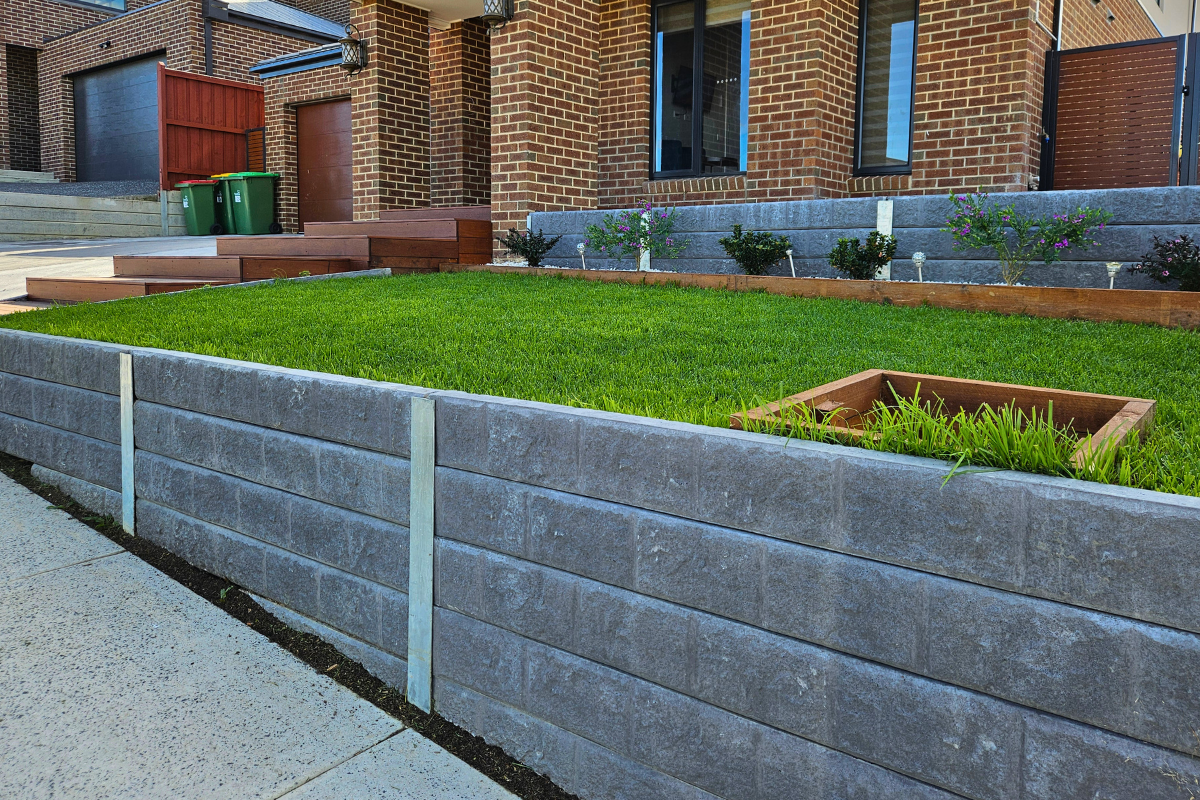
Retaining wall council approval in Perth is not red tape, it is risk management for your property.
If you own or manage property in Perth, chances are you will deal with a retaining wall at some point. Maybe you are cutting into a sloping block for a new build, trying to stop soil pushing against your boundary fence, or cleaning up old, tired brickwork that is starting to lean. Whatever the reason, once you talk about holding back soil, you are in retaining wall territory, and that brings the local council into the picture.
This guide walks you through how council approval fits into that process so you can plan properly, avoid nasty surprises, and protect the value of your property.
What is a retaining wall, really?
A retaining wall is any structure that holds back soil, sand, or fill that would naturally move or slump without support. It is not just a decorative garden edge.
In practical terms, a retaining wall might be:
- A concrete, limestone, panel and post or block wall holding up a raised yard or garden
- A wall supporting a driveway or parking area that sits higher than the natural ground
- A boundary wall that retains your neighbour’s higher yard or your own raised pad
- A structural wall near a pool, building, warehouse slab, or access ramp
Once that wall is doing structural work, for example supporting height differences, nearby buildings, fences, or public areas, it stops being a simple landscaping feature. That is why councils in Perth treat retaining walls as regulated structures, similar to sheds, decks, pool fences, and other built elements that can affect safety and neighbouring properties.
If you want a deeper look at how different retaining wall systems work on Perth blocks, you can read our practical guide here: retaining wall installation guide.
Why do Perth councils care about retaining walls?
Councils are not trying to make your life difficult. Their job is to reduce risk to people and property across their area. Retaining walls can fail in messy and expensive ways if they are not designed, drained, and built correctly, especially in local soil and weather conditions.
Council approval sits in the middle of three priorities.
1. Safety for people on and around your property
A poorly built retaining wall can:
- Collapse or crack under pressure from soil and water
- Undermine fences, driveways, or structures sitting close to the edge
- Drop soil, rocks, or debris onto paths, carparks, or play areas
- Create fall hazards if there is a big height difference with no barrier
For homeowners, that risk often sits right where your kids play or where guests walk. For commercial properties, it can affect staff access, customer areas, or vehicle movements. Council approval helps ensure an engineer has thought through loading, footing depth, and drainage so the wall can cope with real conditions, not just look good on day one.
2. Durability in Perth soil and weather conditions
Perth soils can be reactive, sandy, or fill that has been moved and compacted over time. On top of that, you get hot, dry summers, heavy bursts of rain in winter, and sometimes poor surface drainage from neighbouring properties. All of that punishes a retaining wall.
Through the approval process, councils look for:
- Correct material selection for the site conditions
- Sufficient footing size and reinforcement
- Proper drainage behind the wall so water pressure does not build up
- Suitable backfill materials and compaction
If these are not thought through, you can end up with bowing panels, leaning posts, or cracked masonry that costs far more to fix than doing it right the first time.
3. Protecting property value and neighbour relationships
Retaining walls often sit on or near boundaries. If they move, fail, or block drainage, disputes start fast. Councils want to reduce that by making sure the wall:
- Respects boundary lines and height relationships
- Manages stormwater so it does not push into someone else’s yard or building
- Integrates properly with fencing or other structures on top
- Looks appropriate for the streetscape or development
From a resale point of view, a compliant, engineered retaining wall is a selling point. Buyers, builders, and their inspectors look closely at structural elements. If they see movement, cracking, or no paperwork, they start factoring in demolition or replacement costs.
On the flip side, if you have approvals, plans, and engineering certificates, you can show that the work was done correctly. That can help you avoid price drops or conditions at settlement.
Why retaining wall council approval is usually necessary in Perth
Each local government across Perth has its own planning scheme and building rules, but the pattern is similar. Once a retaining wall reaches a certain height or supports particular loads, the council requires formal approval.
From a practical viewpoint, approval is usually needed when a wall:
- Retains a noticeable height difference between two levels of ground
- Sits on or very close to a boundary or shared fence line
- Is near a building, pool, driveway, or accessway
- Forms part of a new development, subdivision, or commercial project
- Replaces a failed wall that already had an approval requirement
The rules can change depending on local policy, zoning, and how your site is classified, which we will break down in later sections. For now, the key point is this. If your wall is doing real structural work, you should assume you will need some form of approval or sign off and confirm that with your local council before building.
The risks of bypassing council approval
Skipping approval might feel faster in the short term, but it usually backfires. Here is what you risk when you build or modify a retaining wall without council involvement.
1. Legal and compliance trouble
- You may be ordered to stop work until approvals are in place, which stalls your project.
- Council can require you to modify or demolish non compliant walls.
- You might end up paying for urgent engineering assessments and rectification under pressure.
For developers and commercial owners, that also feeds into project delays, contract disputes, and reputational issues with clients and tenants.
2. Financial pain that dwarfs the approval cost
When a non approved retaining wall fails, the costs compound fast.
- Demolition of the failed wall and removal of spoil
- New engineering design and council application fees
- Rebuilding with the right system and materials
- Repairing damaged fences, paving, driveways, gardens, or structures nearby
Insurance can also get complicated. If the wall was built without approvals or against known requirements, your insurer may push back hard on claims related to that failure.
3. Headaches when you sell or refinance
Unapproved structures are a red flag for buyers, their settlement agents, and lenders. They often trigger:
- Requests for retrospective approvals or structural reports
- Conditions on the sale contract requiring you to fix or certify the wall
- Lower offers if buyers expect future rectification costs
If you are a developer, repeated issues with unapproved or non compliant walls can also affect your future dealings with council and your ability to move quickly on future projects.
Why taking approval seriously pays off
When you design, approve, and build a retaining wall properly, you get more than a tick from council.
- Safety peace of mind, you know the wall is engineered to handle real pressures, not just guesswork.
- Longevity, with correct drainage and materials, you avoid constant repairs and sagging structures.
- Cleaner boundary lines, less chance of disputes with neighbours about movement, water, or responsibility.
- Better resale story, you can hand over approvals and drawings instead of excuses.
If you are at the stage of planning a wall and want to understand cost and compliance in more detail, you might find this resource useful: retaining wall costs and council regulations in Perth.
In the next section, we will dig into how Perth councils actually look at retaining walls, and which walls trigger approval requirements.
Understanding the Local Council’s Role and Regulations
Before you spend a cent on blocks, sleepers, or concrete, you need to understand how your local council looks at retaining walls. This is where a lot of projects in Perth go sideways, not because the wall is a bad idea, but because the approvals and rules were ignored or misunderstood.
What your local council is actually responsible for
Each local government in the Perth metro area has its own planning scheme, policies, and building rules, but they all sit under broader Western Australian building and planning legislation. You do not need to memorise the legal names, but you do need to know what council is checking when you submit a retaining wall proposal.
In practical terms, your council usually handles three main things.
- Planning control, does the wall fit the zoning, height, and visual character rules for your area, especially near streets and boundaries.
- Building safety, is the wall structurally sound based on engineering, soil conditions, and nearby loads like buildings, driveways, or fences.
- Impact on neighbours and public land, does the wall affect adjoining properties, shared boundaries, drainage, public open space, or footpaths.
Depending on your site and the wall design, you might need a planning approval, a building permit, or both. For many straightforward retaining walls, the key requirement is a building permit supported by engineering details. More complex or visible walls, for example along a street or in a new subdivision, can also need planning approval.
If you have not dealt with local building rules before and want a softer introduction, the way councils treat fence heights is a handy comparison. You can see how that works in more detail in our guide on fence height regulations for Perth homeowners.
How local laws and planning schemes affect retaining walls
Every council planning scheme sets rules for:
- Where structures can sit on a block in relation to boundaries and streets
- Maximum heights for walls and structures in different zones
- How development should look, for example materials, bulk, and impact on the streetscape
- How stormwater and site levels need to be managed
Retaining walls tap into all of these. If your wall changes finished levels, supports a higher pad, or sits near a boundary, council wants to see that it fits those broader planning settings. In residential areas, this protects privacy and amenity. In commercial and industrial zones, it helps manage traffic, access, and safety.
On the building side, councils apply technical standards and building codes. For you, that usually translates into needing:
- Scaled plans that show the wall location, length, and height
- Sections that show how the wall retains soil and any fence or structure above
- Engineering drawings and certification for the wall structure and footing
- Drainage design to stop water pressure building behind the wall
This paperwork is not just for the file. It is the basis for council to decide whether your wall is safe, suitable for the site, and fair to your neighbours.
Which retaining walls usually need approval in Perth
The exact trigger points vary between councils, but the pattern in Perth is consistent. The more height, load, or risk your wall carries, the more likely you need formal approval.
You should expect to need council approval where a retaining wall:
- Retains a clear difference between ground levels, rather than just edging a garden bed
- Supports or sits close to a building, shed, garage, warehouse, or pool
- Is near a driveway, parking area, or vehicle access where extra loading applies
- Has a fence or other structure sitting on top of it
- Is part of a subdivision, grouped housing, multi unit development, or commercial project
- Is on or close to a shared boundary and affects both properties
In many councils, there are height thresholds that trigger building permits. For example, a low wall might be treated as landscaping, while anything above a set height is classed as a structural retaining wall that needs engineering and a permit. Some councils also have combined limits for a retaining wall with a fence on top, treated as a single total height for assessment.
Because the exact numbers and combinations change between councils, never assume. A quick phone call or email with a rough sketch is usually enough to confirm whether your wall falls into the formal approval category.
Common exceptions and low risk walls
Not every bit of stacked block or edging in your garden needs a council permit. Most councils recognise that very low landscaping walls have minimal structural risk.
As a general pattern, you are more likely to fall into an exception when the wall:
- Is low enough that it does not create a significant fall hazard
- Does not support driveways, buildings, heavy loads, or fences on top
- Is set well back from boundaries and does not affect neighbouring levels
- Does not change the overall finished levels shown on an approved site plan
Even where a building permit is not required, planning rules can still apply. For example, if you raise ground levels near a boundary, that can impact privacy, overlooking, and drainage. Councils are sensitive to this for both residential neighbours and adjoining commercial lots.
The safest habit is simple. Treat any wall that retains soil as a potential structural element. Assume you might need at least engineering advice, then confirm with council whether a permit is triggered or not.
How this plays out for different property types
The council rules are the same set of documents, but they land differently for homeowners, developers, and commercial property owners.
- Homeowners are usually dealing with a small number of walls on a single lot. Council will focus on safety, boundary impacts, and visual impact from the street.
- Developers and builders have to align retaining walls with approved subdivision levels, building pads, and shared boundaries across multiple lots. Councils keep a closer eye on consistency and long term stability.
- Commercial and industrial owners often deal with taller walls, higher loads from vehicles, and interface with public areas. Approvals tend to be more detailed and engineering heavy.
If you sit in any of these groups and want to avoid guesswork on structure and long term performance, it is worth reading our guide on panel and post retaining walls in Perth, because that system often aligns neatly with council expectations.
The smart way to approach council from day one
The worst time to discover you needed council approval is halfway through excavation. Before you sign a contract or start digging:
- Sketch the wall location, lengths, and approximate heights.
- Note any nearby buildings, pools, driveways, or boundaries on the same sketch.
- Send this, with your address, to your local council or drop it into the building department.
- Ask one clear question, “Will this retaining wall need a building permit, planning approval, or both.”
From there, you can brief your engineer, designer, or installer properly and build the approval requirements into your budget and timeline. That one step removes a lot of stress and keeps you on the right side of local rules.
Who Actually Needs Retaining Wall Council Approval?
Short answer, if your wall is doing real work holding back soil on a Perth property, you should assume some level of council involvement. The detail changes depending on whether you are a homeowner, a developer or builder, or a commercial property owner, but the core rule is the same. Structural retaining equals approvals and paperwork.
Let’s break that down so you can see exactly where you fit.
Homeowners, When your retaining wall needs approval
If you own a home in Perth, you are the one council will hold responsible for retaining walls on your property, even if your builder or landscaper organised the work. You need to think about approval in any of these situations.
1. Building a new retaining wall on a sloping block
Typical triggers for approval on residential sites include:
- Cutting or filling part of your yard to create a level pad for a patio, shed, or lawn
- Building up soil along a boundary to raise garden beds or extend usable space
- Installing a structural wall to support a driveway, garage, or carport area
- Creating tiered terraces on a slope with multiple retaining walls in series
If the wall retains a noticeable height difference, sits close to the boundary, or supports a fence, pool, or structure, treat it as a regulated retaining wall, not casual landscaping.
2. Replacing or modifying an existing retaining wall
Many homeowners assume that if a wall is already there, they can simply copy what was built before. That is risky thinking. You may need council involvement when you:
- Demolish and rebuild an old limestone, brick, or sleeper wall that has started leaning
- Increase the wall height to gain more privacy or usable flat space
- Add a new Colorbond or slat fence on top of an existing wall
- Change the levels near the boundary, for example by adding extra fill behind the wall
As soon as you change the height, load, or what sits on top, the original approval (if it existed) no longer covers the new design. Council wants to see fresh engineering and updated plans so they can check the wall still meets current standards.
3. Working near neighbours and shared boundaries
Retaining walls near boundaries are sensitive, because both properties and both owners can be affected. Council approval is usually needed when:
- The wall is on a shared boundary and supports your neighbour’s higher yard or yours
- You want to lift your side of the boundary to increase privacy or block a view
- There is a combined retaining wall and fence that creates a total height that needs review
- Drainage behind or over the wall could affect the adjoining property
In plain terms, if your wall changes how water drains, how soil is supported, or how high someone can stand near a fence, council wants visibility and control. Good design and clear approvals here can save you from long battles with the people next door.
If you are looking at improving privacy and security at the same time, it can make sense to plan the retaining wall and fence together. Our guide on fencing types for Perth homes is a useful companion when you reach that stage.
Developers and builders, Approval is part of your base design
If you are a builder or property developer, you already know that retaining walls are not just a finishing touch. They lock in pad levels, driveway grades, drainage, and how future owners use their yards. Councils look at your walls as part of the broader development, not as isolated structures.
1. Subdivisions and grouped housing projects
For multi lot residential projects, you should expect retaining walls to trigger approvals when they:
- Define the finished levels for multiple lots or building pads
- Run along common boundaries, shared driveways, or accessways
- Interface with public open space, pedestrian paths, or roads
- Form part of acoustic or privacy treatments along major roads or commercial edges
Council will focus on consistency between lots, long term stability, and how future fencing will integrate with those walls. Miss that early and you end up trying to retrofit solutions that either upset neighbours or clash with the planning conditions on the subdivision approval.
2. New home builds on cut and fill sites
On individual house builds, especially infill projects, council approval is usually needed where the retaining walls:
- Support the main dwelling pad, garage slab, or alfresco level
- Manage transitions to neighbouring properties with different existing levels
- Form part of the streetscape presentation at the front of the lot
- Carry a fence or screen that contributes to privacy or security
Most builders now treat structural retaining as part of the engineering design for the home. Council expects retaining walls to be documented and certified in the same way as footings and slabs, not bolted on later.
3. Staging and early works
On larger projects, developers often want to get retaining walls in early, to shape the site and prepare pads. You still need to think about approval when the wall is an early work package. Councils often want assurance that early retaining aligns with the approved, or proposed, final development levels and site layout.
Commercial and industrial owners, Where approvals are almost a given
Commercial and industrial retaining walls usually fall straight into the high risk category in council eyes. That is because they are often taller, carry heavier loads, and sit close to people and vehicles.
1. Loading areas, carparks, and access ramps
You should expect council approval when walls:
- Hold back soil near carparks or vehicle accessways
- Support heavy point loads from trucks, forklifts, or stored materials
- Create level platforms for plant, equipment, or storage areas
- Interface with disabled access ramps or pedestrian paths
Approvals here are about more than simple stability. Councils and building surveyors look at guardrails, barriers, fall protection, and impact loads. That detail lives in your engineering drawings and building permit documentation.
2. Perimeter security and boundary protection
Security focused sites often combine retaining walls with high fencing or garrison style barriers. You are in approval territory when walls:
- Run along public streets or right of ways with a visible combined height
- Back onto residential areas that are more sensitive to visual bulk and overshadowing
- Change the relative height between your site and neighbours, for example creating overlooking or screening issues
- Manage stormwater levels near titled boundaries or easements
For many businesses, those same walls carry security fences or gates. It is smart to design and approve the retaining and the fence as a combined solution rather than in isolation. If security is a priority, you may also find it useful to look at our overview of commercial security fencing options in Perth when you are mapping out the full perimeter.
3. Retaining near public areas
Any commercial wall that sits near public footpaths, shared accessways, or communal spaces tends to get closer scrutiny from council. Approval is expected where the wall:
- Is high enough to create a fall risk for the public
- Supports a higher level that the public can access, for example an outdoor seating area
- Affects how stormwater or surface water flows onto or off public land
- Forms part of fire access routes or vehicle turning areas for emergency services
Here, approvals protect your business from liability as much as they protect the public. Councils want clear proof that the retaining wall, barriers, and access layouts all work together safely.
Red flags that mean you should stop and check approval
If any of the points below apply to your project, regardless of property type, treat them as a trigger to talk to council or your designer before you go further.
- The wall will be taller than a typical garden edge or mow strip
- The wall sits on, near, or affects a boundary line
- There will be a fence, screen, or barrier on top of the wall
- The wall supports driveways, carparks, buildings, or pools
- The wall deals with visible level changes across multiple lots
- People can stand or walk at the top or bottom of the wall, creating a fall risk
If one or more of those line up with what you are planning, assume you are in the group that needs retaining wall council approval. From there, you can dive into the application process and start lining up engineering, drawings, and the right installer to keep everything compliant and efficient.
Step-by-Step Guide to Obtaining Retaining Wall Council Approval in Perth
If you want your retaining wall approved without endless back and forth, you need a clear process. Council is looking for the right information in the right format. When you give them that upfront, approvals usually move quietly in the background while you get on with the rest of your project.
This step-by-step guide walks you through what to prepare, how to lodge it, and how to keep things moving so your wall gets signed off, not sidelined.
Step 1, Confirm what approvals you actually need
Before you start drawing or paying consultants, get clarity on which approvals apply to your site.
- Contact your local council, send a simple sketch showing wall location, approximate height, and nearby structures.
- Ask directly, “Does this retaining wall need a building permit, a planning approval, or both.”
- Clarify any thresholds, such as height triggers, combined wall and fence heights, or special rules for your zoning.
That short conversation shapes your whole process. For many straightforward residential walls, you will be focused on a building permit supported by structural engineering. Larger developments or visible commercial works might also need planning sign off.
If you have never dealt with permits before and want a broader feel for how structural elements are treated on Perth homes, this overview on types of building construction gives useful context.
Step 2, Lock in the design concept and site information
Council can only approve what they can see clearly on paper. That starts with a solid concept that matches your actual site conditions.
- Measure your site, record existing ground levels at key points, especially along boundaries and near structures.
- Decide wall alignments, where the wall starts and finishes, how it turns corners, and how many tiers you need.
- Choose your wall type, for example panel and post, block, concrete, or another engineered system.
- Confirm what sits on top, fencing, balustrades, screens, or nothing at all.
For developers and commercial owners, tie this in with your broader civil and architectural drawings so levels, access, and drainage all line up. For homeowners, a clear sketch with dimensions and height notes is usually enough for your designer or engineer to start proper drawings.
Step 3, Engage the right professional support
You do not need to become an engineer overnight. What you do need is a team that understands Perth soil conditions, local council expectations, and the retaining system you plan to use.
- Structural engineer, designs the wall, footing, and reinforcement, and provides certification.
- Designer or draftsperson, prepares clear site plans and wall details in council friendly formats.
- Experienced retaining wall contractor, confirms buildability, construction methods, and practical details.
A good installer who deals with approvals regularly can also spot information gaps early, for example missing drainage detail or unclear boundary references, and help you fix them before submission.
If you want to understand why a higher quality retaining design can actually save money over time, not cost more, this guide on long term retaining wall value is worth a read while you are still in planning mode.
Step 4, Prepare the core documentation package
Councils across Perth ask for similar information, even if the forms look different. Aim to have a complete, clean package before you hit submit.
At a minimum, expect to provide:
- Site plan (to scale), showing:
- Property boundaries and street frontage
- Existing and proposed ground levels
- Location and length of each retaining wall
- Nearby buildings, pools, driveways, and services
- Wall elevations and sections, showing:
- Wall heights at various points
- How the wall steps or tiers along the site
- Any fence or structure on top with total combined height
- Finish levels on both sides of the wall
- Structural engineering drawings, including:
- Footing sizes and depths
- Reinforcement layout and bar sizes
- Material specifications and strength grades
- Design notes about soil conditions and loading
- Drainage details, showing:
- Ag drains or behind wall drainage systems
- Weep holes, outlets, or connection to broader site drainage
- Approved discharge points so water does not push onto neighbours
- Engineering certification, a signed statement from a qualified engineer confirming the design meets relevant standards.
- Completed council application forms, building permit and, if required, planning application forms.
- Owner consent, if an agent, builder, or contractor is lodging on behalf of the owner.
If your wall sits on a shared boundary, some councils may also ask for neighbour comment or evidence that you have notified adjoining owners. Check this early so you can factor in time to get that sorted.
Step 5, Lodge your application the right way
Most Perth councils now accept building applications electronically, through online portals or email. Others still prefer hard copy or a mix of both. The key is to follow their exact instructions.
- Check the current checklist on the council website and match your submission to it line by line.
- Name your files clearly, for example “Site Plan”, “Retaining Sections”, “Engineering Certification”. Avoid vague labels.
- Make sure drawings are legible, correct scale, with north point, dimensions, and levels clearly marked.
- Submit everything in one package, rather than sending extra documents in dribs and drabs across several days.
A complete, tidy submission signals to the assessing officer that you know what you are doing. That alone can reduce the number of clarification questions that come back to you.
Step 6, Pay the fees and note realistic timeframes
Every council charges application fees. These usually cover:
- Building permit assessment
- Planning assessment, if applicable
- Building services or levy fees in some cases
Ask for an estimate of total fees before you submit so you can budget correctly. Most councils will not start assessment until the correct payment is received and receipted.
Processing times vary depending on workload, project complexity, and whether planning approval is also required. At the start of your project, ask council for their typical assessment timeframe for a retaining wall of your type, then add a buffer so you are not planning construction for the same week the permit might arrive.
Step 7, Respond quickly to any Requests for Information
It is common for council to come back with a few questions or a Request for Information. This does not mean your design is wrong. It usually means something was unclear, missing, or needs a small tweak to align with a local policy.
Typical requests include:
- Clarification of wall height at specific points near a boundary
- Extra detail on how drainage connects into the existing system
- Updated drawings where levels or dimensions were inconsistent
- Confirmation of materials or finishes in visually sensitive areas
The fastest way through this stage is simple. Forward the request to your engineer or designer straight away, respond in one complete package, and keep your answers clear and direct. If something is confusing, pick up the phone and ask the assessing officer to explain exactly what they need to sign off.
Step 8, Receive your approval and understand the conditions
Once council is satisfied, they will issue a building permit and, if relevant, planning approval. Do not just file these away. Read the conditions carefully.
Common conditions may cover:
- How long you have to start and finish the work
- Specific engineering requirements that must be followed on site
- Inspection requirements at certain stages, for example footing inspection before concrete is poured
- Requirements for final certification or as constructed drawings once the wall is complete
Pass these conditions straight to your installer and engineer and make sure they are baked into the construction program. If you ignore them, you can end up with a half built wall and a stop work notice.
Step 9, Build exactly to the approved plans
Once the permit is in your hand, you are not free to improvise. Council approval covers a specific design. If you want to change anything significant, such as wall height, alignment, or wall type, you may need an amended application or new engineering.
- Give your contractor the full approved set, not an old draft version.
- Check on site that footing depth, wall height, and drainage match the drawings.
- Get the engineer involved during construction if required for inspections or site specific adjustments.
For developers and commercial projects, keep tidy records of any site instructions and revised plans, and make sure your building surveyor has what they need for final sign off.
Step 10, Close out the project with final paperwork
After the wall is built, there may be final steps before council considers the project fully closed.
- Engineer’s completion or compliance certificate
- Photos or as constructed plans if requested
- Confirmation that any conditions linked to drainage or fencing on top have been met
Keep copies of all approvals, drawings, certificates, and inspection records. When you sell, refinance, or extend later, that folder is your proof that the retaining wall is not a hidden problem waiting to bite the next owner.
How to avoid delays at every stage
If you remember nothing else from this guide, hold onto these points.
- Confirm the approval path early, do not guess whether you need a permit.
- Use professionals who know Perth councils, they design to what assessors expect to see.
- Submit a complete, tidy package, sloppy or half finished documents are the biggest delay trigger.
- Answer questions in one hit, not through a string of partial replies.
- Build to the approved plans, not to what seems easier on the day.
Follow that process and council approval becomes a predictable step in your retaining wall project, not a stressful mystery that keeps blowing out your timeline or budget.
Common Council Requirements and Standards for Retaining Walls
Once you know you need approval, the next question is simple. What does council actually expect to see in a compliant retaining wall. This is where projects either move smoothly or get stuck in redesign and extra costs.
Let’s break down the typical requirements Perth councils look for, from engineering standards to materials, heights, drainage, and appearance. If you line your design up with these from day one, you avoid most of the friction.
1. Engineering standards councils expect you to meet
Council is not interested in guesswork. They want clear proof that a qualified structural engineer has designed your wall to handle the loads on your site.
In practice, that usually means:
- Certified structural design, an engineer signs off that the wall meets relevant Australian building standards and is suitable for the soil and loading conditions on your property.
- Clear design assumptions, the drawings or design notes spell out:
- Soil type or allowable bearing capacity
- Retained height at different points
- Any surcharge loads, for example vehicles, buildings, or stored materials near the wall
- Whether the wall is cantilevered, gravity, or part of a tiered system
- Footing and reinforcement detail, footing depth, width, and reinforcement bar sizes and spacing are shown clearly, not left vague.
- Construction notes and tolerances, requirements for compaction, concrete strength, minimum cover to reinforcement, and workmanship standards.
For homeowners, this might look like a simple set of panel and post wall drawings with a certificate. For developers and commercial projects, it can be a more involved retaining and civil design package. Either way, council wants to see a structured, consistent design, not a sketch from the back of a notebook.
Bottom line, if there is a real height difference or load, expect council to ask for proper engineering, not just a manufacturer brochure.
2. Materials councils usually accept for structural walls
Councils do not choose your exact product, but they do expect you to use materials that are suitable for Perth conditions and the level of risk on the site.
Commonly accepted structural materials include:
- Concrete panel and post systems, popular across Perth for boundary retaining and driveways, especially when you want a neat match with modern Colorbond fencing and gates. You can see how we approach this system in our panel and post retaining wall overview.
- Reinforced concrete walls, cast in situ or precast, often used for commercial sites, loading areas, and tight access situations.
- Engineered masonry block walls, using interlocking or reinforced blocks with proper cores, steel, and concrete fill.
- Limestone or similar block walls, where they are built to an engineered detail, not just stacked like garden stones.
- Engineered sleepers and posts, concrete or treated systems that are designed and certified for retaining use.
Council tends to look closely at any material that has a history of rotting, bowing, or failing under Perth conditions. If you want a more lightweight or decorative system, it usually needs a strong engineered backing wall that does the real retaining work behind the scenes.
Key point, if the material is not clearly presented as a structural retaining system with engineering, expect pushback or extra information requests from council.
3. Height limits and stepped or tiered walls
Most Perth councils work with height thresholds. Once your wall exceeds a certain retained height, or a certain combined height with fencing on top, you move into formal approval and structural design requirements.
While the exact numbers change between councils, you will see a few common themes.
- Single wall height thresholds, low walls that retain very little height might sit in a lower risk category, while taller walls are treated as structural and always need a permit and engineering.
- Combined wall and fence height limits, if you place a Colorbond or slat fence above a retaining wall, the total height is often assessed as one structure. Councils want to avoid tall, unstable combined systems right on boundaries.
- Preference for stepped or tiered solutions, instead of one very tall wall, councils often encourage two or more lower walls with a setback between them, particularly in residential areas. This reduces structural risk and visual bulk.
- Fall risk and balustrade triggers, once the level difference is high enough for someone to fall and get hurt, councils start to look for guardrails, fencing, or other barriers near public or accessible areas.
For homeowners, this often plays out at the back boundary where you want a retaining wall with a Colorbond fence above. For commercial and industrial owners, it shows up around carparks, loading docks, and ramps where retaining meets barriers or security fences.
Smart approach, design your wall heights and any fence on top as a combined system from day one, instead of treating them as separate jobs. If you want ideas on fence options that sit neatly above retaining, you can explore our guide on types of fencing for Perth homes.
4. Drainage requirements councils rarely compromise on
If there is one thing that will kill a retaining wall quietly over time, it is trapped water. Councils know this, which is why drainage is almost always a non negotiable part of your approval.
Typical drainage expectations include:
- Behind wall drainage layer, free draining material like coarse aggregate or a drainage mat behind the wall rather than compacted, water holding soil pressed hard against it.
- Subsoil drains, perforated drain pipes (often called ag pipes) set at the base of the wall behind the footing, graded to fall toward an outlet or connection point.
- Weep holes or outlets, regular openings or pipe outlets that let water escape through the wall face or to a connected drainage system so it does not build pressure behind the wall.
- Clear discharge points, council wants proof that water from behind the wall will discharge to an approved location on site, for example a soakwell or system, not into a neighbour’s yard or across public paths.
- Consideration of surface water, grading of soil, paving, and hardstand areas so rainwater does not run straight toward the wall in uncontrolled volumes.
A solid retaining wall design without proper drainage is a short term win and a long term headache. Councils see enough failures to know that good drainage is as important as concrete strength or steel size.
Good habit, treat drainage as part of the structure, not a last minute add on. Have your engineer show it clearly on the drawings so council can tick it off without follow up questions.
5. Aesthetic and visual impact guidelines
Councils care about more than pure engineering. They also look at how your retaining wall affects the street, neighbours, and overall character of the area.
Common aesthetic expectations include:
- Reasonable height at the street, tall, sheer retaining walls rising straight off the front boundary are often discouraged or restricted. Councils may prefer stepped walls, terraced landscaping, or softer treatments in front setbacks.
- Materials that suit the surroundings, in residential zones, councils often prefer finishes that match or complement common fencing and building materials in the area, rather than clashing colours or very industrial looks facing the street.
- Visual softening, some planning approvals will encourage or require planting, screening, or articulation of long retaining runs so they do not dominate views from neighbouring properties.
- Neat interface with fencing, where a fence sits above a wall, councils expect a tidy, considered junction, not posts or sheets bolted in at odd heights with exposed fixings facing the street.
- Consistent levels across developments, on multi lot projects, councils look for cohesive retaining and fencing treatments, not a patchwork of mismatched walls and materials from one lot to the next.
For commercial and industrial properties, visual impact also ties directly into brand image and perceived quality. A clean, robust retaining wall with a matching security fence beats a patchy mix of materials every time.
Tip, when you are choosing materials, think about the fence or barrier that will sit above and the buildings behind. Design the retaining wall as part of a single visual picture, not a separate trade.
6. Sustainability and low maintenance expectations
While councils do not usually dictate exact products for sustainability, they are increasingly supportive of designs that reduce long term maintenance and waste. That lines up nicely with what most Perth owners want, especially if you are tired of constant repairs.
Design choices that usually sit well with council and owners include:
- Durable, long life materials, engineered concrete, quality masonry, and well coated steel that stand up to Perth’s heat and winter rain with minimal upkeep.
- Stable, low movement systems, designs that resist cracking, bowing, or rotation, which means fewer rectification jobs and neighbour disputes down the track.
- Good integration with landscaping, retaining that allows planting, groundcovers, or small shrubs in front or between tiers, which helps with erosion and visual softening.
- Drainage that protects structures and soil, well managed water movement that reduces erosion, keeps footings dry, and avoids damp patches at boundaries.
For homeowners and developers alike, choosing a retaining system that is engineered for long life and low maintenance often works out cheaper than constant patch repairs. Council sees the same pattern and tends to support those designs in assessment.
7. Practical compliance checks before you submit
Before you send anything to council, run your design through a quick checklist. If you can tick these off, you are much closer to a clean approval.
- Every retaining wall with a real level difference has structural engineering documented and certified.
- The materials are suitable for retaining use, and clearly identified, not just labelled as “wall to be confirmed”.
- Wall heights are shown at key points, and any fence on top is drawn and dimensioned with a total combined height.
- The drainage system behind the wall is clear, including where the water goes and how it leaves the site or connects into existing systems.
- Street facing or boundary facing walls address visual impact with reasonable heights, stepping, or planting opportunities.
- The design is consistent with any existing or proposed fencing, gates, or site levels in your other plans.
Meet these expectations and you are not just “getting past” council. You are building a retaining wall that is safer, tougher, and easier to live with, whether you are a homeowner managing kids and gardens, a developer handing lots to buyers, or a business owner protecting staff, stock, and customers.
Tips for Ensuring a Smooth Retaining Wall Approval Process in Perth
You can not control how busy your local council is, but you can control how clean, clear, and professional your application looks. That is what separates projects that glide through approval from the ones that sit in limbo for weeks while everyone chases missing details.
Use these practical tips to keep your retaining wall approval in Perth predictable instead of painful.
1. Get the right people involved early
If you try to design a structural retaining wall with guesswork and a few online sketches, you will burn time and usually end up back at square one once council asks for engineering.
Bring in key professionals before you draw a final line on paper.
- Structural engineer, to decide how the wall should actually work, what footing it needs, and how it handles water and load.
- Designer or draftsperson, to convert ideas and measurements into tidy plans that council can assess quickly.
- Experienced retaining wall contractor, to sanity check the design, flag constructability issues, and provide real build costs.
Tell them you want a design that is both practical to build and easy for council to sign off. That one instruction shapes how they draw, specify, and document everything.
If you already know you want a clean, modern finish that pairs with Colorbond fencing, it is worth shortlisting installers who handle both. A contractor who understands the full picture from retaining to fencing, for example a team that offers retaining wall installation and Colorbond fences, will usually design with approval and long term performance in mind.
2. Talk to council before you fall in love with a design
Too many owners and builders design the whole wall, price it, and schedule it, then discover the concept does not match basic council rules on heights, boundaries, or fencing on top.
Flip the order.
- Prepare a simple concept plan that shows the wall location, approximate heights, and what sits above it.
- Email or visit your local council with that sketch and your address.
- Ask:
- If the wall will need a building permit.
- If there are planning requirements because of zoning, streetscape, or height.
- If any special local policies apply, for example limits on combined wall and fence height at the front boundary.
Use their feedback to shape your detailed design. It is far easier to adjust a concept on paper than to redesign a fully detailed retaining and fencing package because you ignored a simple height rule.
3. Understand your zoning and how it affects levels
Your zoning is not just a planning label. It dictates how you can use levels, how close you can build to boundaries, and how visible structures should look from the street.
Before you commit to levels or wall heights, check:
- Whether you are in a residential, commercial, industrial, or mixed use zone.
- If there are designated streetscape or character areas with stricter visual rules.
- Any existing development approvals that already set finished floor levels or pad heights.
For example:
- In many residential zones, councils get sensitive about tall walls facing the street or large level changes at boundaries that create overlooking or overshadowing.
- In commercial or industrial zones, councils watch how retaining interacts with carparks, vehicle access, and public interfaces more closely than garden beds.
Give your engineer and designer a copy of any previous approvals or site levels. When your retaining wall matches those, council can see you are building within the intent of earlier decisions, not trying to backdoor a major change.
4. Design the retaining wall and fence as one system
This is one of the biggest traps in Perth. Owners design a retaining wall, then months later decide to throw a Colorbond or slat fence on top without checking combined height limits or structural implications.
Plan the wall and fence together from day one.
- Show the wall and fence together on your drawings, with total height clearly marked at key points.
- Ask your engineer to design posts, panels, or cores that can safely take the load and wind forces from the fence above.
- Check with council whether they treat the wall and fence as one combined structure for assessment.
If privacy and low maintenance are priorities, work those into the design upfront. A lot of Perth owners combine structural retaining with Colorbond or aluminium slat fencing. Resources like this guide to Colorbond versus timber fencing can help you pick a fence style that stays solid on top of a retaining wall and does not cause extra dramas at approval time.
5. Over document rather than under document
Most delays come from one simple problem. Council can not see clearly what you plan to build. That triggers a round of questions, revised drawings, and extra time.
Make your submission idiot proof, in the best way.
- Label all heights with clear numbers and reference points, for example existing natural ground and proposed finished levels.
- Show cross sections wherever something changes, such as at boundaries, steps, or wall corners.
- Mark drainage lines, outlets, and connection points, not just “drain by others”.
- Use consistent symbols and naming on every sheet so an assessor is not guessing.
If you are not sure whether something is obvious, assume it is not, and show it. A little extra clarity on a drawing is cheaper than weeks of clarification emails.
6. Align your site works, services, and retaining design
Retaining walls do not live in a vacuum. They interact with driveway grades, stormwater pipes, soakwells, sewer lines, and in commercial settings, access for trucks and fire services.
Before submission, cross check your retaining design with:
- Proposed or existing driveways and crossovers.
- Stormwater plans, including soakwells and surface grades.
- Underground services that may sit near footings.
- Any planned pool, shed, or extension that relies on the retained level.
Council assessors often pick up conflicts between retaining and these other elements. If you resolve them before you submit, you avoid redesigns and extra consultant costs later.
7. Use council checklists instead of guessing
Every Perth council has some form of building application checklist. Some also have specific retaining wall information sheets.
Print or download the checklist and treat it like a to do list.
- Tick off each required drawing, certificate, and form as you prepare the package.
- Write notes against any item that does not apply, so the assessing officer is not wondering if you forgot it.
- Attach the completed checklist to your submission so council can see you have followed their process.
This sounds basic, but it is one of the clearest signs that an application is complete. Assessors quickly learn which owners and contractors send tidy, checklist based applications and which ones send a jumble of half finished documents.
8. Keep one clear point of contact for council
On bigger projects especially, council often deals with owners, builders, engineers, and installers all at once. That is when messages get lost, answers contradict each other, and approvals stall.
Nominate a single point of contact for the application.
- Make it clear on the forms who will handle all correspondence.
- Have that person coordinate answers from the engineer, designer, or contractor.
- Reply with one complete response to each council question, not multiple partial replies from different people.
This keeps your message consistent and saves the assessor from playing referee between different versions of the same design.
9. Be honest about timing and do not book installers too early
Approval takes time. If you sign a contract with an installer and lock in a start date before you even lodge your application, you are setting yourself up for stress.
Work the other way around.
- Ask council what their typical processing timeframe is for a retaining wall application like yours.
- Add a buffer on top in case they request extra information.
- Only lock in installation dates when you are close to, or have, formal approval.
This matters for homeowners trying to line up other trades, and even more for developers and commercial owners with tight programs. A realistic schedule costs less than paying contractors to sit and wait for paperwork.
10. Treat variations as new design decisions, not casual tweaks
Plans change on site. Maybe you decide to lift the pad a little more, extend a wall, or swap materials. If you treat those changes as “close enough” and build them without checking approval impacts, you can tip a clean permit into non compliant territory.
Any time you want to change something material, stop and ask:
- Does this change wall height, load, or location near boundaries.
- Does it affect how water drains or where it discharges.
- Does it change what sits on top of the wall.
If the answer is yes, send the change to your engineer first, then to council if needed. It is far easier to get a small amendment approved than to argue about unapproved changes after the wall is built.
11. Keep a clean paper trail for the life of the property
A smooth approval process does not end when the permit lands. It ends when you can prove, years later, that the wall was designed, approved, and built correctly.
Create and keep a simple project file that includes:
- All council approvals and stamped plans.
- Engineering drawings and certificates.
- Any inspection records or completion certificates.
- Details of the contractor who built the wall and any warranties.
When you sell, refinance, or extend, you will be very glad you kept this tidy. Buyers, lenders, and future councils all look for this kind of documentation when they see significant retaining on a site.
Follow these habits and council becomes a predictable partner in your retaining wall project, not a roadblock. You save yourself rework, keep neighbours onside, and end up with a wall that actually does its job long term instead of slowly failing behind the scenes.
Potential Consequences of Failing to Obtain Retaining Wall Council Approval
If you are tempted to “just get the wall in” and worry about approvals later, this is the part you need to read carefully. Skipping council approval for a retaining wall in Perth does not just bend a rule. It exposes you to legal trouble, serious costs, and risks to people on your property.
Whether you are a homeowner, a developer, or a commercial owner, the pattern is the same. When a retaining wall is unapproved, every problem that follows tends to land squarely in your lap.
1. Legal trouble and compliance action from council
Councils across Perth treat unapproved structural work as a compliance issue. Retaining walls are no exception. If they find a non approved wall, or one built outside its permit, they can act fast.
- Stop work notices, if construction is underway without the correct permit, council can order work to cease immediately. That holds up your project and can trigger delays with other trades who are waiting on finished levels.
- Formal compliance notices, you can be directed to obtain retrospective approvals, demonstrate structural adequacy, or provide fresh engineering. This usually comes with strict timeframes.
- Infringements and fines, councils can issue penalties for building without a permit or breaching permit conditions. You still have to fix the wall on top of that cost.
If an unapproved wall causes damage or injury, things escalate further. You may find yourself dealing not only with council, but with liability claims from neighbours, tenants, or customers who are affected.
Key point, “I did not realise I needed approval” does not carry much weight once non compliant work is on site.
2. Mandatory alteration, demolition, or full reconstruction
The most expensive outcome is when council or an engineer decides the wall is structurally inadequate or in the wrong place, and it can not just be patched.
Common scenarios include:
- Footings that are too shallow for the retained height or soil type.
- No proper drainage behind the wall, causing movement or cracking.
- Walls built hard on the boundary when they were required to be set back.
- Fences added on top of retaining that was never designed to carry that load.
In these cases you can be ordered to:
- Cut back the wall, reduce height or alter alignment to fit within rules.
- Add structural support, for example new footings, piers, or bracing that are messy and expensive to retrofit.
- Demolish and rebuild, remove the non compliant wall, dispose of the spoil, and construct a new wall that meets engineering and approval requirements.
For a homeowner, that can wipe out a renovation budget. For a developer or commercial owner, it can compromise project staging, delay settlements, or disrupt trading areas that rely on safe access levels.
If you are still at planning stage and want a clearer sense of compliant retaining options that councils in Perth are comfortable with, it is worth reviewing a product focused resource like retaining walls Perth panel and post systems before you lock in a risky design.
3. Insurance complications and rejected claims
Insurance companies pay close attention to approvals and structural adequacy. When a retaining wall fails, it often damages:
- Fences, gates, and boundary structures.
- Driveways, carparks, and hardstand areas.
- Buildings, sheds, or pool areas that sit near the failure zone.
- Landscaping, irrigation, and outdoor fixtures.
If you lodge a claim and the assessor discovers the wall was built without the required council approval, or in clear breach of known rules, the insurer may:
- Argue that the loss stems from unauthorised or defective work.
- Limit or decline cover for damage linked to that wall.
- Increase excesses or future premiums based on higher risk.
For commercial and industrial properties, the stakes are even higher. A failed retaining wall that affects staff access, customer parking, or stored stock can create a chain of losses. If the underlying structure was never approved, insurers have plenty of room to push back.
Bottom line, approval and proper engineering are part of your risk management, not just council box ticking.
4. Problems when selling, leasing, or refinancing
Unapproved retaining walls have a nasty habit of surfacing right when you want a clean sale, lease, or refinance. Buyers, tenants, and lenders are far more cautious about structural issues than they used to be.
Common pain points include:
- Building and settlement reports flagging concerns, inspectors often note obvious retaining walls and ask for proof of approval and engineering. If you can not provide it, “further investigation” becomes a standard recommendation.
- Conditional offers, buyers may insist that you obtain retrospective approval, provide an engineer’s certification, or rectify defects before settlement.
- Discounted valuations, valuers may factor in the cost and risk of replacing or upgrading unapproved structural elements, which drags down the figure banks are willing to lend against.
For developers handing over new lots or built product, unapproved retaining can turn into warranty disputes and complaints that follow you long after titles issue. For commercial owners, it can scare off tenants who do not want to operate next to a visible structural problem.
A simple, well kept folder that includes your retaining wall permit, approved plans, and engineering certificate is one of the cheapest risk reducers you can put in front of a buyer or lender.
5. Neighbour disputes that keep dragging on
Retaining walls often sit at the heart of neighbour disputes. When they are unapproved or obviously under designed, those disputes get harder to resolve.
Typical flashpoints include:
- Level changes at the boundary, one side suddenly looks down into the other, or one yard collects all the runoff.
- Movement and cracking, fences tilt, paving drops, or gaps open under fences along the shared boundary.
- Visual bulk and overshadowing, tall walls and fences built on the boundary can dominate a neighbour’s outdoor area.
When a wall is built without approval, you lose a key lever. Instead of pointing to a certified design and a clear permit, you are left defending something that has no formal backing.
That can lead to:
- More intense involvement from council or building surveyors.
- Legal advice and potential action from one side or both.
- Long term tension that affects how you use your own yard or shared access.
For multi dwelling and commercial sites, neighbour disputes can also involve strata bodies, multiple owners, or adjacent businesses, which compounds cost and complexity.
6. Genuine safety risks to people and property
The biggest issue with unapproved or under engineered retaining walls is simple. They may not be safe. A wall can look solid on day one and still be a problem once Perth’s weather, soil movement, and live loads get involved.
Common safety risks include:
- Collapse or partial failure, where soil, rocks, and debris fall onto lower areas. On residential sites, that is often where kids play or where people walk. On commercial sites, it can be staff accessways or carparks.
- Undermining of structures, a failing wall can erode support under fences, paving, slabs, or pool surrounds, which creates trip hazards and further structural issues.
- Unprotected fall heights, if you create a raised level without the right barrier or fence, someone can simply step off the edge. That risk increases near driveways, loading areas, and pedestrian paths.
- Water and erosion issues, poor drainage around retaining walls can create slippery surfaces, sinkholes, or boggy areas that catch people out.
If someone is injured because a wall was not properly designed or approved, you can face serious scrutiny over why those steps were skipped. For businesses, that can involve workplace safety regulators as well as insurers and legal teams.
If you already have an older wall on your property that worries you, pairing an engineer’s inspection with advice from a retaining specialist who understands local conditions, such as a team that installs durable retaining wall systems for Perth blocks, is a smart way to get ahead of safety issues.
7. Long term maintenance headaches and hidden costs
Even if an unapproved retaining wall does not fail dramatically, it can bleed money through constant maintenance and small fixes.
Owners often end up dealing with:
- Regular patching of cracks that keep coming back.
- Ongoing attempts to redirect surface water away from problem spots.
- Repeated fence repairs where posts lean or panels pull away over time.
- Gradual loss of usable space as you backfill, re grade, or fence off risky areas.
None of this adds value. It just masks the underlying problem, which is that the wall was not designed and built to a standard that matches the load, the soil, and the local regulations.
Big picture, the cost of doing a retaining wall properly with council approval, engineering, and the right installer is almost always lower than the combined legal, financial, and safety hit of cutting corners. Approval is not a hoop to jump through. It is how you protect your property, your relationships with neighbours, and the people who use your space every day.
Balancing Aesthetics, Functionality, and Compliance in Retaining Walls
A good retaining wall in Perth has to do three things at once. It has to look sharp, work hard, and keep council happy. If you only focus on one of those, you pay for it later, either in maintenance, arguments with neighbours, or a knockback when you try to sell or lease.
Let’s walk through how to choose designs and materials that tick all three boxes, especially in Perth’s soil, sun, and storm conditions.
Start with function, then dress it up
The structure has one main job, hold ground where it does not naturally want to stay. Get that wrong, and no amount of cladding or planting will save it.
Functionally, your retaining wall should:
- Support the required height safely, based on engineering, not guesswork
- Handle Perth’s hot, dry summers and intense winter downpours without movement
- Work with existing and proposed levels around buildings, driveways, and boundaries
- Manage water behind and around the wall so it does not build pressure or cause erosion
That is why council cares less about the colour at first and more about the engineering drawings, footing sizes, and drainage notes. Once that backbone is solid, you can focus on how the wall looks and how much effort it will take to live with it for the next [insert timeframe].
Choosing materials that look good and behave well in Perth
Perth’s climate is tough on anything outside. High UV, salty air in coastal suburbs, and repeated wet dry cycles all attack weaker materials. When you pick a retaining system, aim for materials that give you a clean, modern look without constant babysitting.
Common practical options include:
- Concrete panel and post retaining, gives a straight, clean line that pairs neatly with Colorbond or slat fencing. Panels can be textured or patterned to soften the look, and concrete handles Perth’s climate with very little maintenance when installed properly. If you want to understand how this stacks up visually and structurally against limestone, this comparison on panel post versus limestone retaining walls is worth a read.
- Engineered block or masonry walls, can be built in stepped terraces for a softer, landscaped feel. Coloured or split face blocks add texture without paint, which council and owners both like for long term appearance.
- Limestone block walls, suit coastal and traditional styles. They need correct engineering and drainage, but when designed properly they blend into a lot of Perth streetscapes. Just be realistic about sealing and cleaning over time.
- Concrete sleeper systems, when engineered, can work well in residential backyards. They are slimmer than big blocks, which helps in tight spaces along boundaries.
Whatever you choose, stay away from materials that rely on frequent painting, staining, or patching just to stay presentable. Council might approve them, but you end up carrying the ongoing maintenance burden.
Good litmus test, if you know you are flat out with work and family now, do not choose a retaining system that needs a “weekend project” every [insert interval] just to keep it from falling apart.
Designing for council compliance without killing the look
Compliance does not have to mean ugly. It simply means your wall follows height limits, boundary rules, and safety requirements.
When you sit down with your designer or engineer, make sure the layout:
- Respects typical height limits for retaining and combined wall plus fence where it faces streets or neighbours
- Uses stepped or tiered walls instead of one big vertical face where possible, especially in front yards
- Includes barriers or fences where fall heights would otherwise be unsafe
- Leaves enough space at the top and bottom of the wall for access, planting, and future fencing
If privacy is a factor, design the wall and fence as a combined, compliant package instead of “wall now, fence later”. For example, you might use a panel and post retaining wall with a Colorbond or aluminium slat fence on top, both engineered as one system. You can explore colour and style ideas for the fencing component using resources like this guide to Colorbond fencing colours for Perth homes.
Remember, council reacts badly to structures that look bolted together after the fact. Integrated design usually looks better and gets approved faster.
Low maintenance finishes that still boost street appeal
You do not want to spend your weekends patching mortar and chasing cracks. At the same time, you probably want more than a bare, industrial looking wall. You can have both if you plan the finish properly.
Low maintenance strategies that still look sharp:
- Textured concrete or patterned panels, built in textures hide minor marks and do not rely on paint. You get visual interest with almost zero upkeep.
- Coloured concrete or masonry, pigmentation within the material, rather than surface coatings, keeps the colour consistent without regular repainting.
- Simple planting zones, a narrow garden strip at the base of a wall or a stepped tier with hardy natives softens the look, reduces glare, and keeps council happier with large retaining faces.
- Matching fences and gates, align your retaining colour and texture with Colorbond, aluminium slats, or garrison fencing so the whole boundary reads as one deliberate design, not a random mix of materials.
A clean, coordinated look does more for property value than a complicated design that you can not keep tidy across [insert timeframe]. Buyers, tenants, and neighbours all notice when boundaries look thought through and solid.
Environmentally conscious choices for Perth conditions
“Green” does not have to mean fragile. Sustainable choices in retaining are often the same ones that reduce rework, waste, and heavy maintenance.
If you care about environmental impact, focus on:
- Longevity, a wall that lasts a long time with minimal repairs avoids demolition and landfill every [insert interval]. Durable concrete and masonry often win here when designed properly.
- Responsible drainage, good drainage design (subsoil drains, weep holes, graded surfaces) protects soil structure and reduces erosion into neighbouring lots and public drains.
- Integrated landscaping, small terraces, planting beds, or creepers on dedicated trellis sections can stabilise soil and reduce heat reflection from large bare walls.
- Minimising chemical reliance, materials that do not need frequent recoating or aggressive cleaning agents are better for you and the surrounding environment.
In Perth, sustainability is often about durability and smart water management, not exotic imported products that struggle in the sun.
Adapting design for different property types
The core rules are the same, but how you balance aesthetics, function, and compliance will shift slightly depending on what you own or manage.
Homeowners
- Prioritise privacy, safe play areas, and low maintenance. Clean panel and post or engineered block walls with integrated Colorbond or aluminium slat fencing usually hit the sweet spot.
- Think about how you use your yard. Terracing can create flat lawn space for kids rather than one steep unusable slope.
- Keep an eye on future changes. If you might add a pool, shed, or extension, make sure levels and wall locations will not box you in later.
Developers and builders
- Focus on consistency across lots. Matching retaining heights, materials, and fence types creates a higher perceived value for the whole project.
- Choose systems that install quickly and repeat cleanly, for example standardised panel and post or block solutions that your crews and council both know well.
- Design with handover in mind. A compliant, documented retaining and fencing package reduces liability and warranty headaches once owners move in.
Commercial and industrial owners
- Prioritise strength, security, and access. Retaining near carparks, loading docks, and walkways needs robust engineering and sensible barriers.
- Use retaining to support security fencing such as garrison or chainmesh while keeping the look professional from the street.
- Think long term about vehicle movements and heavy loads, design the wall for what the site will handle over its life, not just at the first fit out.
Practical checklist before you lock in a retaining design
Before you sign a contract or lodge with council, run your preferred design through this quick filter.
- Function, has a qualified engineer designed and certified the wall for the real loads and soil conditions on your site.
- Compliance, do wall heights, combined wall and fence heights, and locations match council rules for your zoning and boundaries.
- Aesthetics, does the wall align with the style of your home or buildings, and will it still look good once the fence and landscaping are in.
- Maintenance, can you realistically keep this system looking tidy and safe with the time and budget you have over the next [insert interval].
- Sustainability, does the design minimise rework, handle water responsibly, and support healthy soil and planting where possible.
If you can tick each of those with a straight face, you are very close to the sweet spot where your retaining wall works hard, looks good, keeps council satisfied, and quietly protects the value of your Perth property for years to come.
Working with Professionals for Retaining Wall Projects in Perth
You can technically try to manage a retaining wall yourself. You can also try to cut your own hair. In both cases, if you get it wrong, you live with the result every single day.
With retaining walls in Perth, the stakes are higher. You are dealing with soil pressure, water, council rules, neighbours, and often fences or structures sitting right on top. That is why bringing in experienced fencing suppliers, builders, and engineers is not a luxury, it is the most reliable way to get a safe, compliant wall without turning your project into a drawn out drama.
Why you should not treat a retaining wall as a DIY experiment
A structural retaining wall is not just a row of blocks. It is an engineered system that has to balance four things at once.
- The weight of retained soil and fill
- Extra loads from cars, buildings, or fences nearby
- Water pressure and drainage behind the wall
- Council rules on height, boundaries, and safety
When you guess at any of these, problems show up slowly. Hairline cracks, small tilts, ponding water, fence posts leaning. By the time you notice, fixing it properly can cost far more than getting a professional design and install in the first place.
Professionals treat your retaining wall as a piece of critical infrastructure, not weekend landscaping.
The core team you actually need
Different sites and budgets need different levels of support, but for most Perth projects a solid team looks like this.
- Structural engineer, does the maths and design so your wall does not rely on guesswork. They specify footing depth, concrete strength, reinforcement, and drainage based on your actual soil and site layout.
- Experienced retaining wall contractor, turns those drawings into a built wall. They know how Perth councils and soil behave in the real world, not just on paper.
- Fencing contractor, if you are adding Colorbond, slat, or security fencing on top. Ideally this is the same company that handles your retaining, so the wall and fence are designed as one system instead of two competing ideas.
For homeowners, that might be a single fencing and retaining business that brings their own engineer to the table. For developers and commercial projects, it might be a broader team of civil designers, surveyors, and builders who already work together.
If you want one contractor who understands both structural walls and modern fencing systems, it is worth talking directly to a specialist installer that offers integrated services for Perth properties, such as professional fencing installation and retaining solutions.
How professionals streamline the council approval process
Council approval feels slow when you are learning as you go. For people who deal with it every week, it is just a checklist.
Here is how a good professional team cuts through the friction.
- They know the trigger points, height thresholds, combined wall and fence limits, setback expectations, and which drawings each council wants to see. That means your first submission is far closer to “ready to approve”.
- They prepare council friendly drawings, clear plans, sections, and elevations with heights, levels, and drainage all marked properly. Assessors do not have to guess what you are building.
- They speak council’s language, when a planning or building officer asks a question, your contractor or engineer can respond in the terminology and detail that satisfies them, instead of vague descriptions and emotional arguments.
- They coordinate the documents, application forms, engineering certificates, site plans, and product specs arrive as one complete package instead of scattered emails over weeks.
The right team does not just “help with council”. They build the approval requirements into the design from day one so you are not redesigning walls and fences halfway through construction.
Benefits for Perth homeowners
If you own a single home, your focus is usually simple. You want privacy, usable yard space, and a wall you do not have to worry about every time it rains.
When you work with seasoned retaining and fencing professionals, you get:
- Clear advice on what is realistic, they will tell you honestly if your idea for height, boundary position, or combined wall and fence is going to fight council rules or physics.
- One integrated boundary solution, retaining, Colorbond, or aluminium slat fencing, and gates all designed to work together. No awkward gaps, random steps, or odd height changes at the side of your house.
- Reliable fixed scope, a clear written quote that spells out excavation, footings, wall construction, drainage, fencing, and clean up. Fewer surprises once the machines arrive.
- Documentation for the future, approved plans, engineering sign off, and warranty info that you can hand to a future buyer or insurer instead of a shrug.
If you know Colorbond will be part of your boundary solution, you can stack the deck in your favour by choosing installers who specialise in it. Guides like how to choose the right Colorbond fence company give you simple filters to separate serious contractors from hobby operators.
Benefits for developers and builders
For developers and builders, time, repeatability, and risk are the big issues. Retaining that is slow, inconsistent, or under designed can blow up your program and your budget.
A professional retaining and fencing team that understands development work will help you:
- Standardise designs, using proven panel and post, block, or concrete details that repeat cleanly from lot to lot. Council gets used to the system, and so do your crews.
- Align with civil and architectural plans, matching wall locations and heights to approved pad levels, driveway grades, and stormwater design instead of improvising on site.
- Stage construction efficiently, getting key retaining in early so pads, crossovers, and fencing can follow without rework.
- Reduce post handover headaches, a properly engineered and documented retaining package means fewer defect calls, fewer boundary disputes, and a cleaner handover to buyers or a strata body.
Most experienced developers in Perth now treat retaining as part of their base civil design, not a late landscaping decision. Tapping into a contractor who already speaks that language keeps your submissions and your siteworks consistent.
Benefits for commercial and industrial property owners
On commercial and industrial sites, retaining walls often sit right where you can not afford downtime, near carparks, loading docks, and busy walkways.
Using professionals who specialise in structural boundaries gives you:
- Walls designed for real loads, forklifts, trucks, stacked pallets, and heavy plant are part of the original design, not an afterthought.
- Integrated security, retaining walls built to carry garrison, chainmesh, or other high security fencing without compromise. You can see how serious security fencing fits into this picture by reviewing options like garrison fencing for Perth sites.
- Safe public and staff interfaces, guardrails, balustrades, and access paths that match retaining heights so you avoid fall risks and compliance issues with workplace safety rules.
- Minimal disruption to operations, staged works and clear method statements, so you are not shutting down key access points any longer than necessary.
For commercial owners, a failed or non compliant retaining wall is not just a repair bill. It can interrupt trading, impact deliveries, and hurt your reputation with tenants or customers. Professional design and install is cheap insurance against that.
What “good” looks like when you hire a retaining wall professional
You do not need to become an expert, but you should recognise the signs of a competent operator.
- They ask about approvals first, before talking colours or finishes, they ask about council, zoning, heights, and what sits on top of the wall.
- They insist on engineering for real walls, if there is genuine retained height or load, they either bring their engineer or ask for your engineer’s drawings. They do not guess reinforcement or footing depth.
- They give you a written scope, detailing excavation, spoil removal, drainage, backfill, compaction, wall type, fencing type, and any allowances or exclusions.
- They talk through access and staging, how they will get machinery in, how they will protect existing structures, and how long each stage will take.
- They are comfortable showing previous work, photos, references, and similar projects that involved retaining plus fencing, especially near boundaries or commercial accessways.
If a contractor tells you that “council never checks”, avoids the topic of engineering, or refuses to spell out drainage and backfill in writing, that is your sign to keep looking.
How professionals cut your risk on site
Once approvals are in place, the build phase is where a lot of projects quietly slip away from the drawings. Good contractors work hard to keep the site aligned with the plans.
Here is how they protect you during construction:
- Set out accurately, using survey points or clear benchmarks so the wall actually sits where the approved plans say it should.
- Excavate to proper depth and width, not shallow “near enough” trenches that save a bit of time and cost you stability later.
- Follow the reinforcement schedule, the right bar size, spacing, and cover, not whatever steel happens to be left on the truck.
- Install drainage as drawn, subsoil drains, gravel backfill, weep holes, and outlets all in the right place before backfilling.
- Involve the engineer when required, for footing inspections, variations, or unexpected ground conditions.
When professionals supervise these steps, you are not just hoping the wall will last. You are getting what you actually paid for, a structure built to a known standard instead of a rough approximation.
When it makes sense to bring professionals in early
The earlier you bring the right people in, the more they can help you avoid dead ends and redesigns.
Get a professional involved as soon as:
- You realise there will be a noticeable level difference on or near a boundary
- You plan to put a fence, building, driveway, or pool close to a change in level
- You are working to tight timeframes for a build, handover, or commercial opening
- You are not sure what council will say about height or combined wall and fence structures
An hour with a competent installer or engineer in the planning phase can save you weeks of pain at approval and construction. That is where professional input delivers the biggest return, guiding your decisions before you pour a single footing or order a single panel.
Handled properly, a retaining wall project in Perth is a one time investment that quietly does its job for a very long time. Working with the right professionals is how you stack the odds in your favour and keep council, neighbours, and your own peace of mind on side.
Conclusion and Key Takeaways for Perth Property Owners and Developers
If you have read this far, you already know retaining wall council approval in Perth is not just a formality. It is how you protect people, your budget, and the long term value of your property.
Whether you are working on a single family home, a multi lot development, or a busy commercial site, the rules all point to the same core idea. If a wall is doing real structural work, it needs proper design, proper approval, and proper construction.
Why council approval is worth taking seriously
Approvals can feel slow on paper, but skipping them is what really drags projects out. When you secure retaining wall council approval up front, you:
- Reduce legal risk, you are not waiting for a stop work notice, compliance order, or demand for retrospective approvals once the wall is already in the ground.
- Protect your finances, you avoid paying twice for the same wall, first as a rushed install, then as a demolition and rebuild when it fails or gets knocked back.
- Strengthen your insurance position, approved and engineered structures are far easier to defend in a claim than ad hoc work that never passed basic checks.
- Avoid problems at sale or lease, you have a clear paper trail for buyers, tenants, and lenders instead of a structural question mark along your boundary.
The real cost is in unapproved, under designed walls, not in doing the paperwork properly.
What smart owners and builders do differently
You do not need special treatment at council to get a good outcome. You just need to approach retaining walls in a more deliberate way than most people do.
The projects that run smoothly tend to follow the same pattern.
- They confirm approval requirements early, a quick call or email to council with a sketch before any serious design or quoting starts.
- They involve professionals from day one, structural engineers, experienced retaining installers, and designers who already understand Perth’s local rules.
- They design the wall, drainage, and fence as one system, instead of treating each element as a separate job that may or may not align with the others.
- They submit complete, clean documentation, clear plans, sections, engineering, and drainage details in one package, which lets council say yes instead of sending multiple Requests for Information.
- They build to the approved plans, no “close enough” on footing depth, wall height, or drainage, and no quiet changes on site that undermine the permit.
None of that is complicated. It just requires you to treat your retaining wall as part of the structure of the property, not as light landscaping.
Key takeaways for Perth homeowners
If you own or are building a home, keep these points in mind.
- If your wall holds back a noticeable level difference, sits near a boundary, or supports a fence, driveway, shed, or pool, assume you need approval and engineering.
- Design your retaining and fencing together, especially if you want a low maintenance boundary with Colorbond or aluminium slats that will last. For fence ideas that work well on top of retaining, have a look at aluminium slat fencing options for Perth homes.
- Use professionals who handle both structure and aesthetics, so you end up with safe, compliant walls that also look right with your home.
- Keep a file with all approvals and certificates. That single folder will make your life easier when you refinance, extend, or sell.
For most Perth households, the goal is simple. You want private, safe outdoor space that does not chew up your weekends with repairs. A properly designed and approved retaining wall is a big part of that.
Key takeaways for developers and builders
For you, retaining walls are not a single structure, they are a framework that holds your entire project together.
- Lock retaining into your base civil and structural design, not as a late variation. Council expects walls, pads, and drainage to line up with the planning approval.
- Standardise compliant wall systems, for example proven panel and post or engineered block details, so councils and crews know exactly what they are dealing with on each stage.
- Coordinate retaining with driveways, services, and finished floor levels so you are not regrading or rebuilding once other trades arrive.
- Document retaining thoroughly for handover to buyers or strata, so you reduce disputes and warranty claims over level changes and shared boundaries.
Integrated, approved retaining is one of the quiet levers that keeps your program on track and your brand out of long running post completion arguments.
Key takeaways for commercial and industrial owners
Your retaining walls are working in higher risk environments, near vehicles, stock, and staff or public access. That changes the stakes.
- Expect to need detailed engineering and permits for walls near carparks, loading areas, ramps, and public interfaces.
- Design retaining to carry security fencing properly, whether that is chainmesh or garrison. If security is a factor on your site, it is worth reviewing options like garrison fencing for Perth projects alongside your wall design.
- Insist on clear access and safety treatments, guardrails, balustrades, non slip surfaces, and sight lines all tied to retaining heights.
- Keep approvals and structural records current, so insurers and regulators can see you have treated retaining as a serious part of your risk management.
On these sites, a failed retaining wall is not just ugly. It can shut down operations or trigger workplace safety issues. Proper approval and construction are cheaper than that outcome.
Make your next step a planned one, not a reactive one
If you are at the point where you know a retaining wall is on the cards, the smartest thing you can do next is simple.
- Clarify with your local council what type of approval you need for the wall you have in mind.
- Talk to a retaining wall and fencing professional who works in Perth soil and Perth council systems every day.
- Be clear about your priorities, for example maximum privacy, low maintenance, or a stronger commercial security line, and let them design around that within the rules.
You do not need to become an expert in building codes to get this right. You just need to make one decision up front. Treat your retaining wall as an investment in safety, compliance, and property value, not a corner to cut.
Handle that decision properly now, and your retaining wall will sit quietly in the background of your property for years, doing exactly what it is meant to do, holding the ground where you need it, keeping fences and structures stable, and letting you get on with using the space instead of worrying about it.
If you are ready to see what a compliant, low maintenance retaining solution looks like on your own Perth block, you can start a conversation and get a tailored retaining wall quote through our retaining wall quote request page. One clear brief, the right design, and the right approvals will save you a lot of stress later.